



Highlights that caught my attention this week.
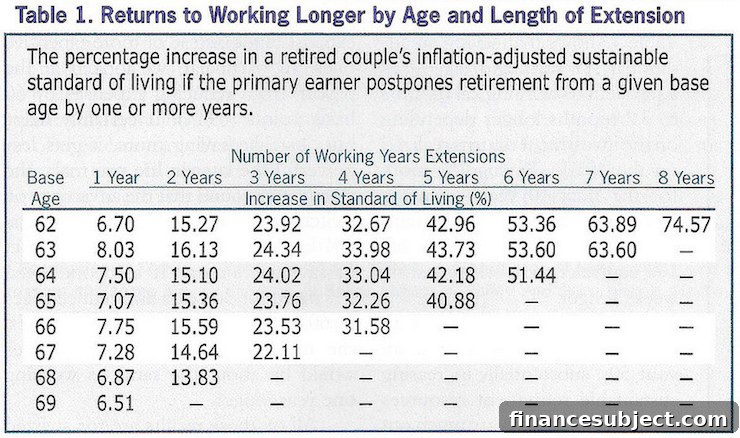
The relaunched US personal finance site Get Rich Slowly published compelling data on the advantages of delaying retirement by a year or two. The piece frames the gains not just as a larger nest egg but as an improvement in standard of living — a useful way to think about the trade-off of working longer.
One chart in particular illustrates how a single extra year of work can boost lifetime spending power:
It’s worth noting that UK and US retirement systems differ, so readers outside the US should interpret the numbers with care. Another important point the original article glossed over is simple arithmetic: the fewer years you expect to spend in retirement, the more each pound can support your lifestyle. Retirement savings are finite, and the length of retirement matters.
Even so, the core message is valuable: working a little longer can meaningfully increase your lifetime spending. That modest extension is often dismissed — especially by some adherents of the FIRE (Financial Independence, Retire Early) movement who favor an all-or-nothing exit — but for many people it’s a pragmatic choice worth considering.
Retirement Investing: One year can change everything
Take the case of Retirement Investing Today, who reported that working an extra year produced about £300,000 more than his £1 million target. That translates to roughly an extra £12,000 a year in retirement income — effectively a lifetime boost to spending power.
That kind of jump isn’t magic. It came after a decade of focused effort: advancing a career, saving aggressively, and investing consistently. For many readers the scale of that achievement will feel out of reach, but it’s the result of deliberate, sustained choices rather than a lucky windfall.
I supported his decision to work an extra year because it made sense to capitalize on a rare position. Once you’ve reached financial independence, the urge to tap an emergency or “F.U.” fund often fades. That last year at work may be less stressful and more deliberate than the years that came before.
Context matters. If you’re pursuing early retirement on a modest income, your plan must match your means. Conversely, someone with a substantial portfolio who takes a low-paid job could sensibly retire sooner. The point is that a small extension of working life can have a large impact on lifetime spending, especially for those who are already saving heavily.
I also think those who do retire early should consider keeping a small, paid engagement — even one day a week — if it suits them. Having some income can ease pressure, provide structure, and make it easier to enjoy discretionary spending. There’s no one-size-fits-all answer, but flexibility often pays off.
A little extra spending money goes a long way. You don’t need to be fanatic about frugality to benefit from modest additional earnings.