
What caught my eye this week.
A few weeks ago Nick Maggiulli of Dollars and Data admitted he’d been writing for Google’s search algorithm rather than following his own curiosity. He said the shift was draining his enjoyment of blogging and that he needed to stop or risk losing his creative sanity.
I can’t keep doing this and preserve my creative sanity. One of the reasons I’ve been able to blog consistently for nearly seven years is because I’ve always chosen what I write about. I’ve been able to follow my curiosity wherever it led me. This year, however, I strayed from that path and realised it before it was too late.
By returning to topics that genuinely interested him, Nick immediately produced one of his best posts. He explores why it’s counterproductive to dwell on roads not taken—whether in life or investing—and explains that imagined alternatives are usually misleading.
This kind of thinking is a mirage. How you imagine an experience is a theoretical exercise—a mental simulation of the past. How you would actually live through that alternate experience tends to produce very different results.
Nick illustrates the point with an example about Magic Johnson and a hypothetical decision to sign with Nike instead of Converse. The imagined outcome—becoming billions richer—may look compelling in hindsight, but it overlooks the many factors that shape real-life trajectories. The emotional pull of “what if” often creates fantasies that never materialise.
Most active investors know this trap well. I’ve personally revisited my own costly decision to sell Tesla shares a few years back. Others grieve over a home they didn’t buy, a job they didn’t take, or a relationship that never happened. These regrets can feel real, but the mental replay often serves to make us feel worse rather than to teach us anything useful.
There are times when missed opportunities truly matter and when we did make mistakes—I, for instance, regret not buying my first flat earlier. But the common problem is how we mentally reconstruct the past. Too often the motivation behind rehashing decisions is self-blame, not meaningful learning. When that happens, it’s healthier to focus forward.
Writing for algorithms
The temptation to tailor content to search engines is familiar. At Monevator we lost roughly half our search traffic overnight in the summer of 2021 after a Google update, and it was deeply frustrating. That experience highlights the tension between following editorial instincts and optimizing for algorithms.
Search engines need rules to deliver a good search experience, but creators shouldn’t let the algorithm dictate every choice. People don’t begin creative projects to please a robot. If you subscribe to receive our articles by email, you become one fewer reader we must try to recapture through the unpredictable lottery of search rankings.
Read Nick’s post if you can and, whatever you’re doing this weekend, enjoy it.
From Monevator
Maximising FSCS protection for your investment portfolio – Monevator
From the archive-ator: Sad story stocks – Monevator
News
Note: Some links lead to news sites or search results. Use a browser’s private mode to avoid tracking. Consider subscribing to sites you visit often.
Treasury braced for an 8% rise in pensions because of triple-lock — FT
Triple-lock could add £45bn to state pensions bill by 2050, says IFS — Guardian
UK rejoins EU science research scheme Horizon — BBC
Housing cost concerns hit record levels — Which
Mortgage rates fall for the sixth consecutive week — Mortgage Solutions
Vet pricing review amid fears of overcharging — BBC
Britons least likely to say work is important to them, study finds — Guardian
UK crypto firms given three-month reprieve on new marketing rules — Yahoo
NHS to begin autumn Covid jabs next week as new variant spreads — Guardian
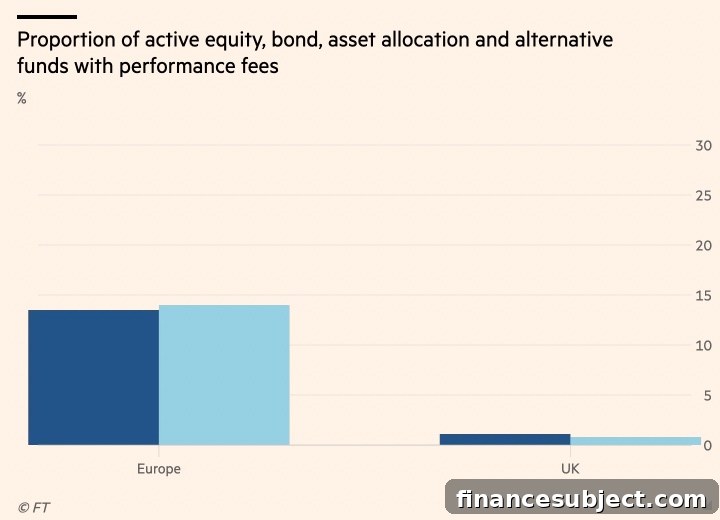
The puzzling underperformance of performance fees — FT
Products and services
Could NS&I spark a rates war on one-year fixed savings? — Which
Monzo’s new call-status tool aims to stop impersonation scams — Monzo
Twenty ways to save on household bills and living costs — Which
Open a SIPP with Interactive Investor and get cashback (terms apply) — Interactive Investor
Amazon’s same-day Prime delivery: what it will cost — Be Clever With Your Cash
Do I have to pay tax and import duties on trainers bought from EU sites? A guide to post-Brexit rules — This Is Money
InvestEngine offer: open an account via our link and receive a bonus when you invest (T&Cs apply) — InvestEngine
Top cash ISAs right now — Money Saving Expert
New mortgage lender Perenna offers 30-year fixed-rate deals — Guardian
Why almost every Omaze dream home winner sells their prize — Metro
Warehouse-style apartments for sale — pictures and listings — Guardian
Comment and opinion
Global stocks = more stocks — Oblivious Investor
Time for the UK to tax inflation — FT
Who knows how long we have? — A Teachable Moment
Dollar-cost averaging in a bear market wins again — A Wealth of Common Sense
Compound interest misconceptions — Lazy FI Dad
How to emotionally prepare for retirement — Kindness FP
Rethinking restraint — Humble Dollar
Will I keep spending more and more money forever? — Vox
The trimesters of retirement — Financial Advisor
Life after growth and soul loss — Simple Living in Somerset
Bonds are back mini-special
[All US but relevant or interesting]
Bonds aren’t boring anymore — Quiet Wealth
What ‘escape velocity’ means for a fixed-income portfolio — Morningstar
The bond bear market and asset allocation — A Wealth of Common Sense
Should bond fund investors be going long? — Morningstar
What to do about high interest rates — M.M.M.
Naughty corner: Active antics
Sing me a song of valuation — WisdomTree
US small-cap value stocks look cheap versus large-cap growth — Validea
A primer on multi-strategy hedge funds (podcast) — Invest Like The Best
Deep dive into Howdens Joinery — Flyover Stocks
John Lee: my dividend strategy continues to deliver — FT
Kindle book bargains
How to Read Numbers by Tom Chivers — £0.99 on Kindle
Freakonomics by Steven D. Levitt — £1.99 on Kindle
Creativity Inc. by Ed Catmull — £0.99 on Kindle
No Rules Rules: Netflix and the Culture of Reinvention by Reed Hastings — £1.99 on Kindle
Environmental factors
Walking away from investing because of climate change — DIY Investor
“Disaster”: UK auction secures no offshore windfarms — Guardian
Life and death in America’s hottest city — New Yorker
Heat denial: influencers question high temperatures — Guardian
Deep freezing coral reefs for the future — NPR
Invasive species cost the world $400bn a year, says UN — Semafor
Robot overlord roundup
What OpenAI really wants — Wired
How predictive technology is shaping medicine and investing — Institutional Investor
Off our beat
The decomposition of Rotten Tomatoes — Vulture
Giving $7,500 directly to homeless people worked well in a Canadian study — Vox
95-year-old cardiologist’s advice on living a long, happy life — CNBC
The mystery of the Bloomfield Bridge — Tyler Vigen (hat-tip: A.R.)
How to choose what advice to take — Art of Manliness
Where on Earth? A geo-location quiz — BBC
And finally…
“The ease of online dealing makes many people act as if investing was positively scored, but the arithmetic of compounding dictates that it is really negatively scored. Success in investing consists mainly of avoiding big mistakes.”
– Guy Thomas, Free Capital
Like these links? Subscribe to get them every Friday. Note: this article includes affiliate links, such as to Amazon and Interactive Investor.