

Kyle Prevost, creator of 4 Steps to a Worry-Free Retirement, Canada’s DIY retirement planning course, summarizes the week’s financial headlines and provides context for Canadian investors.
High rates be gone!
The Bank of Canada cut its key policy rate from 4.25% to 3.75% this week, a 50 basis point move — the largest single reduction we’ve seen since 2009 outside the COVID‑19 period. (A basis point is one one‑hundredth of a percent.)
Markets reacted calmly: options trading showed little volatility on the announcement, and swap markets still expect the policy rate to fall further, with market pricing pointing to a rate around the mid‑2% range by the end of 2025.
Governor Tiff Macklem said the decision is intended to support a “soft landing” by encouraging stronger growth while inflation remains near target. He noted that, although layoffs have been modest, business hiring has been weak, which has particularly affected younger workers and newcomers. In short, labour supply has outpaced job creation in recent months.
The relative strength of the U.S. economy adds another variable to the BoC’s decisions. The U.S. Federal Reserve is maintaining a higher range for its federal funds rate, which could limit how quickly Canadian rates fall if policymakers are cautious about diverging policy paths. The Canadian dollar stayed roughly even against the U.S. dollar after the widely anticipated cut.
For now, with inflation sitting below historically high levels but above the BoC’s tolerance for rapid easing, further gradual rate cuts are likely if inflation remains contained and growth and employment trends improve.
Canadian railways don’t let strikes derail profits
Canadian railway earnings highlights
Key results reported this week:
- Canadian National Railway (CNR/TSX): EPS $1.72 (consensus ~ $1.70); revenues $4.11 billion (consensus ~ $4.08 billion).
- Canadian Pacific Kansas City Ltd. (CPKC/TSX): EPS $0.99 (consensus ~ $1.01); revenues $3.55 billion (consensus ~ $3.60 billion).
Overall, earnings and revenues largely tracked expectations, which kept share prices relatively stable. CNR traded modestly higher after its release, while CPKC moved slightly lower following its report.
Earlier railway employee strikes and operational disruptions had pressured volumes and revenue earlier in the year, so investors were prepared for some earnings headwinds. CPKC described a “very challenging operational quarter” and noted additional costs, including a hazardous‑materials incident that trimmed results.
Despite those challenges, CPKC reported a year‑over‑year income gain driven by growth in key freight categories: grain, energy, plastics and chemicals. The company highlighted successful cross‑border grain shipments as an example of the strategic benefits from its merger that created a rail network spanning Canada, the United States and Mexico.
CNR management pointed to resilience in its scheduled operating plan, noting the railroad adapted to wildfires and labour issues and that operations have recovered. Revenues rose modestly year over year, but higher operating costs pushed the operating ratio higher. CNR also announced a near‑7% increase to its quarterly dividend, reflecting a conservative, gradual approach to payout growth.
Rough day for Rogers
Rogers earnings highlights
Rogers Communications reported:
- Rogers Communications (RCI/TSX): EPS $1.42 (consensus ~ $1.34); revenues $5.13 billion (consensus ~ $5.17 billion).
Despite solid earnings per share, Rogers missed revenue expectations, and the stock fell several percent after the report. Weakness in additions of new wireless customers was the main reason for softer revenue growth. Canada’s wireless market, traditionally an oligopoly dominated by Rogers, Bell and Telus, has become more competitive and pressure on acquisition and retention is squeezing margins across the industry.
One bright spot for Rogers was an 11% increase in sports and media revenue. Over recent years Rogers has built a large portfolio of sports assets, including ownership stakes or rights related to:
- Major and professional teams and venues in Toronto and other cities
- SportsNet and national and local NHL media rights in Canada
- Several smaller sports and esports franchises
Still, wireless and cable services generate the vast majority of Rogers’ revenue, with sports and media accounting for a smaller share.
American communications earnings highlights
U.S. peers reported mixed but generally steady results (figures in USD):
- Verizon (V/NYSE): EPS ~$1.19; revenues ~$33.3 billion.
- AT&T (T/NYSE): EPS ~$0.60; revenues ~$29.9 billion.
Both U.S. carriers added more wireless subscribers than expected, though they flagged continued pressure from lower handset upgrade volumes and a shifting mix away from fixed‑line services. Market reaction was modestly positive, with shares rising on steadier‑than‑feared results.
EV versus ICE: Should we buy ’em all?
Auto earnings highlights
Notable auto sector results (USD):
- General Motors (GM/NYSE): EPS $2.96 (consensus ~ $2.43); revenues $48.76 billion (consensus ~ $44.6 billion).
- Tesla (TSLA/NASDAQ): EPS $0.72 (consensus ~ $0.58); revenues $25.18 billion (consensus ~ $25.37 billion).
Tesla rallied sharply after projecting strong sales growth and promising margin improvements driven by lower production costs and a path to a more affordable model. The stock’s volatility this week underscores how much investor sentiment around Tesla is tied not just to vehicle deliveries and margins but to broader commentary from leadership.
GM delivered an impressive quarter thanks to robust truck and SUV demand in North America and sustained transaction prices, driving a sizeable earnings beat and a positive market response.
Looking beyond North America, Chinese EV manufacturers are becoming increasingly competitive. Rapid cost declines in battery production and aggressive domestic competition have pushed EV purchase prices in China down substantially; for the first time in some markets, EV purchase prices are comparable with or below internal‑combustion equivalents. Large vertically integrated manufacturers, such as BYD, have advantages in scale and supply‑chain integration that make global expansion a real competitive threat for legacy automakers.
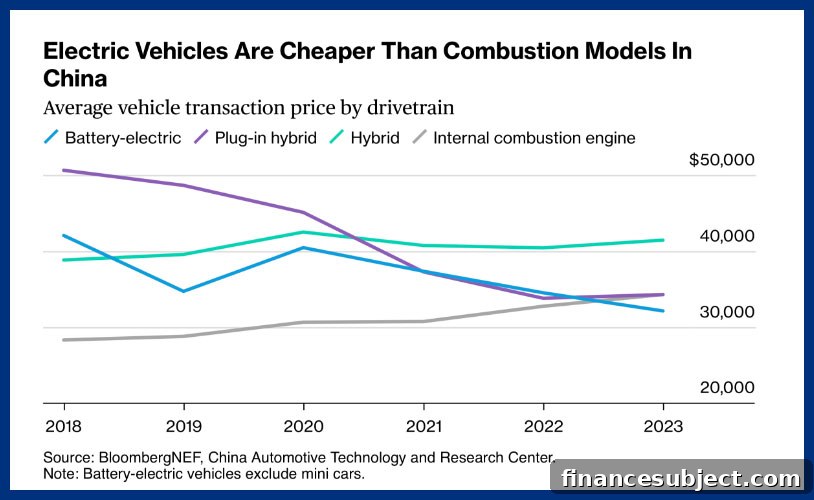
Tariffs and trade measures have been introduced in some markets to protect domestic manufacturers, but in non‑tariff regions Chinese EV brands have already captured significant share due to price competitiveness and aggressive distribution. The global auto landscape is evolving fast: incumbents will need to accelerate cost reductions, product innovation and scale‑efficiency measures to compete.
Have you reached peak financial knowledge?
Continued learning matters. The 2024 Canadian Financial Summit is happening now as a free online event featuring a range of Canadian personal‑finance experts and journalists. If you’re interested in improving your investing and retirement planning knowledge, consider attending sessions from leading voices in the field.
More about investing:
- Boost your portfolio: why and how to increase small‑cap exposure with ETFs
- WeBull Canada review
- Best robo‑advisors in Canada
- When holding on to stocks can hurt you financially
- Crypto updates and major platform changes in Canada