Canadians already rely heavily on digital payments. We shop, pay bills and transfer money domestically and internationally with cards, apps and online banking every day, all using government-backed Canadian dollars.
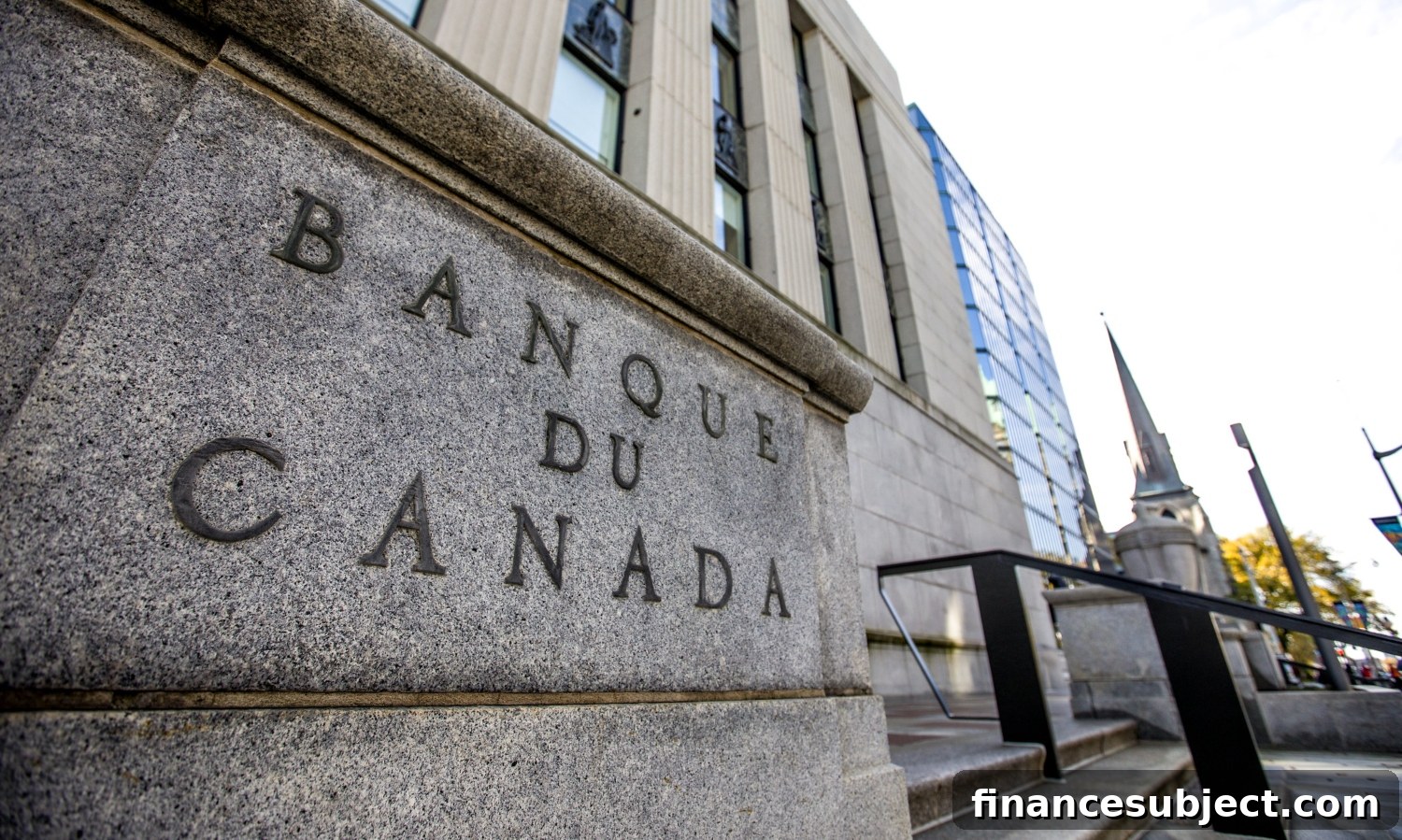
At the same time, the Bank of Canada is researching a central bank digital currency (CBDC) for Canada. While the Bank says there is no immediate need for a digital loonie, it is preparing for a future in which cash may become rare or disappear. Central banks around the world are asking the same questions.
A Canadian CBDC would be government-issued digital money that functions as legal tender. Its introduction would affect the banking system, privacy, payments infrastructure and access to legal tender. Below we explain what CBDCs are, how they differ from cryptocurrencies, where Canada stands in its evaluation, and what five experts think a Canadian CBDC could mean.
What is a CBDC—a.k.a. GovCoin?
A central bank digital currency (CBDC) is a digital form of a nation’s fiat currency issued and regulated by its central bank. Informally called a GovCoin or digital dollar, a CBDC is intended to be legal tender backed by the central bank. Unlike cash, a CBDC would exist only in electronic form but would be accepted for the same everyday transactions: in stores, to pay bills, and for person-to-person transfers.
Is a digital currency coming to Canada?
Not immediately. The Bank of Canada has said it “doesn’t see a need for a digital dollar right now,” but it is studying the issue so Canada can be ready if circumstances change. The Bank would issue the digital currency, but the federal government would make the final decision about launching it.
When will Canada’s CBDC launch?
There are no current plans to issue a CBDC. The Bank of Canada is conducting research and consultations to understand public preferences and policy trade-offs. In 2023 the Bank ran a public consultation that drew strong participation and will inform its ongoing work. Any decision to proceed would follow additional study, design work and consultations with regulators, payments operators and the public.
Are CBDCs the same as cryptocurrencies?
No. CBDCs and cryptocurrencies differ in several important ways:
- Regulation: CBDCs are issued and regulated by central banks and are legal tender. Cryptocurrencies are privately issued, not legal tender, and often treated as commodities for tax purposes.
- Structure: CBDCs are necessarily centralized; cryptocurrencies are typically decentralized and designed for peer-to-peer use without a central issuer.
- Acceptance: A CBDC would have the same status as cash in its home country, while cryptocurrency acceptance varies widely and is not commonplace in Canada.
- Stability: A digital Canadian dollar would maintain a stable value equal to physical currency. Many cryptocurrencies are volatile, though stablecoins exist that aim to track fiat currencies.
- Purpose: CBDCs are aimed at improving the payments system’s security, efficiency and inclusiveness. Cryptocurrencies serve varied roles—from payment to speculative investment—and carry different risk profiles.
How many countries have a CBDC?
Interest in CBDCs is global. As of mid-2023, more than 100 countries were researching or developing digital currencies. A smaller number had already launched or were piloting CBDCs. The pace of exploration has been accelerating as central banks evaluate design choices and public policy implications.
Five experts on what a CBDC could mean for Canada
Below are concise perspectives from five experts who weigh the benefits and risks of a Canadian CBDC. Their views cover monetary history, payments infrastructure, cybersecurity, financial inclusion and economic policy.
- The evolution or end of money in Canada? — James Powell, retired central banker
- A new era of convenience and efficiency — Charl Ackerman, Payments Canada
- A CBDC would pose a security threat to Canadians — Kathy Macdonald, cybersecurity expert
- An opportunity to expand financial inclusion? — Elizabeth Mulholland, Prosper Canada
- There’s no need for a digital dollar right now — Sohaib Shahid, The Conference Board of Canada
The evolution or end of money in Canada?
Money has taken many forms through history—furs, shells, beads, coins and banknotes—each evolving to meet the needs of the time. Today Canadians increasingly use electronic payments instead of cash. Central banks are now exploring digital versions of sovereign currency.
A CBDC could offer important advantages: it would be harder to counterfeit than paper money and could give central banks an extra tool for policy. If cash were phased out, a CBDC could reduce unrecorded cash transactions.
But there are trade-offs. A fully digital payments system relies on electricity, networks and devices. Power outages and disasters can make electronic payments difficult, a reality highlighted during severe weather events. Many Canadians already prefer cards and mobile payments, so a CBDC might be an evolution—another digital option—rather than the end of money itself.
James Powell is a retired senior central banker and author on Canadian monetary history.
A new era of convenience and efficiency
The digitization of money could transform payments, potentially boosting convenience, speed and inclusion. Payments Canada supports the Bank of Canada’s research and could play a role in integrating a CBDC with national payment infrastructure.
Key policy factors to address include financial and monetary stability; privacy safeguards that deter crime while protecting individuals; an inclusive distribution model to reach underserved populations; system resilience to operate continuously; clear liability rules to protect consumers; and accessible consumer recourse if problems arise.
Many countries are piloting CBDCs. Canada is positioning itself to make informed decisions that align with its policy goals of safety, soundness and efficient payments.
Charl Ackerman is director of policy at Payments Canada.
A CBDC would pose a security threat to Canadians
A CBDC would trade some anonymity and direct ownership for convenience and traceability. Its centralized nature could allow extensive transaction monitoring and collection of personal data, creating attractive targets for cybercriminals and raising privacy concerns.
Traceability may boost law enforcement in some respects, but it could also encourage new forms of cybercrime, including phishing, ransomware and sophisticated state-sponsored attacks aimed at crippling financial infrastructure. Vulnerable groups—seniors and people less familiar with technology—could face heightened risks.
Another issue is ownership and control. If digital currency is held or governed by the central bank rather than directly by individuals, the ability to freeze or restrict transactions could shift power away from users, with broad social implications.
Kathy Macdonald is a retired police officer and cybersecurity expert focused on crime prevention and response.
An opportunity to expand financial inclusion?
As businesses go cashless and private digital currencies emerge, a public CBDC could preserve monetary sovereignty while improving access to digital payments. A well-designed CBDC could help people in rural, remote, Indigenous and low-income communities who face barriers to bank accounts, reliable broadband or affordable financial services.
Universal accessibility is a key design principle the Bank of Canada has emphasized. That includes exploring options for devices and interfaces that work without continuous internet access and adopting an “inclusive by design” approach—consulting users, prototyping solutions and iterating to meet diverse needs. If implemented carefully, a CBDC could reduce costs, expand economic participation and lower barriers for those currently excluded from the digital financial system.
Elizabeth Mulholland is CEO of Prosper Canada, a charity dedicated to expanding economic opportunity for people living in poverty.
There’s no need for a digital dollar right now
Cash use in Canada has fallen significantly while electronic methods have grown. Many functions a CBDC might provide—online payments, person-to-person transfers, digital wallets—are already available via banks, cards and existing payment services.
For now, the Bank of Canada plans to build the capacity to issue a general-purpose CBDC if future conditions make it necessary, rather than launching one immediately. According to the Bank, a CBDC would likely become necessary if banknotes fell into such disuse that cash could no longer serve everyday needs, or if private digital currencies became dominant alternatives. Neither scenario appears imminent.
Sohaib Shahid is director of economic innovation at The Conference Board of Canada.
Further reading
- How fintech and neobanks are transforming banking in Canada
- Navigating evolving cryptocurrency regulation in Canada
- Are your deposits at Canadian financial institutions safe?
- What is decentralized finance?