
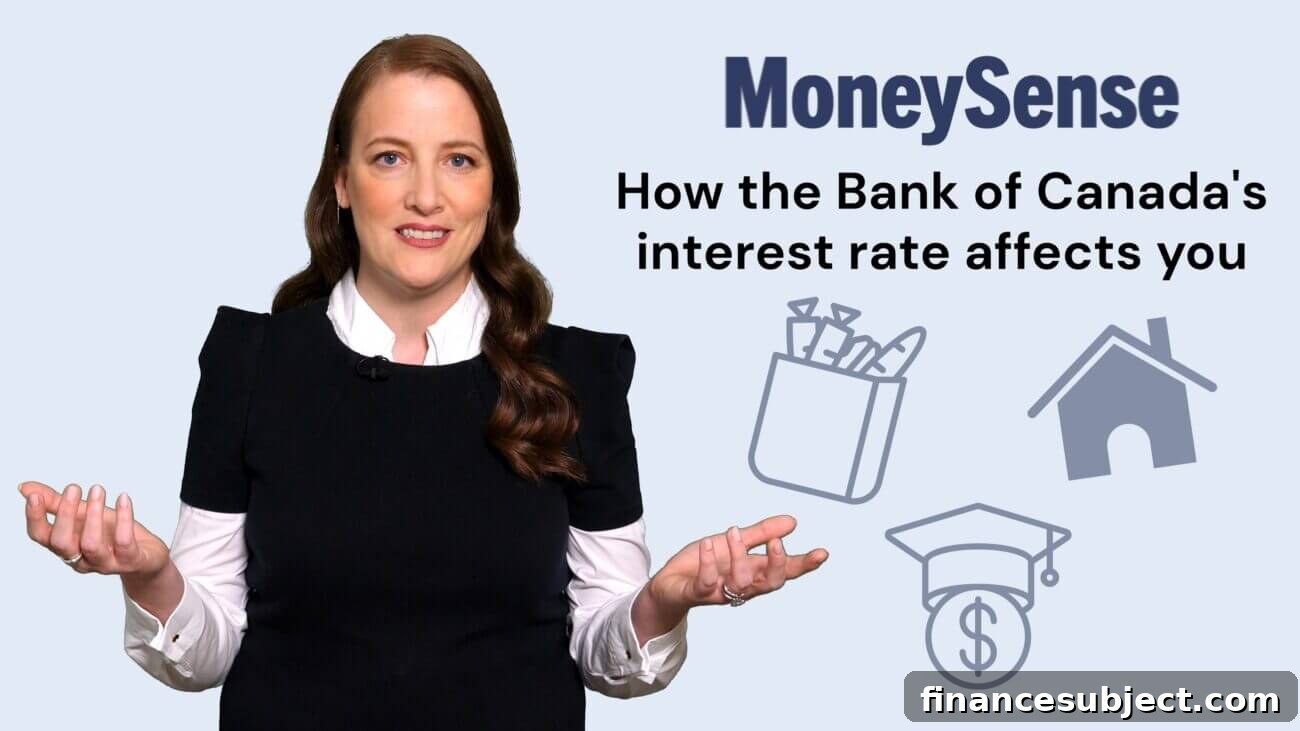
Think of the Bank of Canada (BoC) as the central force guiding interest-rate direction across the economy. When the BoC adjusts its overnight rate, banks and other lenders generally follow by changing their prime rates and lending terms. That ripple affects everything from what you earn on savings to what you pay on a mortgage or line of credit. Below is a concise explanation of how BoC rate moves tend to influence common financial products, followed by practical takeaways to help you plan.
How do changes in the Bank of Canada’s interest rates impact you?
The BoC’s overnight interest rate and the resulting prime rate set by banks drive borrowing costs and the returns available on deposits. When the central bank raises rates, borrowing generally becomes more expensive and savings yields usually rise; when it lowers rates, borrowing gets cheaper and returns on safe savings vehicles often decline. The table below summarizes typical effects for common products so you can better understand which parts of your finances may be most sensitive to rate shifts.
| Type of financial product | When interest rates go up | When interest rates go down |
| Variable-rate mortgages | If the BoC raises the overnight rate and lenders increase their prime rate, monthly payments on variable-rate mortgages can rise. Higher rates also mean a larger share of each payment goes toward interest rather than reducing the principal, which slows equity build-up. | When rates fall, the interest portion of your payment declines and more of each payment is applied to the principal balance, helping you build equity faster and potentially lowering overall interest costs over time. |
| Fixed-rate mortgages | A fixed-rate mortgage locks your interest rate for the term of the loan (commonly five years), so immediate increases in the BoC’s rate won’t change your monthly payment until renewal. However, future renewals or new borrowers will face the higher prevailing rates. | Similarly, falling rates won’t affect your current fixed-rate payments, but when your term ends and you renew or refinance, you may be able to secure a lower fixed rate and reduce monthly payments or shorten amortization. |
| High-interest savings accounts | Higher overnight rates typically translate into better savings yields, so the interest paid on high-interest savings accounts usually increases. That makes holding cash in these accounts more rewarding compared with low-rate environments. | When the BoC lowers the overnight rate, banks often reduce the interest they pay on savings, so your returns from holding cash in these accounts decline and may not keep pace with inflation. |
| GICs | Guaranteed Investment Certificates (GICs) usually pay higher rates in a rising-rate environment, offering better returns for locking in savings for a fixed term. New GICs issued after rate hikes tend to reflect the higher market rates. | When rates fall, newly issued GICs generally offer lower yields, so locking money into long-term GICs during a low-rate period may mean missing out on higher rates later unless you choose shorter terms or laddering strategies. |
| Variable-rate loans (lines of credit, HELOCs, etc.) | When the prime rate rises, interest charges on variable-rate loans increase, raising monthly interest costs and potentially total repayment amounts. This can affect budgeting for homeowners and borrowers who rely on revolving credit. | If rates decline, interest costs on variable-rate debt fall, reducing monthly interest expenses and making it cheaper to carry balances or borrow against home equity, though prudence is still advised. |
Practical considerations: if you carry variable-rate debt, plan for the possibility of higher payments when rates rise—ensure your budget can absorb increases or consider switching to a fixed-rate product if you need payment stability. For savers, rising rates create opportunities to earn more on liquid accounts and short-term GICs; explore accounts and terms to balance access with yield. If you have a fixed mortgage, remember that changes won’t affect your current rate until renewal, which is the point to shop around or negotiate. In all cases, review the terms, penalties, and flexibility of any loan or deposit product before making changes.
Watch more MoneySense videos:
- Why open a high-interest savings account?
- What is a variable-rate mortgage?
- The differences between a TFSA and RRSP
- What are GICs?