
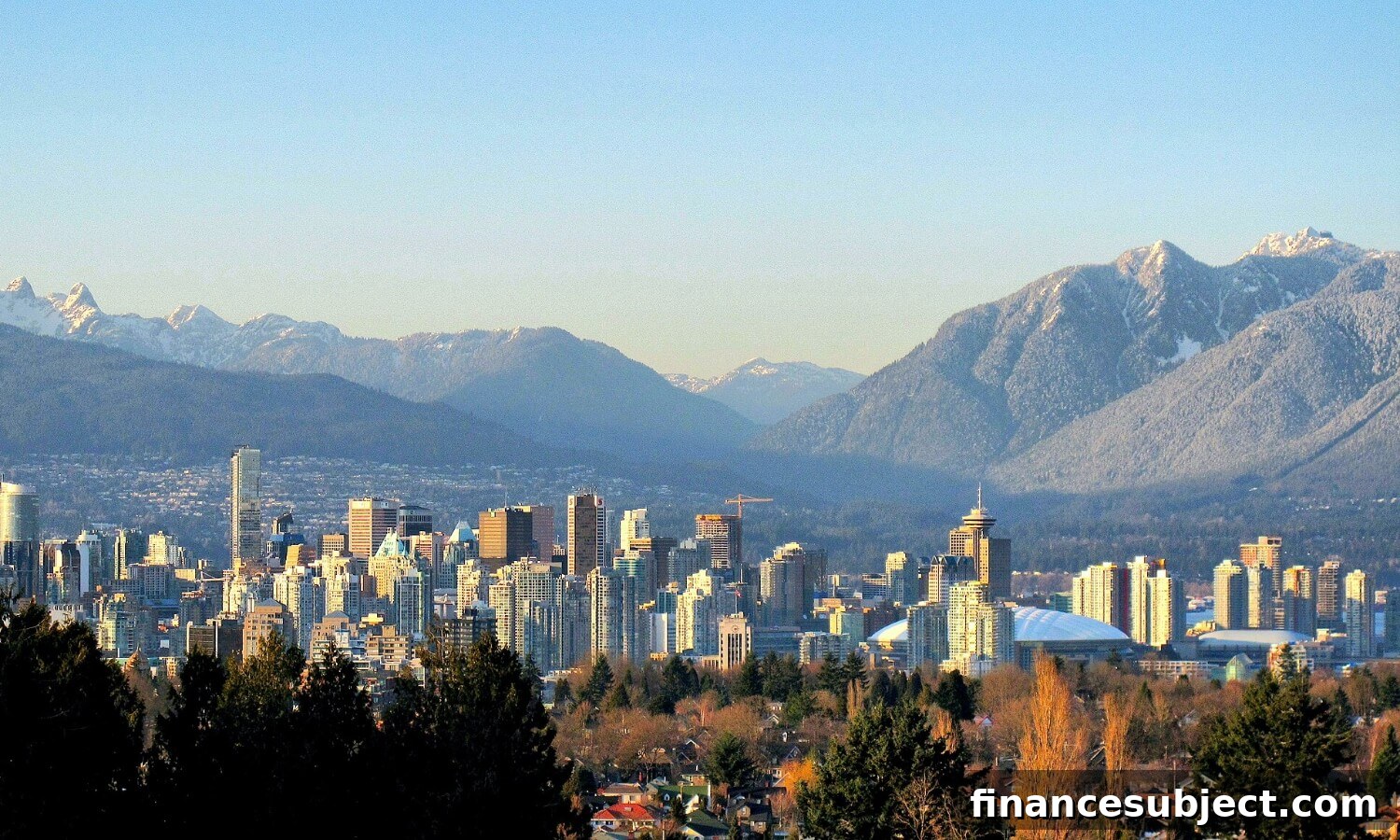
Vancouver’s real estate market remains one of Canada’s most expensive, yet the city’s appeal continues to attract buyers and investors. With a mild coastal climate, dramatic scenery and a resilient economy, Vancouver offers a high quality of life: walkable neighbourhoods, a multicultural population and easy access to international travel. Located between the Pacific Ocean and the Coast Mountains, Vancouver’s limited developable land and strong demand help keep property values elevated.
- The best neighbourhoods in Vancouver
- Closer look at the top three neighbourhoods
- Real estate trends in Vancouver
- Methodology (source data and ranking approach)
Best places to buy
Where to Buy Real Estate in 2026
Best places to buy real estate in Vancouver
Below are the top neighbourhoods to consider for property purchases in Vancouver this year, ranked by a combination of recent price performance, long-term growth, value and livability metrics. The table highlights benchmark prices for 2024 and short- and medium-term growth to help you compare areas at a glance.
| Rank | Neighbourhood | City Area | Benchmark price (2024) | 1‑year | 3‑year | 5‑year | Value | Economics | Accessibility | Children (%) |
|---|---|---|---|---|---|---|---|---|---|---|
| 1 | Hastings-Sunrise | Vancouver East | $1,494,258 | 8.30% | 26.02% | 37.21% | 5.00 | 3.53 | 2.3 | 25% |
| 2 | Mount Pleasant (West Vancouver) | Vancouver West | $1,174,175 | 5.96% | 9.84% | 26.32% | 4.46 | 5.00 | 3.9 | 10% |
| 3 | Collingwood | Vancouver East | $900,658 | 1.56% | 13.87% | 35.86% | 4.38 | 3.61 | 3.5 | 29% |
| 4 | Victoria | Vancouver East | $1,284,550 | 2.82% | 9.33% | 38.90% | 4.07 | 3.21 | 3.9 | 27% |
| 5 | Mount Pleasant (East Vancouver) | Vancouver East | $897,775 | 0.90% | 6.76% | 24.19% | 3.97 | 5.00 | 3.9 | 20% |
| 6 | Fairview | Vancouver West | $896,917 | 0.89% | 6.53% | 20.47% | 3.92 | 4.26 | 4.0 | 6% |
| 7 | Kitsilano | Vancouver West | $1,356,900 | 3.92% | 5.91% | 22.98% | 3.86 | 4.18 | 3.7 | 22% |
| 8 | Marpole | Vancouver West | $1,211,933 | 1.41% | 8.41% | 20.04% | 3.71 | 2.73 | 2.5 | 24% |
| 9 | Grandview Woodland | Vancouver East | $1,447,258 | 0.90% | 8.41% | 30.90% | 3.53 | 4.25 | 3.5 | 26% |
| 10 | Downtown Vancouver | Vancouver West | $660,017 | -1.54% | 1.90% | 2.03% | 3.49 | 4.72 | 3.5 | 9% |
| 11 | Strathcona | Vancouver East | $917,658 | -1.71% | 4.41% | 17.19% | 3.45 | 4.02 | 4.3 | 18% |
| 12 | Killarney | Vancouver East | $1,669,400 | 0.64% | 9.82% | 41.43% | 3.43 | 3.80 | 1.4 | 30% |
| 13 | Kerrisdale | Vancouver West | $2,364,058 | 4.40% | 15.09% | 29.48% | 3.21 | 2.36 | 1.9 | 21% |
| 14 | Fraserview | Vancouver East | $2,272,450 | 1.04% | 13.17% | 42.85% | 2.97 | 3.21 | 4.9 | 33% |
| 15 | Point Grey | Vancouver West | $2,657,267 | 2.50% | 11.50% | 34.13% | 2.62 | 3.63 | 3.0 | 26% |
| 16 | Oakridge | Vancouver West | $1,450,700 | -1.41% | -14.55% | -7.49% | 2.16 | 3.13 | 2.1 | 18% |
| 17 | South Cambie | Vancouver West | $1,629,142 | -4.86% | 4.93% | 3.03% | 2.15 | 4.10 | 3.2 | 23% |
| 18 | Dunbar | Vancouver West | $3,092,767 | 2.77% | 5.38% | 22.99% | 1.92 | 3.85 | 3.1 | 30% |
| 19 | Arbutus | Vancouver West | $3,716,033 | 0.55% | 3.92% | 22.67% | 0.94 | 3.51 | 0.4 | 38% |
| 20 | Shaughnessy | Vancouver West | $4,091,100 | -0.91% | -1.27% | 3.79% | 0.00 | 3.73 | 1.9 | 35% |
Source: Real Estate Board of Greater Vancouver
Top three neighbourhoods in Vancouver
Hastings-Sunrise is an energetic, community-focused neighbourhood in East Vancouver. It blends older character homes with newer infill development and hosts a lively strip of shops, cafes and family-run businesses. Many streets are shaded by mature trees and decorated with murals, contributing to an arts-forward, relaxed atmosphere. Hastings Park, home to community events and seasonal attractions, adds green space and recreational options. While the neighbourhood delivers strong value and growth characteristics, some areas benefit from private vehicle access for convenience to nearby jobs and services.
Mount Pleasant is known for its creative energy and diverse mix of amenities. Trendy cafes, independent retailers, galleries and breweries give the area a vibrant street life. Housing options range from restored heritage homes to modern mid-rise and low-rise condos, making it attractive to young professionals and small families. Good neighbourhood walkability and proximity to transit corridors add to Mount Pleasant’s appeal for buyers seeking urban convenience without sacrificing community character.
Collingwood offers a mix of single-family homes, smaller apartment buildings and newer townhouse developments. Well-served by public transit, including nearby rapid transit stations, it provides relatively straightforward commutes to downtown and other employment hubs. Collingwood Park and local recreation facilities give residents outdoor space and family-friendly amenities. The neighbourhood’s balance of affordability, transit access and community services helps explain its strong ranking for buyers seeking long-term value.
What’s happened in the Vancouver real estate market?
After many years of price gains, housing affordability continues to challenge buyers in Vancouver. Still, 2024 was a year of relative stability rather than dramatic swings. Overall residential sales in Greater Vancouver finished 2024 about 1.2% higher than the prior year, reflecting modest activity after a longer-term cooldown. Compared with 2022, sales were down roughly 9%, and were about 21% below the region’s 10‑year average—illustrating that transaction volumes remain below historical norms.
First-time buyers played an important role in stabilizing demand. Lower interest-rate expectations and steadier prices encouraged many new buyers to target entry-level properties—particularly condominiums and townhouses—where competition for fairly priced units remained intense.
In the condo sector, inventory rose after regulators introduced new rules for short‑term rentals in 2024. Those policy changes prompted some investors to list units that had previously been used for short stays, notably one‑bedroom condos. That influx of supply gave buyers more choices, even as demand stayed healthy for sensible, affordable listings.
Local real estate professionals noted numerous multiple-offer situations for competitively priced homes, driven largely by buyers aiming to enter the market. The combination of modest new supply and persistent demand for affordable options shaped market dynamics through the year.
Return to menu.
Resource highlight
Find competitive mortgage rates
Answer a few quick questions to receive a personalized rate estimate whether you are buying, renewing or refinancing.
Powered by a mortgage comparison service
What’s next for real estate in Vancouver?
Early 2025 showed a balanced market in Vancouver: neither overheated nor deeply depressed. Buyers had more time to make offers and sellers generally had realistic expectations. That balance makes for better decision-making on both sides and fewer frantic bidding wars than seen in prior cycles.
Longer-term, Vancouver’s geography and limited developable land suggest persistent demand for housing. As a result, multi-generational housing and legal secondary suites (separate basement units, laneway homes or garden suites) are increasingly attractive. These configurations help households share costs, provide rental income or accommodate extended family, and they are becoming a key consideration for buyers and builders alike. Local agents note strong buyer interest in properties that offer flexible living spaces—homes with a secondary suite or an additional kitchen are viewed as especially valuable.
Return to menu.
Newsletter
Get free financial tips, news and advice in your inbox.
Read more about buying a home:
- Why are mortgages so expensive in Canada?
- The true costs of home ownership for young Canadians
- Mortgage payment calculator (tool)
- Buying a second home: How it works in Canada
This article was created by Zoocasa.
This is an unpaid article written by a content partner based on its local expertise and edited for clarity and accuracy.
This article is presented by a mortgage comparison partner.
The article was produced editorially with financial support from an advertiser. Advertorial support does not influence the editorial content.