
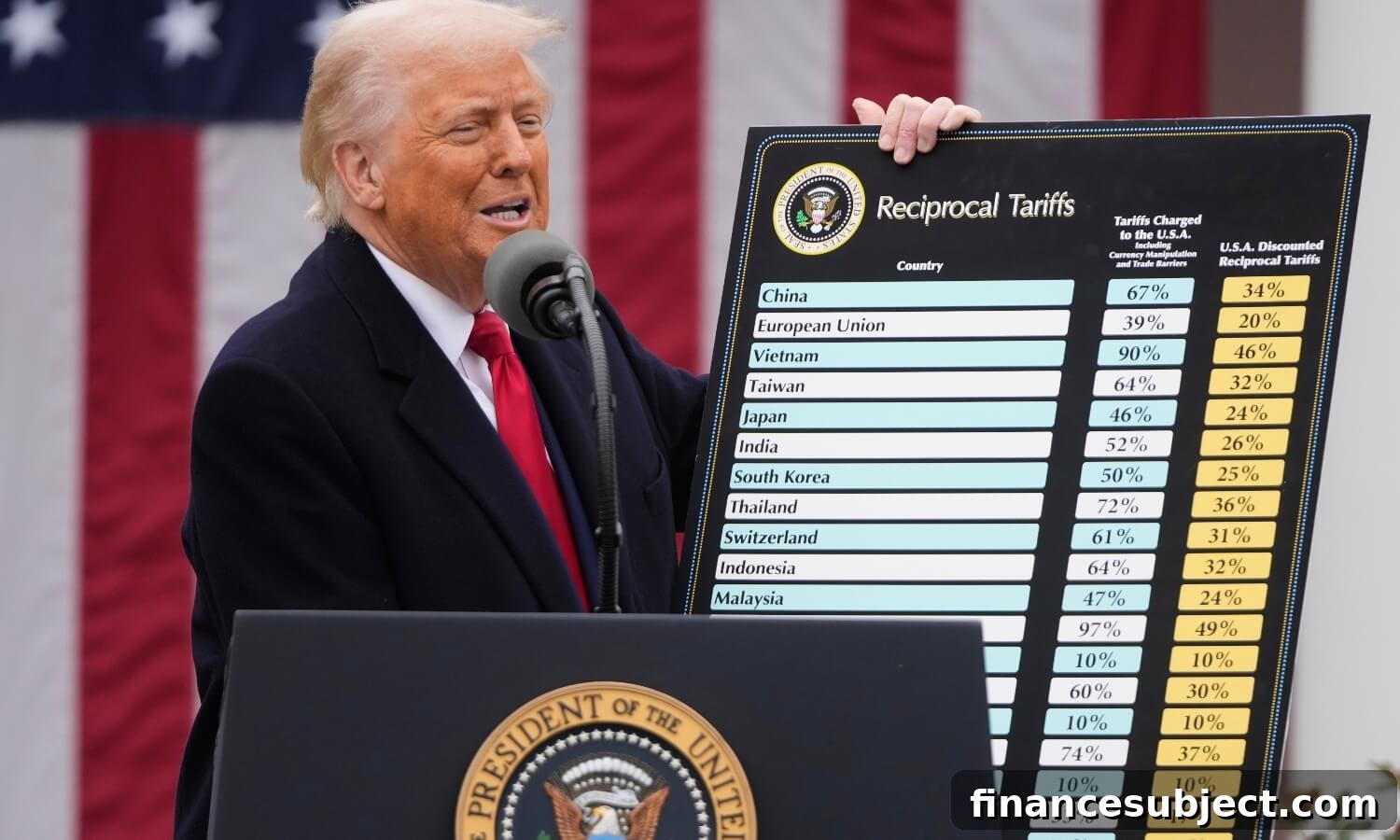
Prime Minister Mark Carney said he “welcomes” the U.S. Court of International Trade’s decision to strike down President Donald Trump’s broad-based tariff actions that targeted most countries. On Wednesday, the court found that the president did not have the authority under the International Economic Emergency Powers Act (IEEPA) to impose the wide-ranging duties. The ruling invalidated both the so-called “Liberation Day” tariffs and the fentanyl-related levies that had been applied to Canada, Mexico and China.
Speaking in the House of Commons on Thursday, Carney said the judgment “is consistent with Canada’s long-standing position that the U.S. IEEPA tariffs were unlawful as well as unjustified.” He warned, however, that Canada’s commercial ties with the United States remain under serious strain because other duties—for example, tariffs on steel, aluminum and some auto-sector products—were imposed under a different statute and therefore remain in effect.
“It therefore remains the top priority of Canada’s new government to establish a new economic and security relationship with the United States and to strengthen our collaboration with reliable trading partners and allies around the world,” Carney said, emphasizing the need to pursue stable, predictable trade arrangements.
Also read
The best online brokers, ranked and compared
The trade conflict has taken casualties, but it’s not over
Candace Laing, president of the Canadian Chamber of Commerce, cautioned that the court decision does not mark the end of the trade conflict and that businesses are still seeking certainty. “Ultimately, the end of this trade war with the U.S. will not come through the courts. It will come when we have negotiated a durable new agreement on trade that is trusted and respected by all involved,” she said in a statement.
The Trump administration filed a notice of appeal shortly after the ruling. While the president had not issued a personal response at the time, several officials in his administration strongly criticized the court’s finding.
White House deputy chief of staff Stephen Miller described the decision on social media as an example of “judicial tyranny,” and White House spokesman Kush Desai argued it is inappropriate for unelected judges to determine how to respond to a declared national emergency.
The federal panel that issued the ruling sat in New York and consisted of three judges appointed by different presidents: one appointed by Trump during his first term, one by Barack Obama, and one by Ronald Reagan. The court concluded that “any interpretation of IEEPA that delegates unlimited tariff authority is unconstitutional,” and it separately blocked the fentanyl-related tariffs because they did not sufficiently address the national-security and public-safety threats cited in the executive order.
A clear legal choice
Mona Paulsen, an associate professor of international economic law at the London School of Economics, described the ruling as a relatively straightforward legal determination. According to Paulsen, the judges did not second-guess the existence of a national emergency; instead, they evaluated whether the tariffs had a reasonable connection to the emergency the executive order purported to address. “They basically just find there’s no direct link here between the imposition of tariffs and the unusual and extraordinary threat that the trafficking orders said it was trying to address,” she explained.
The decision raises questions about the extent to which the president can continue to use tariff threats as leverage in trade negotiations. The administration has argued that the duties encourage other countries to negotiate trade deals favorable to the United States, and that they will spur domestic manufacturing and increase government revenue. But Paulsen noted those goals can conflict: a tariff used as negotiating leverage is expected to be removed in exchange for concessions, while a tariff intended primarily to raise revenue is treated as a permanent source of income—two purposes that do not easily coexist.
How the original tariffs were implemented
Many of the contested tariffs were implemented under IEEPA, a statute that grants the president authority to regulate economic transactions during an emergency. Although the law allows broad economic controls once an emergency is declared, it had not previously been used to impose tariffs on this scale.
In March, the president declared a national emergency at the northern border and announced economywide tariffs on Canadian goods, later pausing parts of those measures for imports that complied with the Canada-United States-Mexico Agreement (CUSMA). The following month, he expanded the emergency rationale to cover U.S. trade deficits and briefly threatened sweeping global tariffs, subsequently scaling back the most severe duties while leaving a 10% universal tariff in place.
Trump has continued to rely on IEEPA language to threaten sudden tariff increases, at one point announcing a planned rise to 50% on imports from the European Union before postponing the date. Paulsen noted other legal authorities could be invoked instead, such as section 338 of the U.S. Trade Act of 1930, which allows the president to impose duties of up to 50% against countries deemed to be discriminating against U.S. commerce—a provision that, while rarely used, could potentially be applied more often.
Political reactions at home
Conservative Leader Pierre Poilievre called the court’s decision “good news” but warned that Canada can no longer rely exclusively on the United States. “Too risky,” he said, urging Canada to invest in infrastructure—pipelines, power lines, ports, rail, roads and technology—to become stronger, more self-reliant and more sovereign.
Bloc Québécois Leader Yves-François Blanchet said the ruling improves Canada’s negotiating position with the United States and expressed hope it will lead to calmer, more constructive discussions when the two countries next meet at the bargaining table. “It might call for some more reasonable, quiet and serene negotiations,” he told reporters.
Newsletter
Get free MoneySense financial tips, news & advice in your inbox.
Read more about personal finance news:
- Notes from Scotiabank’s 2025 Q2 earnings report
- Missed credit payments rose 4% in the first quarter of 2025
- What to do if your employer goes bankrupt
- Target reports Q1 earnings—sales dip, C-suite changes and more