


Keeping finance personal
Financial advice is rarely one-size-fits-all. For neurodivergent people—whose brains absorb and process information differently—conventional guidance often needs to be adapted. That’s been true for Calgary-based finfluencer Ellyce Fulmore. Since 2020 she has shared candid, witty observations about how ADHD shaped her relationship with money. Fulmore founded the financial literacy company Queerd Co. and is the author of the book Keeping Finance Personal: Ditch the “Shoulds” and the Shame and Rewrite Your Money Story (Hachette Go, 2024). The following excerpt offers a clear, compassionate, and pragmatic take on managing money when your brain doesn’t fit typical expectations.
—MoneySense Editors
The scoop on ADHD
ADHD, or attention deficit hyperactivity disorder, is defined by the American Psychiatric Association as a developmental condition involving inattention, hyperactivity, and impulsivity. The label can be misleading: many people with ADHD don’t lack attention so much as the ability to consistently direct attention where it’s needed.
ADHD coach Brett Thornhill says, “It’s like your brain keeps switching between 30 different channels and somebody else has the remote.”
Public stereotypes often picture a hyperactive boy who can’t sit still. But ADHD can look like daydreaming, distractibility, and difficulty sustaining focus. Some people show mainly inattentive symptoms, others mainly hyperactive symptoms, and many have a combination. ADHD varies in severity and presentation and can interfere with daily functioning across multiple settings.
I have the combined type of ADHD: both hyperactive and inattentive traits affect me. In school my grades were fine, but I was often described as a chatterbox. When I wasn’t talking I was gazing out the window, doodling, or doing homework for another class. Because the grades masked the struggle, my difficulties were overlooked—an experience common among women and girls with inattentive ADHD.

Since a difficult period early in my adult life, I’ve rebuilt my finances, grown a business, and found stable, healthy relationships. Privilege helped, and so did getting a diagnosis and learning how my brain works. Society is structured around neurotypical norms, and when your brain differs, you often have to adapt systems to suit you.
This chapter explores common ways ADHD can affect money management and how to work with your brain instead of against it. Research is evolving—especially about ADHD in women—so details may shift over time. Everyone’s experience is unique; some passages will resonate more than others. Whether you’re reading for yourself or to support someone else, allow room to experiment and discover what helps.
How ADHD impacts your money
In college I opened a $10,000 line of credit expecting to use a small portion for tuition and living costs. Within two months it was maxed out. Before my diagnosis I spent impulsively simply to feel something; that line of credit unlocked more spending and left me with a maxed credit card, multiple lines of credit, and student loans. At one point my debt reached $35,000, $15,000 of it high-interest. I’d look at statements and not remember half the purchases. The shame followed me everywhere—eating out, groceries, a coffee—because I felt out of control and didn’t know how to change my habits.
My experience isn’t unique. Research and surveys show that people with ADHD often face greater financial difficulty: they are more likely to struggle with debt, miss payments, and find budgeting hard. ADHD affects perception, decision-making, and behavior—so it also affects how you earn, spend, and save.
But that’s not all.
If you have ADHD you are…
- 2x more likely to experience anxiety about finances
- 3x more likely to struggle with debt
- 3x more likely to miss bill payments occasionally or often
- 3x more likely to find it hard to stick to a budget
- 4x more likely to engage in impulse spending
…compared with those without ADHD.
ADHD can reduce executive function: planning, organization, time management, and self-control. Those cognitive skills are vital for managing money. Without supports tailored to neurodivergent brains, standard financial advice—“just make a budget” or “stop impulse spending”—often misses the mark.
I began creating content to fill that gap, sharing practical tactics based on how ADHD affects me. My social posts about ADHD and money have resonated widely, and feedback has reminded me that many people feel isolated in their struggles. Financial challenges tied to ADHD are not moral failures; they’re predictable consequences of brain differences—and there are concrete strategies to help.
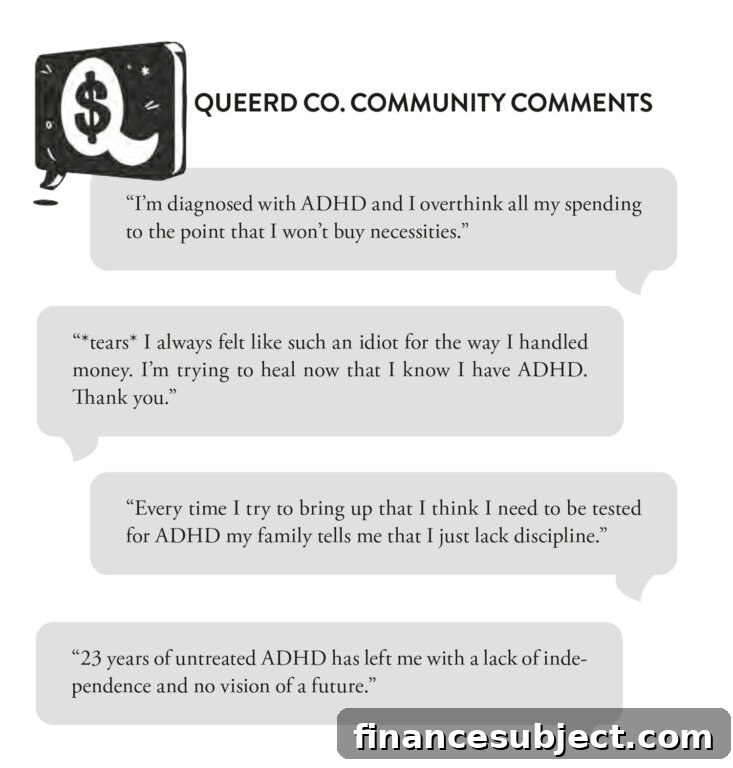
I want you to feel validated: your money problems are not simply your fault. Misunderstanding and stigma still make many people with ADHD internalize shame. Below I unpack common myths people with ADHD hold about themselves and the realities behind those beliefs—so you can find actionable steps to improve your finances.
3 lies and many truths about ADHD and money
Lie #1: “I’m just lazy.”
When I wrote this book I had ample time but couldn’t stick to the schedule I set. My brain works best with urgency; without it I procrastinated until the deadline created pressure. That pattern felt shameful, so I labeled myself lazy. But ADHD impairs executive function—our internal manager for planning, prioritizing, and following through. That impaired manager makes tasks that seem simple to others feel overwhelming.
Couch paralysis is a common example: you’re stuck scrolling despite wanting to work, clean, or study. This isn’t laziness; it’s executive function failing you. Tasks that require many steps—like creating a budget—can trigger avoidance: you start, get overwhelmed organizing subscriptions and expenses, set it aside, forget to track spending, and give up on systems that don’t feel right for you.
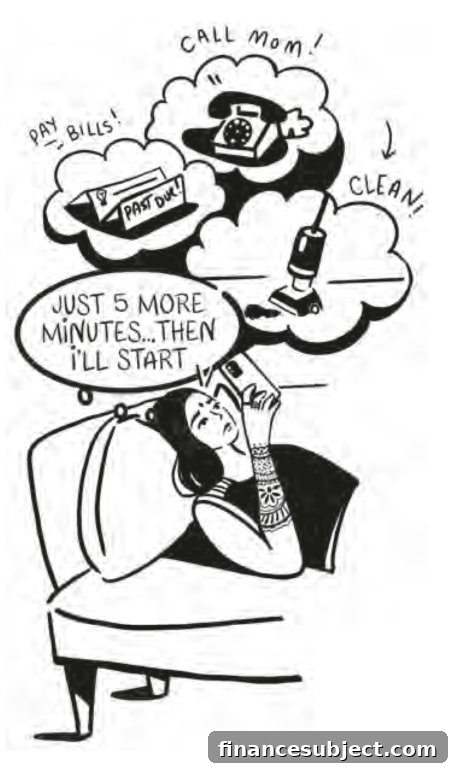
Repeat after me: “I’m not lazy; I have ADHD.” The right supports and systems matter more than willpower alone.
Lie #2: “I lack willpower.”
People with ADHD often think they simply lack motivation or willpower because they don’t meet financial goals at the same pace as others. But motivation in ADHD is not absent—it’s different. Tasks that feel boring, repetitive, or distant in payoff are especially hard to sustain. To succeed, you need to tap into motivation that actually works for you. Here are four kinds of drivers that commonly help people with ADHD:
1. Pressure/urgency
Many with ADHD perform best under pressure. Deadlines, external accountability, or the fear of real consequences can prompt follow-through. You can sometimes create this urgency yourself—set mini-deadlines, involve an accountability partner, or automate consequences to trigger action.
2. Interest/passion
If a task is intrinsically engaging, you can hyperfocus on it for hours. The challenge is making necessary but dull financial chores feel more interesting—pair them with a podcast, reward yourself, or use tactile tools that make the process appealing.
3. Competition/challenge
Gamifying tasks—turning them into challenges or contests—can spark motivation. Competing against others or against your previous best can make budgeting or bill-paying feel like a win.
4. Novelty/play
Newness fuels dopamine. Fresh tools, timers, or systems can boost initial engagement. The trick is to find ways to refresh routines so momentum lasts beyond the novelty phase.
It isn’t about being lazier or less disciplined; it’s about recognizing your brain needs different stimuli and designing systems that provide them. I don’t lack willpower—I have ADHD.
Lie #3: “I’m bad with money.”
Starting stimulant medication felt like putting on glasses for the first time: suddenly I could focus and track details. That clarity made me see how much harder unmedicated life made financial tasks. Research shows adults with ADHD often face poor financial outcomes—more debt, less savings, impulsive spending, and lower scores on financial competence assessments—but this is not evidence of lower intelligence or moral failing.
ADHD symptoms—disorganization, forgetfulness, trouble planning, and inconsistent follow-through—raise the “cost” of self-control needed for healthy finances. That’s why many conventional tools don’t work: they’re designed for neurotypical brains. It’s like being handed a fork to eat soup. The solution isn’t more self-blame; it’s finding the right tools.
For me, medication helped, but so did building an engaging budgeting system, injecting dopamine into money goals, and discovering which types of motivation work. Accept that different approaches can be effective, and give yourself permission to try options that suit your brain.
Repeat after me: I’m not bad with money; I just have ADHD.
Excerpt from Keeping Finance Personal: Ditch the “Shoulds” and the Shame and Rewrite Your Money Story by Ellyce Fulmore. Copyright 2024. Available from Hachette Go, an imprint of Hachette Book Group, Inc.
Newsletter
Get free MoneySense financial tips, news & advice in your inbox.
More about personal finance:
- The best free personal finance and investing courses in Canada
- New year, new money habits: 5 personal finance books for a fresh start
- Finding Balance: Q&A with author Andrew Hallam
- Where to get help if you’re struggling financially (and mentally)