

Kyle Prevost, creator of 4 Steps to a Worry-Free Retirement, Canada’s DIY retirement planning course, reviews mid-year financial headlines and offers context for Canadian investors.
Checking in on our 2024 market predictions
With the first half of 2024 now behind us, it’s a good moment to revisit the market forecasts we published at the start of the year and evaluate what’s played out so far.
After a quiet holiday week around Canada Day and U.S. Independence Day, we checked key asset returns and macro trends to see which predictions remain on track and which have diverged from expectation.
Asset performance highlights for 2024
Key asset returns so far in 2024, reported in Canadian dollars:
- Canadian stocks: up approximately 6.4%
- U.S. stocks: up roughly 20%
- International stocks: up about 9.1%
- Canadian bonds (ZAG ETF proxy): down roughly 1.8%
- Gold: up roughly 24.7%
Prediction: Canada’s TSX 60 will gain 15%, outperforming the 8% gain for the S&P 500
This forecast has not panned out so far. The TSX 60 has shown modest gains, but the U.S. market—driven by a handful of mega-cap names—has surged far beyond an 8% annual pace through midyear. That said, there’s still a plausible path for the TSX 60 to make up ground by year end, particularly if interest rates ease and domestic sectors such as banks, utilities and telecoms benefit.
It’s unlikely the S&P 500 will finish the year at only an 8% gain given how concentrated recent U.S. returns have been in a small group of large companies. Markets can remain irrationally extended for long stretches, so while the U.S. lead looks stretched today, timing any mean reversion remains difficult.
Prediction: Tech stocks will underperform the TSX Composite
This call has been off the mark so far. Using the Nasdaq 100 as a proxy for U.S. tech, its double-digit return has significantly outpaced the TSX Composite. Momentum among AI-focused names and chipmakers—led by firms like Nvidia—has driven exceptional returns, and “animal spirits” are clearly at work in the market.
We still believe valuations for some of the most enthusiastic tech winners will moderate eventually. However, the timing of that correction is uncertain. Lower interest rates later in the year could shift investor preference back toward cyclical and value-oriented Canadian sectors, narrowing the current gap.
What are animal spirits?
“Animal spirits” is a term originally used by economist John Maynard Keynes to describe investor behaviour driven by emotion—fear, greed or optimism—rather than strictly by fundamentals. These forces can push prices well beyond what traditional metrics would justify.
Prediction: Canadian GDP per capita would continue to go down
This forecast remains regrettably accurate. While headline GDP has shown modest growth this year, GDP per capita tells a different story once population growth is taken into account. Canada’s GDP per person has fallen compared with recent years, a drop that has raised concerns among economists and commentators. When real GDP per capita slides, it reflects weaker average economic conditions and a lower standard of living growth for residents.
Rising unemployment and slower productivity gains will likely constrain near-term GDP per capita recovery. Policymakers face a challenge: raising productivity and ensuring that an expanding population translates into stronger per-person output.
What is GDP?
Gross domestic product (GDP) measures the total value of goods and services produced in a country over a period, typically a quarter or a year. Economists use GDP, and especially GDP per capita, to assess how economic output relates to population and living standards.
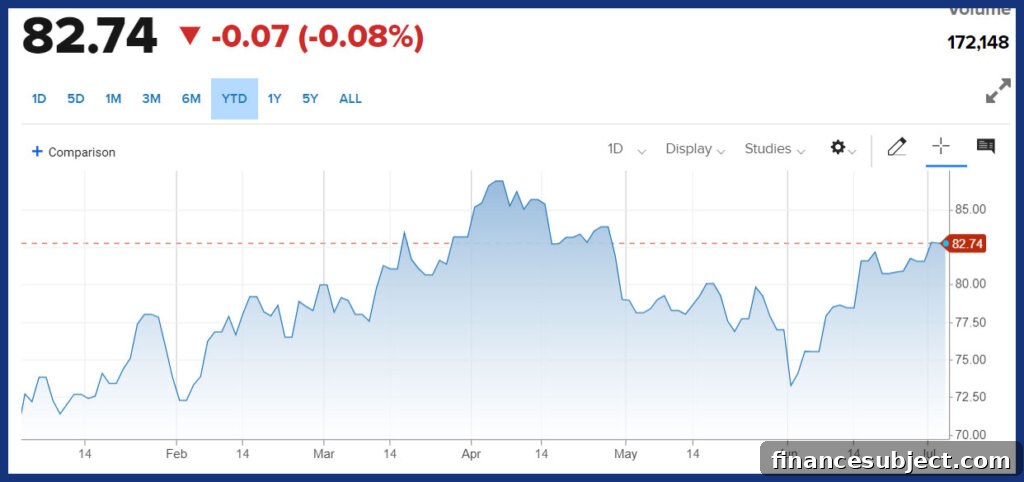
Prediction: Oil prices will stay below USD$85 per barrel
This call has mostly held. Oil did briefly trade above USD$85 per barrel in April but has generally remained below that threshold since, supported by OPEC production cuts. Energy markets remain sensitive to geopolitical developments and supply decisions, so prices can move quickly if conditions change.
For investors interested in energy exposure, Canadian energy producers remain a common place to gain leverage to oil prices, though individual company fundamentals vary widely.
Prediction: Tesla will finish the year down 30%
This thesis remains plausible but remains to be proven. Tesla shares have been volatile: they fell substantially earlier in the year but rallied on positive quarterly delivery and earnings news. Our central concern—that intensifying competition and margin pressures would weigh on long-term profit expectations—still underpins the view that Tesla faces meaningful downside risk over a full market cycle.
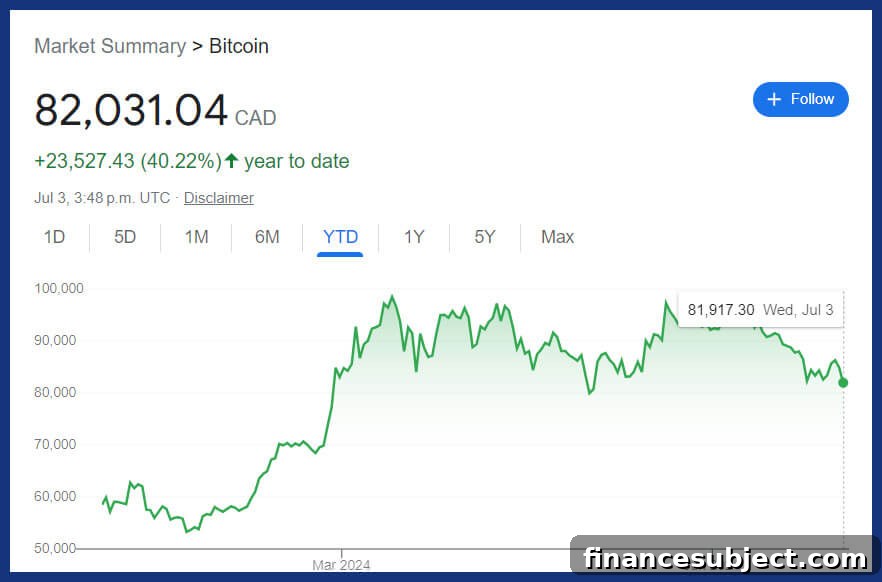
Prediction: Crypto might be volatile, but could finish 2024 up 50%
So far this call has been closer to the mark. Bitcoin rallied strongly in February, fell sharply through spring, and overall has shown the kind of wild swings typical of the asset class. From a price perspective, achieving a 50% annual gain is still possible depending on market momentum over the next six months.
That said, long-term skepticism remains warranted: cryptocurrencies are highly speculative, and many investors continue to view them as risky and uncertain for long-term value storage.
Prediction: U.S. election in November will be chaotic
We anticipated an eventful U.S. election year, and that prediction has been accurate so far. Political uncertainty has intensified markets’ sensitivity to headlines, and the campaign has introduced unexpected twists that complicate forecasting. Historically, U.S. election years can be positive for markets overall, but the specific outcomes and their policy implications can create large short-term swings.
We suggested that a split government might be the most market-friendly outcome. That scenario remains one plausible route to a calm year-end for equities, but given the many moving parts it is premature to draw firm conclusions.
What’s left of 2024?
After accurately calling a number of trends in 2023, we knew repeating that level of precision would be difficult. Some specific calls—like the outperformance of U.S. tech—have missed, while broader themes about interest rates, commodity sensitivities and macro uncertainty appear intact.
For Canadian investors, the big-picture takeaway is to maintain a long-term perspective. Volatility and headline noise are likely to continue through the fall as political and economic developments unfold. Patient, diversified investors who focus on fundamentals and prudent asset allocation are positioned to benefit from long-term market growth, even if some near-term predictions prove incorrect.
Read more about investing:
- Best ETFs in Canada
- National Bank to buy Canadian Western Bank at $5 billion valuation
- Buying your first stocks in Canada
- Capital gains tax in Canada and common questions answered
- Will the AI “gold rush” last?