

Welcome to the Canadian Crypto Observer. Financial journalist and author Aditya Nain provides insight on market-moving headlines to help Canadian investors navigate the cryptocurrency market.
Could bitcoin continue to rise?
On May 22, bitcoin (BTC) reached a fresh all-time high of $111,681 (U.S. dollars unless otherwise noted). That surge appears partly driven by a broader move away from U.S. assets amid political uncertainty, which has pushed some investors toward alternative stores of value like gold and bitcoin.
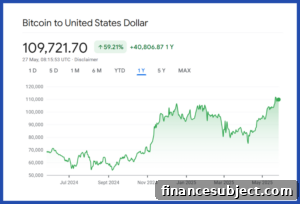
So, can bitcoin push even higher, or is this market cycle near its end? Several indicators offer useful perspective.
What the Fear and Greed Index suggests
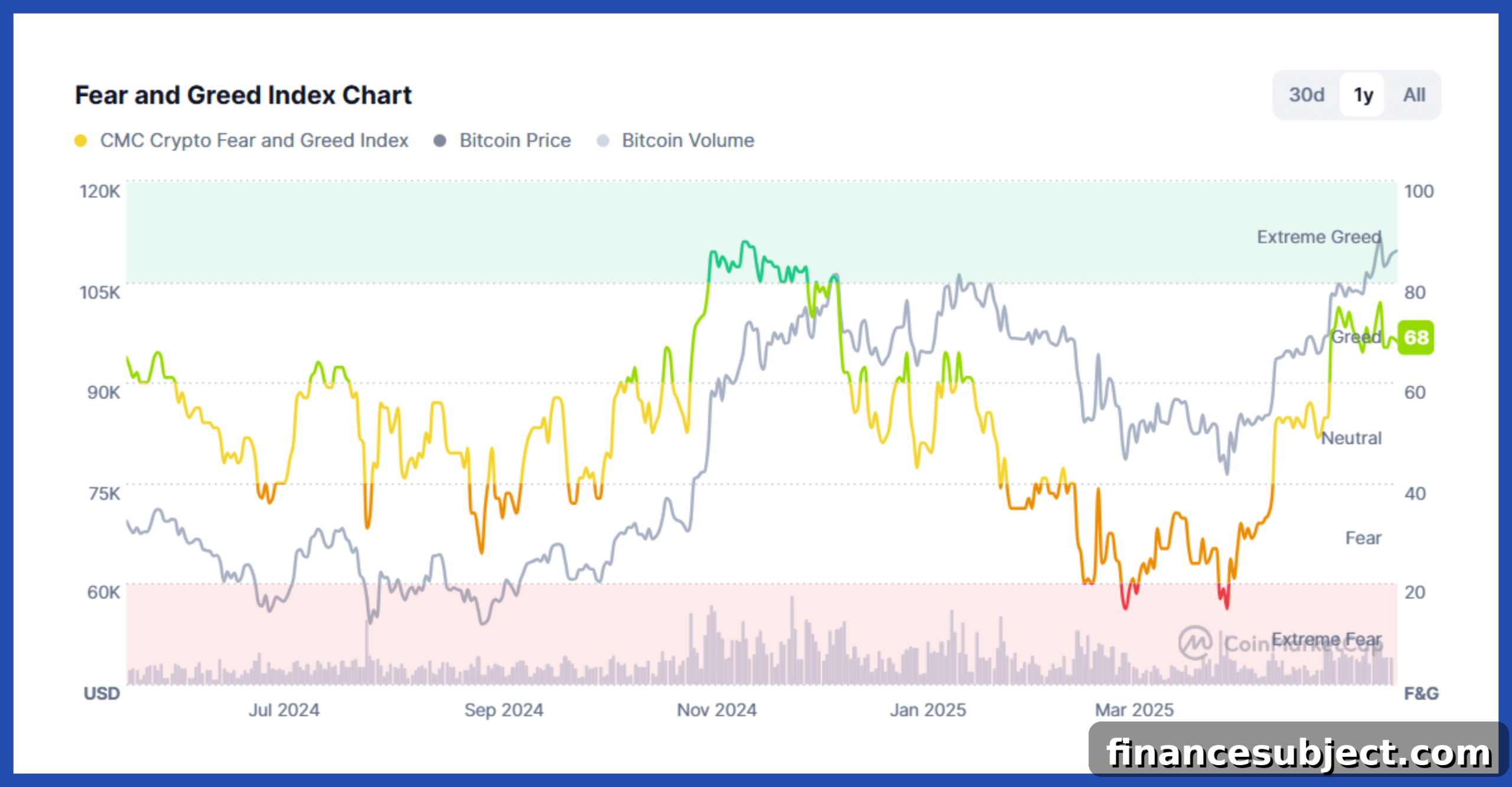
When BTC first approached the $100,000 mark in December 2024, the CMC Fear and Greed Index and Google search activity signalled potential overheating: both showed very high levels of enthusiasm. Today, though BTC has eclipsed that level, the Fear and Greed Index sits in “greed” rather than “extreme greed.” Historically, extremes on that index have coincided with market tops. The current reading implies there may still be room for further gains before sentiment becomes frothy.
What Google search trends reveal
Google Trends data offers another lens on investor interest. In past bull runs, such as March 2021 and November 2024, searches for “bitcoin” spiked dramatically as retail attention surged. As of May 27, however, search interest is far below those peaks—roughly one-third of the December 2024 peak, which scored 100 on Google’s index. Currently it sits around 34. Low search interest alongside rising prices can indicate that mainstream retail investors have not yet fully reentered the market, which could allow further upside.
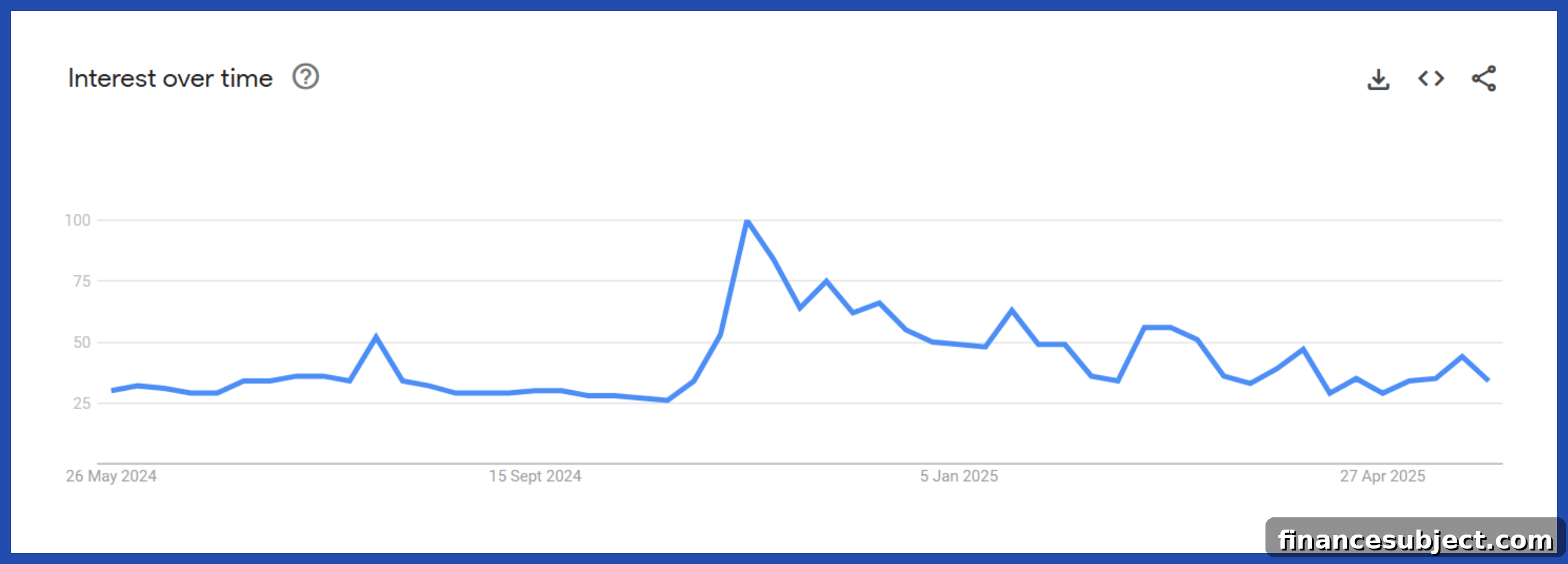
In short: while bitcoin’s price has set new highs, the usual signs of extreme market euphoria are not yet present. That does not guarantee continued gains, but it reduces the immediate signal that the market is top-heavy.
Also read
The best crypto platforms and apps
We’ve ranked the best crypto exchanges in Canada.
Ethereum bounces back
Ethereum (ETH) staged a sharp recovery in April–May 2025, climbing about 62% from roughly $1,416 to $2,700 in under two months. ETH had lagged behind bitcoin, Solana and several other assets earlier in this cycle, but the recent surge shows that market sentiment can change quickly.
What explains Ethereum’s rebound? Part of it may be renewed confidence in the platform’s roadmap and upgrades led by co-founder Vitalik Buterin. Another factor could be value-driven rotation: investors buying ETH after it had become relatively undervalued compared with other tokens. Skeptics, meanwhile, argue that newer blockchains could overtake Ethereum if they deliver faster, cheaper services.
The longer-term outlook for Ethereum remains uncertain. Over the next five to 10 years it could either consolidate its role as a dominant smart-contract platform or face pressure from more nimble competitors. One notable success linking traditional finance and crypto is BlackRock’s tokenized money market fund, BUIDL, which uses Ethereum to tokenize U.S. Treasuries.
BlackRock’s BUIDL fund reached roughly $2.88 billion, with about 95% tokenized on Ethereum, according to market data reported in May 2025.
As of late May the BUIDL market cap was reported near $2.92 billion, a significant rise since the tokenized fund’s launch in March 2025. That growth highlights a growing interest in using Ethereum (and similar blockchains) to represent real-world financial assets.
Could U.S. stablecoin rules spur crypto adoption?
Regulatory developments in the United States could have broad implications for the crypto sector. Lawmakers are considering the bipartisan GENIUS Act — the Guiding and Establishing National Innovation for U.S. Stablecoins Act — which would impose reserve, disclosure and operational requirements on dollar-pegged stablecoin issuers. The bill has moved through the Senate and, if it becomes law, could arrive as soon as next year, subject to the legislative process and executive approval.
Stablecoins play a central role in crypto markets as on- and off-ramps, trading liquidity and a medium for moving value without converting to fiat currency. Two of the largest cryptocurrencies by market capitalization are stablecoins: Tether’s USDT and Circle’s USDC. In April 2025, stablecoins accounted for over half of on-chain transaction volume, underlining their importance to the ecosystem.
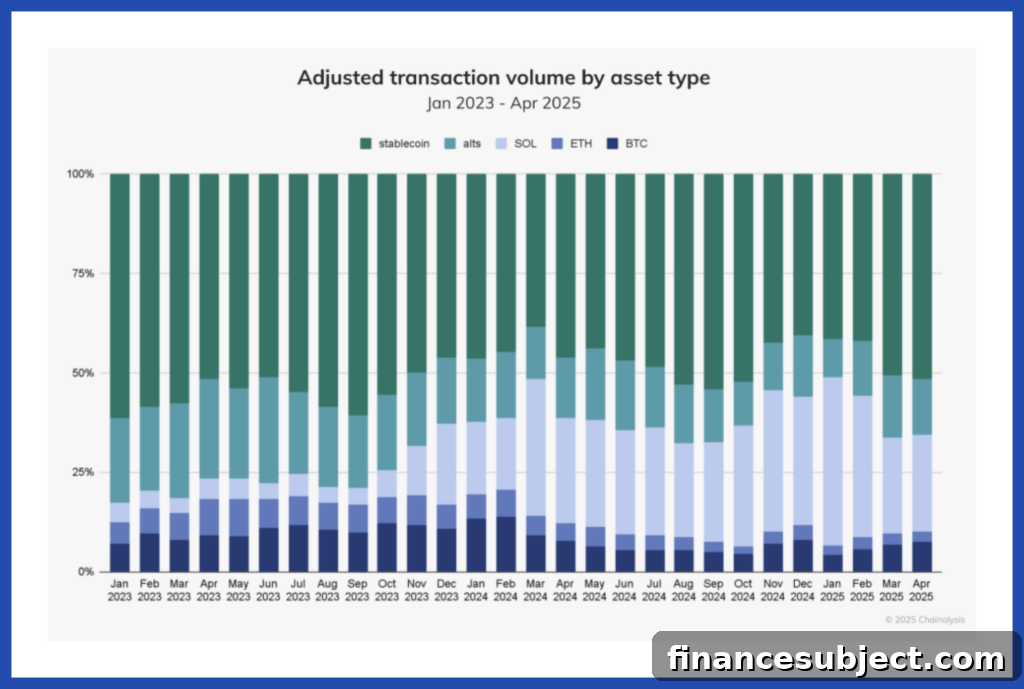
From a policy standpoint, regulators worry that inadequately backed stablecoins could create systemic risks. Clear, enforceable rules that require adequate backing and transparency would likely boost confidence, encourage broader use, and make it easier for people and institutions to transact and hold value within the crypto ecosystem.
Crypto price swings are common
Cryptocurrencies such as bitcoin, ethereum, solana and others remain speculative and highly volatile. Even stablecoins carry risk if they lack sufficient backing by real-world assets. Investing in cryptocurrencies involves market, technological and regulatory risks. Consider whether crypto fits your investment goals, time horizon and risk tolerance, and be vigilant about common scams and security risks in the space.
Newsletter
Get free MoneySense financial tips, news & advice in your inbox.
Read more about crypto:
- Is now a good time to buy bitcoin?
- Will bitcoin crash in 2025?
- Bitcoin tops USD $100,000 for the first time
- Price of bitcoin hits new high after Trump victory, and more crypto news
- How to protect your crypto from hacks