
Welcome to the Canadian Crypto Observer. Financial journalist and author Aditya Nain offers perspective on market-moving headlines to help Canadian investors navigate the cryptocurrency market.
It’s 2025 and bitcoin is (still not) dead
Something curious and telling happened in 2024: commentators declared bitcoin “dead” only twice, compared with 124 such obituaries in 2017. That decline in proclamations says a lot about how mainstream bitcoin has become.
Bitcoin turned 16 on Jan. 3, 2025—the anniversary of the genesis block mined by Satoshi Nakamoto in 2009. Over the years, dozens of headlines across outlets such as The New York Times, Financial Times, The Guardian and The Atlantic once wrote bitcoin off, but that narrative has faded as the asset matured. From 2017 onward, the frequency of “bitcoin is dead” articles has dropped significantly, reflecting broader acceptance and institutional engagement.
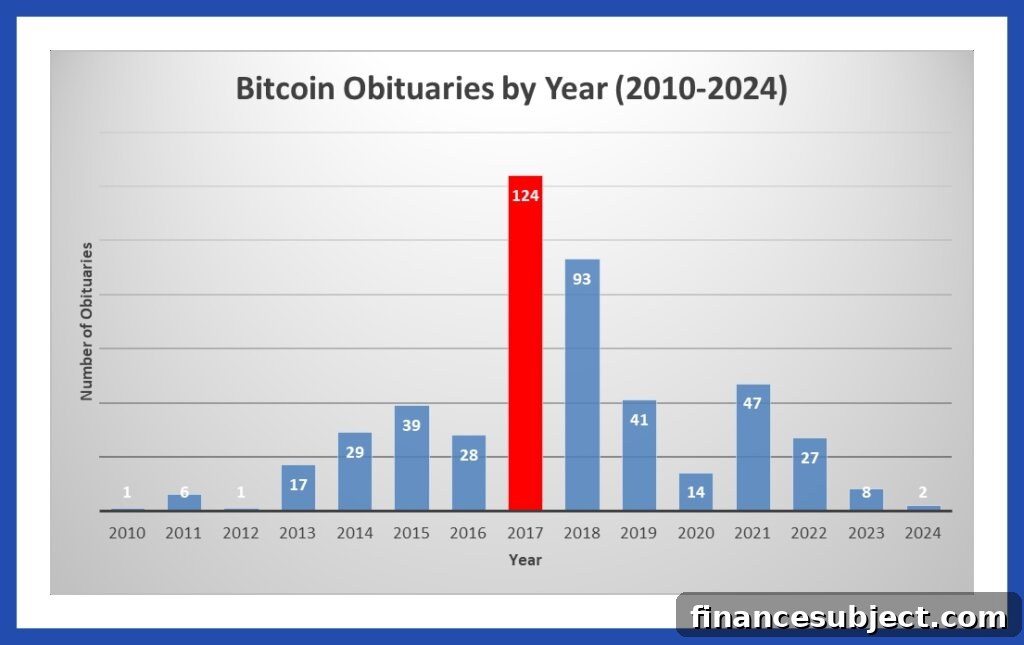
Source: Data gathered from 99bitcoins.com (as of Jan. 9, 2025)
Beyond media sentiment, institutional adoption—platforms and investment managers such as BlackRock and Fidelity moving into crypto-related offerings—has helped cement bitcoin’s status as a resilient financial technology and an asset class to watch in 2025.
Will crypto crash in 2025?
Bitcoin may not be dead, but after reaching US$100,000 in early December 2024, many investors ask: is bitcoin a bubble? Will it correct sharply in 2025, or will the bull run continue?
Predicting short-term moves is impossible, but many analysts remain bullish on the long-term trend. For example, some Wall Street analysts publicly forecast much higher targets for bitcoin in 2025—including scenarios where the price might touch US$250,000—while cautioning that volatility is likely.
Short-term headwinds could include inflationary pressures from trade policy changes, and strong U.S. economic data that could prompt the Federal Reserve to delay interest-rate cuts. Historically, tighter monetary policy tends to be negative for risk assets, including bitcoin, so macroeconomic and policy developments will be important drivers of price action in 2025.
What happens when bitcoin halves?
Another reason 2025 is pivotal for crypto investors is the halving cycle. Every four years, the bitcoin network reduces the block reward by 50%, cutting the rate of new supply entering the market. Scarcity rules are coded into bitcoin’s protocol: there will only ever be 21 million BTC.
Halvings are considered bullish by many investors because, if demand remains steady or grows while new supply slows, the market price can appreciate. The most recent halving occurred in April 2024; the next scheduled halving is expected in mid-2028.
Current mining and supply statistics provide useful context:
| Total BTC ever | 21 million |
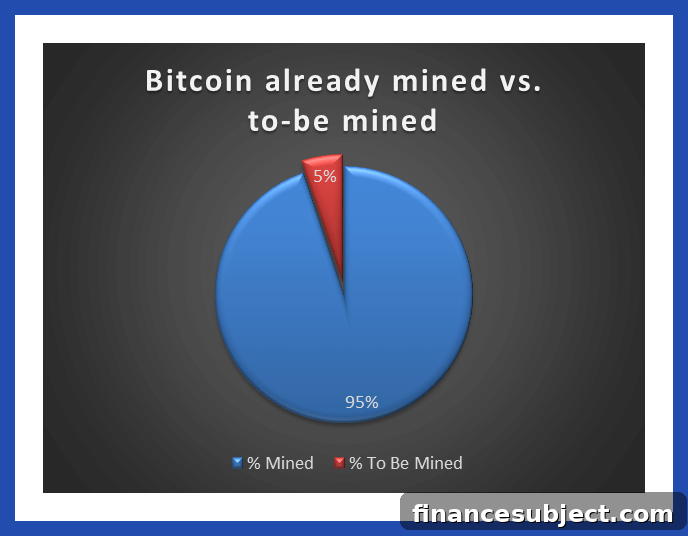
| Already mined | 19,927,250 |
| To be mined | 1,072,750 |
| % mined | 94.9% |
| % to be mined | 5% |
Historically, bitcoin’s market-cycle peaks have often arrived about a year after a halving—typically in November or December. Past cycles include November 2013 after the 2012 halving, December 2017 after the 2016 halving, and November 2021 after the 2020 halving. Whether the December 2024 high of roughly US$108,000 marks the cycle peak or a stepping stone to higher levels later in 2025 remains to be seen.
| Halving date | Bitcoin market-cycle peak | Approximate BTC peak (USD) | % gain from the previous high |
|---|---|---|---|
| November 2012 | November 2013 | $1,200 | n/a |
| July 2016 | December 2017 | $20,000 | 1,566% |
| May 2020 | November 2021 | $72,000 | 260% |
| April 2024 | ? | Current high: $108,000 | 50% so far |
Best ways to buy crypto in Canada in 2025
Whether you’re new to crypto or already invested, Canadians have several straightforward ways to gain exposure to bitcoin, ethereum and other digital assets. Your choice should reflect your goals, tax situation and risk tolerance.
Options include:
- Buy coins directly on an exchange: Purchase bitcoin, ethereum, solana and other tokens through a regulated crypto exchange or app. Once acquired, you can keep assets on the exchange or transfer them to a private wallet for greater control.
- Invest in crypto ETFs: Canadian-listed crypto ETFs either hold only crypto (bitcoin or a mix of bitcoin and ethereum) or include a small crypto allocation inside a diversified fund. ETFs offer easier access and can be held in registered accounts.
- Buy publicly traded crypto-related stocks: Invest in companies focused on mining, staking, exchanges, infrastructure and fintech. Examples of publicly traded entities include firms listed on Canadian exchanges and U.S. markets, which give exposure to the broader crypto ecosystem.
My preferred approach for many Canadian investors is using crypto ETFs for two main reasons: they hold actual crypto for direct exposure, and they are eligible for tax-advantaged accounts such as a TFSA, RRSP or FHSA, which can improve tax efficiency.
It’s tax season—here’s what you need to know
The Canada Revenue Agency treats cryptocurrencies as commodities. Selling crypto can trigger a capital gain or loss. For tax purposes, 50% of any capital gain is included in your taxable income and taxed at your marginal rate.
If you sold crypto in 2024, you must report those gains or losses on your tax return. For detailed guidance on record-keeping and reporting, consult CRA resources or a tax professional.
Example: If you bought 1 BTC for $62,722 on Jan. 8, 2024, and sold it for $144,733 on Dec. 14, 2024, the capital gain would be $82,011. The taxable portion (50%) is $41,005.50; at a hypothetical 30% marginal rate, tax owed would be $12,301.65. This illustrates how capital-gains reporting works for substantial crypto transactions.
| Details | Value (CAD) | |
|---|---|---|
| Purchase price | Amount spent to buy 1 BTC | $62,722 |
| Selling price | Amount received for 1 BTC | $144,733 |
| Capital gain | Selling price – Purchase price | $144,733 – $62,722 = $82,011 |
| Taxable capital gain | 50% of capital gain | $82,011 x 50% = $41,005.50 |
| Marginal tax rate | Hypothetical tax rate applied | 30% |
| Tax owed | Taxable capital gain x Tax rate | $41,005.5 x 30% = $12,301.65 |
Capital gains tax uncertainty for large gains
For most taxpayers, calculating capital gains is straightforward if transaction records are complete. However, for very large gains—above $250,000—changes announced in 2024 may affect how much of those gains are taxable. Specifically, gains above that threshold could be subject to a higher inclusion rate of two-thirds (66.67%) instead of the standard 50% for the portion above $250,000.
There is ongoing administrative and legislative uncertainty about the timing and implementation of these changes. Investors with significant crypto holdings should monitor official guidance from the Canada Revenue Agency and consult a tax advisor about potential implications.
Crypto price swings are common
Cryptocurrencies remain speculative and prone to sharp price swings. While the long-term story may look attractive to some investors, deep and sudden bear markets are part of crypto’s history and should be expected going forward.
Always match your crypto exposure to your financial goals, time horizon and risk tolerance. Invest only what you can afford to lose, keep accurate records for tax purposes, and stay vigilant against common crypto scams.
Newsletter
Get free MoneySense financial tips, news & advice in your inbox.
More about crypto:
- Bitcoin tops USD$100,000 for the first time
- Price of bitcoin hits new high after Trump victory, and more crypto news
- How Coinbase is reshaping Canada’s crypto landscape
- How to protect your crypto from hacks