
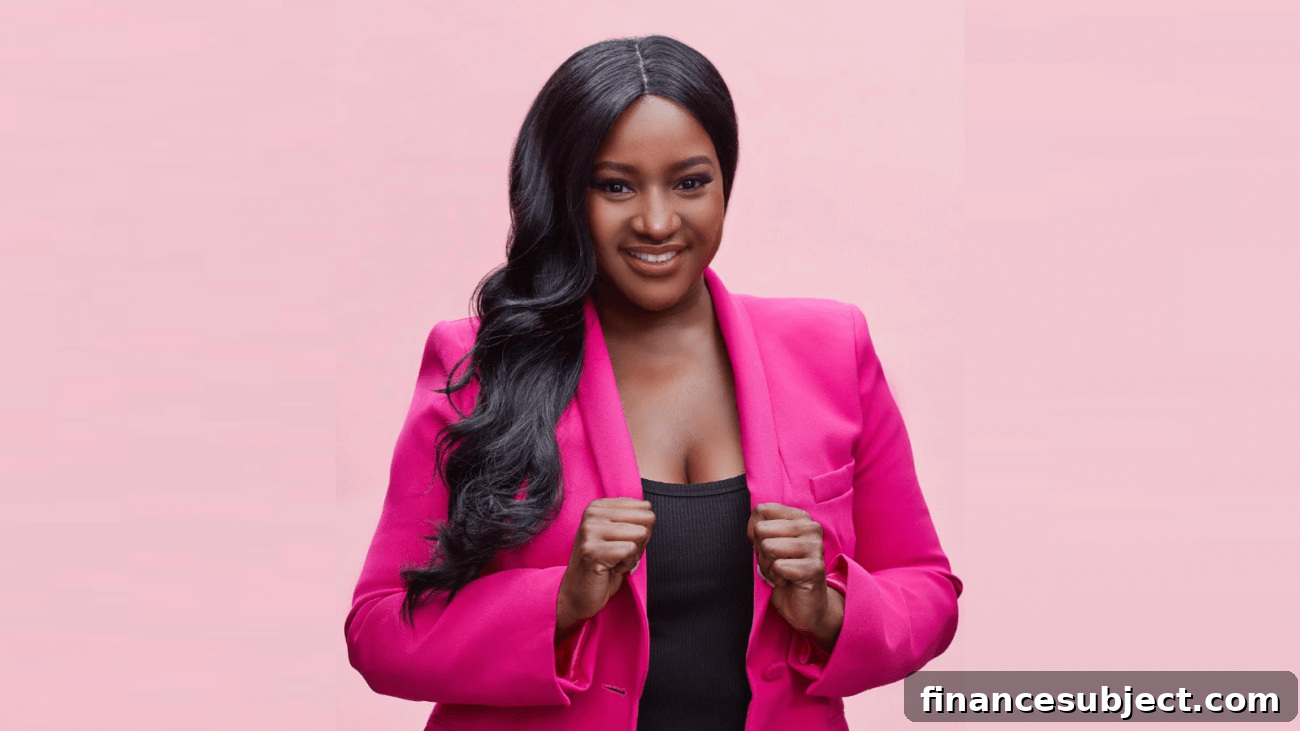
Franchise founder Nathalie Smith still remembers the joy on guests’ faces when they left the spa where she once swept floors and answered phones. Years later, she discovered a way to recreate that feel-good, big-reveal moment through eyelash extensions. After saving from her property management business and taking technical courses in her spare time, she opened a small eyelash salon in a third-floor unit in Toronto. That single location expanded into a six-location franchise across the Greater Toronto Area, now known as MYNC (pronounced “mink”), a place “where guests socialize while getting pretty in a wink.”
In October, North American franchise Blo Dry Bar acquired MYNC. Smith remains brand president, helping to guide new franchisees as MYNC prepares for a nationwide rollout. She believes you can turn passion into profit by pursuing work you truly love. Below are her insights on money, business growth and the lessons she’s learned along the way.
Who are your money or finance heroes?
Michael Lee-Chin—my family even jokes that we might be related. His story inspires me: an immigrant who rose from humble beginnings to become a billionaire and a philanthropist. That combination of success and giving back is powerful.
How do you like to spend your free time?
Free time is rare right now since we’ve partnered with Blo Dry Bar and are focused on expanding the MYNC franchise. That’s the entrepreneur’s life—work and personal time often blend. When I do get time away from the business, you’ll find me hiking the Bruce Trail with my dog Lowry—named after the former Toronto Raptors point guard.
If money were no object, what would you be doing right now?
I’d be giving more away. I’m proud of launching a $10,000 grant supporting female entrepreneurship—MYNC will award ten of those—but if money were no object I’d fund many more grants. Philanthropy is a priority for me.
(Learn more about how to apply for a grant.)
What was your earliest memory about money?
Raised by a single mother who had me at 17, we were happy though we had very little. Early on I realized money often equals options—or a lack of them.
What was the first thing you remember buying with your own money?
I saved up and ordered something from the Consumers Distributing catalogue—probably a toy.
What was your first job?
I scooped ice cream at Laura Secord. I’m pretty sure my first paycheque bought me a pair of shoes.
What was the biggest money lesson you learned as an adult?
Early on, I felt too busy to track expenses closely—I wore many hats while building the business. When revenue was coming in it felt fine, but learning to balance the books regularly gave me clarity about where to invest and when to pull back. That discipline made all the difference.
Would you rather receive a large sum of money all at once or a smaller amount regularly for life?
A large sum up front. It opens immediate investment opportunities.
What is the biggest misconception people have about growing money?
That entrepreneurs are inherently high-risk takers. Franchising, for example, offers a proven business model, a recognizable brand and systems already in place. That’s not reckless risk—it’s calculated and strategic.
Can you share a money regret?
I don’t dwell on regrets. Obstacles teach you lessons; they’re part of the journey. Don’t let fear of regret stop you from trying.
What does the word “value” mean to you?
Value is anything you hold in high regard—it’s not always monetary or measurable. I spend on experiences and quality treats, especially fine chocolate—I’ll always choose the best.
What was the first major purchase you made as an adult?
My first house, at 26. I sold it years later for what felt like a healthy profit and rented while I launched the business. When I re-entered the market years later, prices had risen and my buying power was reduced—so there’s a small regret there.
What’s your take on debt?
Debt is a tool that should be controlled, not feared. Used for assets that appreciate or to improve earning potential, it makes sense. But accumulating debt to impress others—especially on consumer goods—is unnecessary.
What is the last money-related book you read?
The Wealthy Franchisee. I’ve read it several times. It’s very relatable and a must-read for current or prospective franchisees.
What is something you always have in your wallet?
A photo of my Gram. She was a Chinese-Jamaican Canadian immigrant and an entrepreneur herself. Though she’s no longer with us, she remains a guiding presence, and I keep small keepsakes of hers close.
What was your most recent splurge?
A vintage pair of Chanel earrings.
What is your favorite possession?
A centuries-old baby grand piano by Heintzman & Co. in Toronto. It lives in its own room and feels like family. I’m not a great player yet, but I hope to improve.
What is your next money goal?
My focus is helping others reach their financial goals through mentorship and angel investing. I’ll be coaching our first MYNC franchisees personally. I’ve worked every role in our lash and brow bars—from stylist to front desk to manager and even janitor—so I can guide them through every aspect of the business.
My MoneySense quick questions
Rent or own?
Own. It’s a challenging goal for many, but make ownership a priority if you can.
Buy or lease?
Buy. I don’t like paying penalties or restrictions that come with leases—especially when life throws unexpected bumps in the road.
Save or invest?
Both. Save for short-term needs and emergency funds; invest for long-term growth and diversify your holdings.
Budget or not?
Always budget. It’s essential for clarity and control.
Read more My MoneySense profiles:
- “Dragons’ Den” tech titan Michele Romanow on taking risks and betting on yourself
- How dating expert Damona Hoffman handles her relationship with money
- Journalist Renée Sylvestre-Williams on the advice she wished she had in her 20s and more
- Ambitious Adulting’s Liz Enriquez on growing up low-income, the worst financial advice she’s received and more