
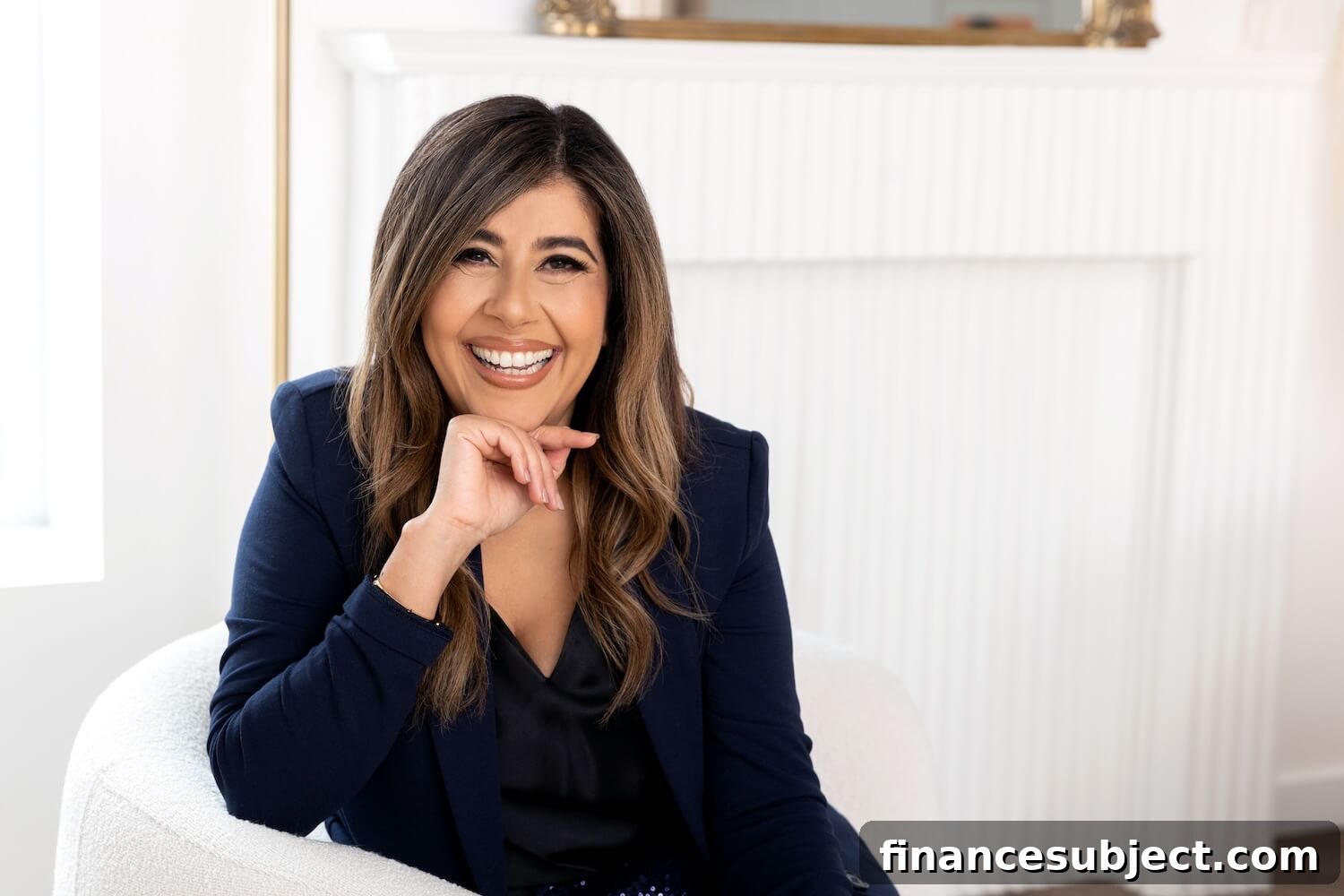
Success begins with small daily habits—one of the most powerful, says Hina Khan, is waking up early. A Peak Performance Mindset Coach and former psychotherapist, Khan helps clients reprogram their subconscious minds to reach and surpass their goals. A graduate of the Centre for Training in Psychotherapy in Toronto and ranked among the top 1% of executive coaches at the Proctor Gallagher Institute, she has guided thousands through mindset shifts that increase productivity and wellbeing. Khan lives in Toronto with her husband, two sons and two rescue dogs.
Who are your money heroes?
My money hero is Bob Proctor. I met him in 2014 and, since we lived in the same city, we became friends. He became one of my greatest mentors and taught me foundational lessons about money—what it truly represents, the law of compensation, and how personal growth links to financial reward.
The law of compensation has three parts: the demand for what you offer, your ability to deliver it, and the difficulty of replacing you. The most actionable piece is improving your ability to do the work. That’s why I tell people to get their reps in: keep learning, refining your craft and becoming more effective. Continuous improvement raises your value and opens the door to greater financial returns.
How do you like to spend your free time?
I don’t use the term “free time” the way many people do. I view time as a series of activities, and I make conscious choices about how I spend it. Writing on weekends, for example, isn’t “working” to me—it’s an activity I enjoy. Time itself is neutral; we can’t manage it, only the activities that fill it. I keep open space in my calendar intentionally and treat all of it as optional and available for meaningful pursuits. In short: I have the freedom to choose how I spend my time.
If money were no object, what would you be doing right now?
Honestly, I would be doing exactly what I do today. Each weekday I run The Rise calls from 6 a.m. to 7 a.m. EST. We begin with written goals, followed by teaching and strategies to create a peak state for the day. That peak state is about clarity and alignment—not hardened hustle. When people start their day connected to a clear goal, they work from purpose rather than reactivity, and they often accomplish more in the morning than many do in a full day. Whether or not finances were a concern, I would still get up for those calls.
What was your first memory about money?
My earliest impressions of money were tied to tension and conflict at home. That created a belief that money causes problems and can damage relationships. As an entrepreneur, that influenced my early discomfort with raising prices and accepting payment. Over time I reframed money as a neutral tool that amplifies who you are—so selling services and receiving compensation no longer triggers negativity.
What’s the first thing you remember buying with your own money?
Probably records or Duran Duran posters—I was obsessed with the band.
What was your first job?
My first job was asking customers if they wanted a Hudson’s Bay credit card. It was my first sales role, and I likely spent my first paycheck on clothes.
What was the biggest money lesson you learned as an adult?
The most important lesson was to trust my intuition. I once invested in something that didn’t feel right and, despite early doubts, went ahead. The experience brought guilt and disappointment, and it taught me to listen to my gut—especially with investments. That intuition has proven reliable every time since.
What’s the best money advice you’ve ever received?
That money is energy: it goes where it’s welcomed and stays where it’s invited. Money itself is neutral and tends to amplify what already exists in a person. In practical terms, focus on building wealth and creating value—money will follow.
What’s the worst money advice you’ve ever received?
That making money is inherently hard. That belief breeds a scarcity mindset: if money comes easily, it must not be deserved, and therefore it can’t be kept. I’ve learned you can create revenue through either struggle or ease; I choose the latter—working with clarity and aligned identity rather than grinding indefinitely.
Would you rather receive a large sum of money all at once or a smaller amount regularly?
Both are fine. I don’t limit how money can come. It can be expected or unexpected, large or recurring—what matters is being open to receiving.
What do you think is the most underrated financial advice?
Examining your beliefs about money is hugely underrated. Your self-image dictates what you can hold financially—you can’t out-earn your identity. If you want more income, first upgrade how you see and value yourself.
What is the biggest misconception people have about growing money?
That growth always requires more work. Many operate under an outdated hustle paradigm. I teach clients that income doesn’t solely come from one source; it flows through people and can be multiplied by improving self-worth and expanding identity. As their mindset evolves, so does their net worth.
Can you share a money regret?
I don’t call them regrets—just lessons. After investing in a course that didn’t feel aligned, I learned to honor my intuition. I completed the program and made the most of it, but the experience reinforced that trusting myself is the best investment.
What does the word “value” mean to you?
Value includes financial return and what I call psychic income—benefits beyond money. For example, I often fly first class for the ease, lounge access and priority boarding. That comfort and time savings are worth the price to me.
What’s the first major purchase you made as an adult?
My husband and I bought our first home together. Other notable investments were professional development and four first-class tickets to Australia—choices that reflected both personal and professional values.
What’s your take on debt?
I’m neutral on debt. It’s simply a way to structure payments over time. The decision depends on the context and the terms.
What was your most recent splurge?
I don’t label purchases as “splurges.” I focus on value and alignment, so things that might look like splurges to others feel normal to me if they support my life or well-being.
What is the last money-related book you read? What did you think of it?
The last book I read was 10x Is Easier than 2x (Hay House, 2023) by Dr. Benjamin Hardy and Dan Sullivan. I recommend it to clients: its central message is that expansion begins with identity. To grow financially, you must let go of a previous version of yourself—even if it served you well—and step into a new identity aligned with larger goals.
What is something you always have in your wallet?
My driver’s license.
What is your favourite possession?
I prefer experiences to things. One favourite memory is taking ten family members to Jamaica and staying in a luxury villa—that shared experience was priceless.
What’s your next money goal?
To reach $1 million in monthly sales.
Newsletter
Get free MoneySense financial tips, news & advice in your inbox.
Quick questions
Rent or own?
Depends on the situation.
Buy or lease?
Depends on the context and goals.
Save or invest?
Both—savings for safety, investing for growth.
Budget or not?
Generally not strictly—my approach is value-driven rather than rigid budgeting.
Read more:
- New Money Nate urges followers to invest in themselves
- Ms. Money and Math adds up the good advice and subtracts the bad
- Taking risks and trusting your gut: Julie Barlow’s self-employment tips
- “My take on debt has changed over time”: Eva Wong on saving and investing