
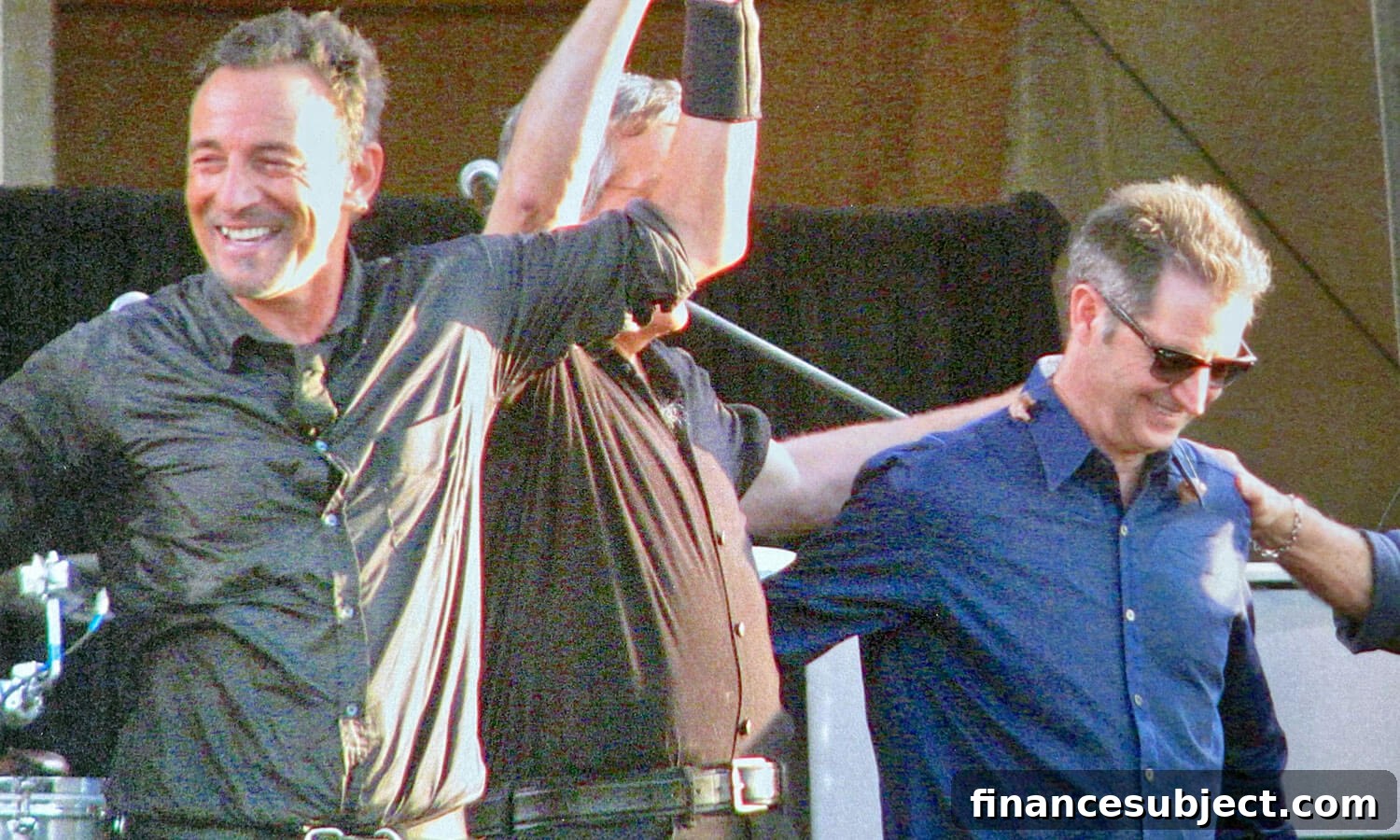
In a previous MoneySense column I explored how shifting spending from things to experiences can create deeper, longer-lasting satisfaction. Here’s a personal example that puts that idea to the test. Before I dive in, think back to your favourite concert: who was on stage, where were you, who was beside you, what opened the show and what encore left everyone buzzing?
Now let me tell you my story.
Why music is a valuable “investment”
Music played a constant role in my childhood. Long drives and evenings at home were scored by songs like “Fishing in the Dark,” “Copperhead Road,” “Summer of ’69” and “Bad Moon Rising.” Those tracks still conjure warmth and nostalgia. Music does something unique: it connects past and present, bringing specific memories to life while helping us fully inhabit the moment. That capacity to create and sustain powerful feelings is one reason experiential spending—concerts, trips, shared adventures—often yields more enduring happiness than buying things.
Bruce Springsteen’s voice was part of our household soundtrack. His blend of vivid lyrics, energetic guitar and pounding drums became woven into family life. My two brothers and I had seen the E Street Band live, but our parents hadn’t—until we surprised them.
In 2014 Springsteen was playing at the New Orleans Jazz & Heritage Festival. Our parents loved New Orleans, so we booked tickets and planned a family trip. We budgeted for travel and lodging, found affordable options, and spent the months leading up to the concert revisiting old performances and guessing the set list. The anticipation became part of the fun.
On May 3, 2014, we arrived at the festival’s main stage hours early to secure a spot in the sun. The heat didn’t matter—what did was the moment Bruce walked on stage. For the next three hours we sang, swayed and soaked up the music. The show ended, but the memory never did. Even years later, recollecting that night brings genuine joy and gratitude.

Why paying for experiences mattered
Why share this? Because that New Orleans concert is a clear example of how experiences can shape long-term well‑being. The trip cost roughly $2,000 per person—meaningful, but small compared with common ongoing expenses like car ownership. For instance, the average annual cost of owning a car in Canada is often cited around $12,000. That comparison doesn’t mean we should stop driving; it’s a prompt to evaluate trade-offs. Does a pricier car deliver more lasting life satisfaction than a reliable, lower‑cost vehicle? As Ramit Sethi writes in I Will Teach You to Be Rich: “Spend extravagantly on the things you love and cut costs mercilessly on the things you don’t.”
Academic research supports prioritizing experiences. Amit Kumar, a marketing and psychology researcher, has shown that spending on experiences tends to create deeper and more durable satisfaction than spending on material goods. The effects are seen before, during and after the event—through anticipation, immersion, and memory—making experiential purchases uniquely valuable.
Five reasons spending on experiences boosted my happiness
- Benefits extend across time. Research identifies three utilities for experiences: anticipatory (the pleasure of looking forward), experiential (enjoyment during the event) and recall (the lasting joy when remembering it). Anticipation of a concert fuels excitement, while material purchases often bring impatience or anxiety during the wait.
- Stronger social bonds. Shared experiences build and deepen relationships. Concerts create moments of connection that become shared stories, and those social ties are central to long-term well‑being.
- They shape identity. Experiences contribute to who we are. They form the narrative of our lives more than possessions do, helping us craft meaningful personal stories.
- Different kinds of regret. Material purchases can trigger buyer’s remorse—regret of action—while experiential regrets usually take the form of wishing we had done something instead—regret of inaction. That difference often favors experiences.
- They increase gratitude. People generally report greater gratitude for experiences than for things. Gratitude is linked to positive social behaviours and improved mental health, so this is a tangible benefit of experiential spending.
What I took away from that concert

Seeing Springsteen in New Orleans reinforced a simple takeaway: spending intentionally on experiences can enrich our lives. That doesn’t mean reckless spending or ignoring financial responsibilities. It means considering whether some discretionary dollars currently going to material goods might deliver greater, longer‑lasting satisfaction if redirected toward meaningful experiences.
Money is about choices. Over a lifetime those choices shape whether we feel we’ve lived well. If you want to maximize the chances of looking back and saying, “I lived a good life,” think about how experiences factor into your budget. For me, Kumar’s research and my own memories guide how I allocate discretionary income—balancing necessities with investments in experiences that create lasting happiness.
If you’d like to hear more, I interviewed Amit Kumar on episode #150 of The Most Hated F-Word Podcast, where we discuss the science of spending on happiness: experiences versus material possessions.
Read more A Rich Life columns:
- What is the PERMA model? Can it help Canadians to spend better?
- Does money buy happiness?
- How to live a rich life
- What are money scripts? What’s yours?