
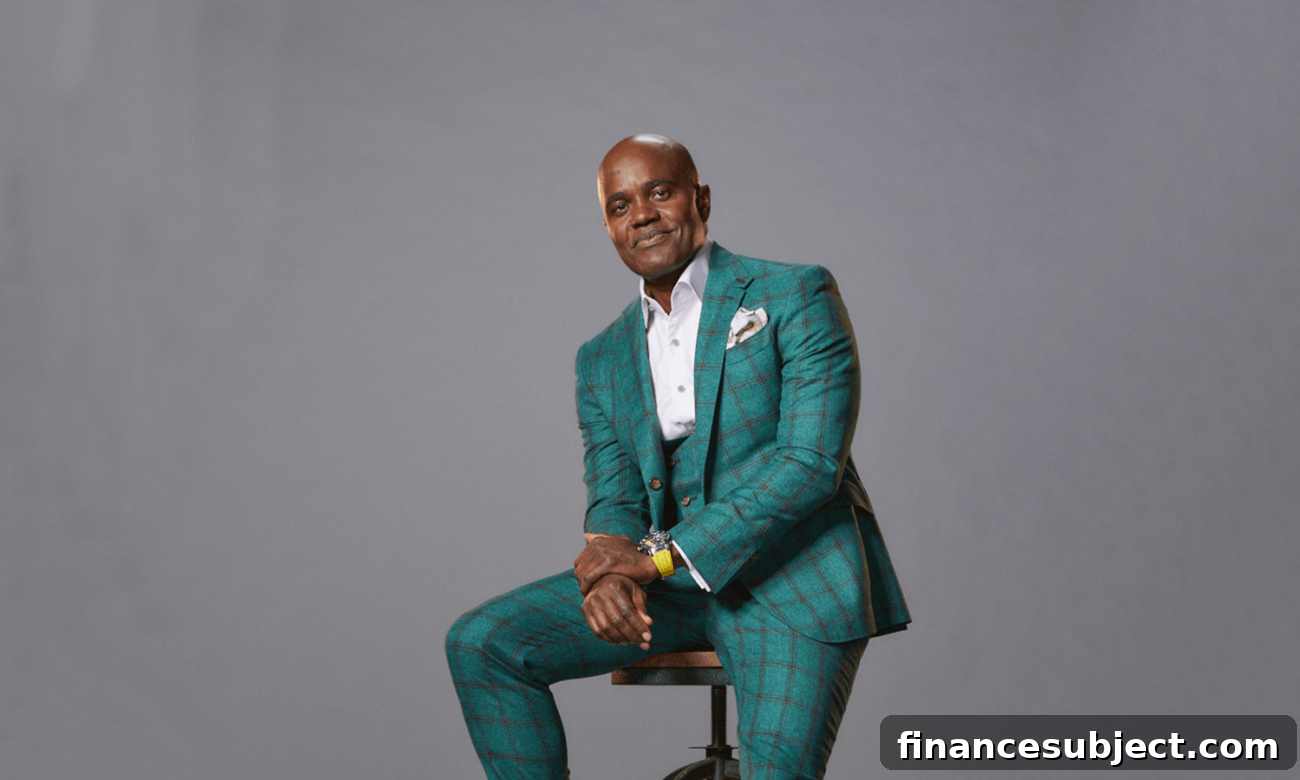
Founder, philanthropist and Dragons’ Den star Wes Hall emigrated from rural Jamaica to Canada as a teenager. The night he arrived he resolved to succeed, and despite the obstacles of moving to a new country, he kept that promise. His journey — from working in a mailroom to founding investment firms and leading anti-racism initiatives — offers practical lessons about determination, career development and money management.
In his memoir, No Bootstraps When You’re Barefoot (Penguin Random House, October 2022), Hall recalls wearing a suit on his first day as a mail clerk at a law firm. While others in the mailroom dressed casually, he learned quickly that corporate impressions matter. Junior lawyers in the elevator assumed he was part of their circle; that motivated him to read after hours in the firm’s library and to learn the language of business. Those early efforts laid the groundwork for his later success as an entrepreneur and advisor.
Hall went on to launch a consulting business, open a private equity firm — WeShall Investments Inc. — and co-found an advisory firm, Kingsdale Advisors. He now chairs the board of the BlackNorth Initiative, an organization focused on ending systemic racism that affects Black Canadians. Below, Hall shares the financial habits, regrets, and principles that shaped his path.
Who are your financial heroes?
Robert Smith. I admire his success as an investor and his commitment to giving back to uplift the Black community.
How do you like to spend your free time?
I spend it on vacation with family — time away together is a priority.
What was your earliest memory about money?
Seeing my grandmother stretch limited resources to feed her ten grandchildren taught me early lessons about scarcity, prioritizing needs, and the value of resourcefulness.
What’s the first thing you remember buying with your own money?
A 1980 Dodge Omni.
What was your first job?
I delivered The Toronto Star. I deposited my first paycheque and developed a habit of saving early on. Growing up in a lower-income household taught me to save for essentials, even if not how to invest. That early savings helped when I moved out at 18 — it covered the initial months of rent and a down payment.
What was the biggest money lesson you learned as an adult?
Don’t become emotionally attached to an investment. Emotions can cloud judgment; disciplined analysis and exit strategies matter more than sentiment.
What’s the best money advice you’ve ever received?
“Don’t be married to money.” Money should serve your goals and values, not the other way around — it’s like sand in the palm of your hand if you hold on too tightly.
What’s the worst money advice you’ve ever received?
“If you make it, spend it.” That advice overlooks the power of capital to create future opportunities and security.
Would you rather receive a large sum of money all at once or a smaller amount regularly for life?
I prefer a lump sum I can allocate strategically. With proper planning and discipline, a large sum can be put to work more effectively than small periodic payments.
What do you think is the most underrated financial advice, tip or strategy?
“Bet on the jockey, not the horse.” Leadership and management determine whether a business realizes its potential. Good people and strong execution can compensate for other weaknesses.
What is the biggest misconception people have about growing money?
That putting money in a basic savings account will make you rich. Banks benefit when people treat deposits as wealth accumulation rather than opportunities to invest. While banks are essential, optimizing returns often requires investing beyond basic savings products.
Can you share a money regret?
Concentrating too much capital in one investment or sector. Diversification is not glamorous, but it reduces risk and helps you sleep at night. You may forego a home run, but you avoid striking out.
What does the word “value” mean to you?
Value is about durability, quality and long-term benefit. For example, a tailored suit may cost more up front, but superior fabric and fit mean it lasts a decade and travels well without frequent cleaning. Value is paying more today to avoid higher costs over time.
What’s the first major purchase you made as an adult?
My first house — I paid $112,000, stretching my finances to afford it. It proved to be a pivotal investment: five years later I sold it for double and used the equity to start Kingsdale. Over time that property’s value rose significantly.
What was your most recent splurge?
A brand-new G-Wagon.
What is the last money-related book you read?
Values by Mark Carney. I appreciated its focus on what we choose to value — not just financial measures but relationships and societal priorities. As Oscar Wilde (and later Jay Z) put it, “Nowadays people know the price of everything, and the value of nothing.”
What is something you always have in your wallet?
My Nexus card.
What is the best business asset?
Smart people. My business depends on talented, committed people who show up and produce results. Without them, there are no assets to monetize.
What’s your next money goal?
I don’t focus on accumulating more for its own sake anymore. My priority is using resources to drive social change and create lasting impact.
My MoneySense quick questions
Rent or own?
Own. Homeownership builds equity you can leverage for education, investment or launching a business. Renting primarily benefits property owners.
Buy or lease?
It depends on your liquidity and goals. I usually buy because I have the cash, but leasing can be a sensible option when liquidity is tight or interest rates make ownership costly. Low rates can also create investment opportunities that outpace the cost of leasing.
Save or invest?
Invest. While saving is important for short-term security, long-term wealth is built through investing. Savings kept in low-yield accounts rarely generate significant wealth on their own.
Budget or not?
Budget. A budget clarifies spending habits and forces priorities. Every business and government uses a budget; it’s a basic discipline for managing resources effectively.
Read more My MoneySense:
- Shannon Lee Simmons on emotional return on investment and personal debt
- Kerry K. Taylor on learning from buyer’s remorse
- Alyssa Davies on CoastFIRE, the value of time, and financial priorities
- Dragons’ Dentech entrepreneur Michele Romanow on risk-taking and self-belief