
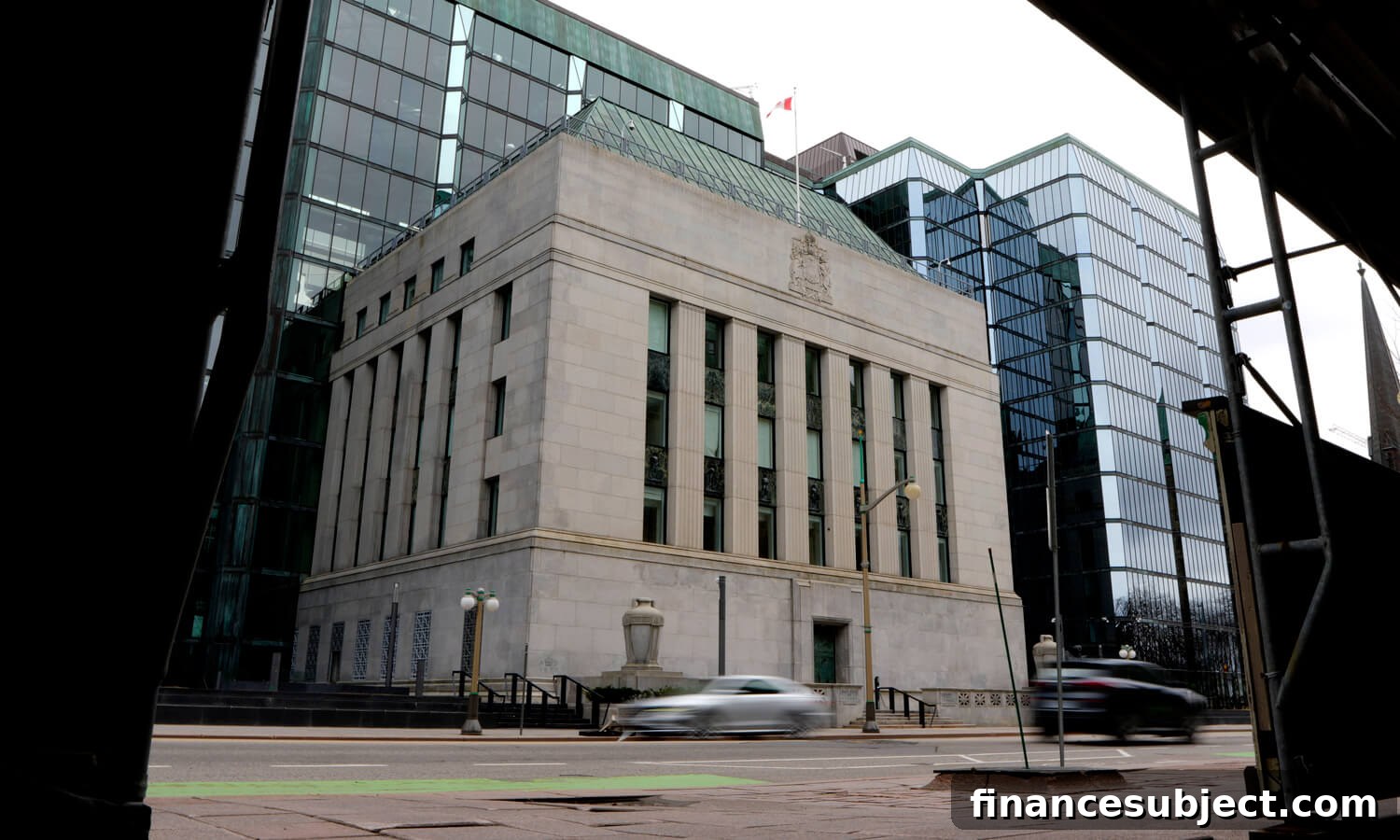
The Bank of Canada (BoC) left its benchmark policy rate unchanged at 2.75% on Wednesday, June 4. In announcing the decision, Governor Tiff Macklem emphasized that policymakers are awaiting clearer evidence about how recent and threatened tariffs will affect the Canadian economy.
“Uncertainty remains high,” Macklem said in prepared remarks. “At this decision, there was a clear consensus to hold policy unchanged as we gain more information.” The central bank therefore paused after a prior hold, choosing to gather further data before adjusting monetary policy.
Ask MoneySense
Have a personal finance question? Submit it here.
Expected outcome amid tariff uncertainty
Markets and economists broadly expected another hold. Since the Bank’s April decision there have been some positive developments on the tariff front, Macklem noted, but trade restrictions remain in place and additional import duties have been threatened. On Wednesday, new 50% U.S. tariffs on steel and aluminum came into effect, doubling the previous rate and increasing uncertainty for trade-sensitive sectors.
The BoC uses a higher policy rate to restrain spending and curb inflation, and a lower rate to stimulate economic activity. Disruptions to global trade tied to the United States’ tariff actions and Canada’s retaliatory measures can simultaneously push prices higher and slow growth, complicating the Bank’s policy response.
Emphasis on risk and a cautious approach
Macklem said the Bank would be “less forward-looking than usual,” meaning it will place more weight on risks and incoming data rather than relying solely on a single central forecast. In April, the Bank published two illustrative scenarios rather than a single central scenario to reflect the range of possible outcomes from different tariff developments.
The governor acknowledged a “diversity of views” among the Bank’s governing council about the future path of monetary policy. On balance, however, the council judged that there is scope to lower the policy rate if evidence emerges that the tariff dispute is weakening the economy while inflation remains under control.
“We will continue to support economic growth while ensuring inflation remains well controlled,” Macklem said, summarizing the Bank’s intent to strike a careful balance between supporting activity and maintaining price stability. The central bank will closely monitor how the tariff dispute affects inflation and other key indicators as it shapes future decisions.
Timing of the next decision
The Bank of Canada’s next interest rate announcement is scheduled for July 30, alongside its quarterly monetary policy report. Several private-sector economists are already projecting possible rate cuts if labour market conditions deteriorate and inflation pressures ease. For example, CIBC chief economist Avery Shenfeld noted in a client note that, should the jobs market show more strain and inflation excluding tariff-affected items soften, a quarter-point cut in July could follow, with a further cut possible in September.
Despite stronger-than-expected GDP in the first quarter and an annual inflation rate that fell below 2% in April, the BoC sees concerning signs beneath the surface of those headline figures. That mix of stronger recent activity and growing downside risks from trade has reinforced the Bank’s patient stance.
Where inflation stands
Annual inflation slowed to 1.7% in April, largely influenced by the federal government’s removal of the consumer carbon price, which lowered pump prices. Excluding tax changes, inflation would have been 2.3% in April, up from 2.1% in March and exceeding the Bank’s expectations. The central bank described the latest price data as showing some “unexpected firmness,” particularly in measures of core inflation.
Macklem cautioned that it is still too early to detect the full impact of retaliatory tariffs on consumer prices, but said that a resurgence in underlying inflation pressures could reflect trade disruptions.
Prospects for further rate moves
While the BoC’s decision to hold indicates a reluctance to cut imminently, several economists expect additional easing later in the year if economic activity softens and core inflation trends moderate. BMO chief economist Douglas Porter suggested that softer activity combined with milder core inflation would likely prompt further action. TD’s senior economist Leslie Preston similarly warned that, unless trade tensions are resolved, Canada’s economy could tip into recession and require more rate cuts.
First-quarter real GDP growth came in at a 2.2% annualized pace, outpacing the Bank’s forecast; the Bank attributed much of that strength to firms accelerating activity to beat impending tariffs. Macklem warned those effects would reverse, and he expects the second quarter to be notably weaker. Trade-sensitive industries are already showing some labour-market weakness, while housing resales and government spending are cooling. Although business and household spending has shown resilience in the face of U.S. tariffs, Macklem said businesses and consumers are likely to remain cautious.
Newsletter
Get free MoneySense financial tips, news & advice in your inbox.
Related economy coverage:
- Are there tariffs on Canadian goods in the U.S.?
- Missed credit payments grew by 4% in the first quarter of 2025
- Is the stock market going to crash in 2025?
- Three of Canadian banks release their earnings