
A recent EY Mobility Consumer Index study shows a renewed interest in buying a new vehicle overall, but fewer Canadian drivers now plan to choose an electric vehicle for their next purchase.
The report finds overall intentions to purchase a new car rose by 6% year‑over‑year, yet interest in electric and electrified vehicles has softened. The share of respondents who said they intended to buy a fully electric, plug‑in hybrid or hybrid vehicle within the next two years slipped to 50% this year, down from 52% in 2023.
This marks a pause in the steady rise of EV interest seen in recent years: in 2021 roughly 35% of prospective buyers in Canada were considering an electric or hybrid vehicle, and that figure climbed to 46% in 2022 before the recent flattening, the report notes.
Jennifer Rogers, leader for automotive and transportation at EY Canada, describes the change as a “flattening curve,” reflecting a cooling in momentum after the early surge of buyer enthusiasm.
Looking only at fully electric vehicles, intent to purchase fell to 15% this year, compared with 18% in 2023.
featuredSpring FinancialFast unsecured loan options, with e‑transfer delivery and transparent terms.find your rate
featuredgoPeerPre‑qualify quickly to borrow up to $35,000 with competitive rates.Find your rate
Barriers include range anxiety, high costs and lack of infrastructure
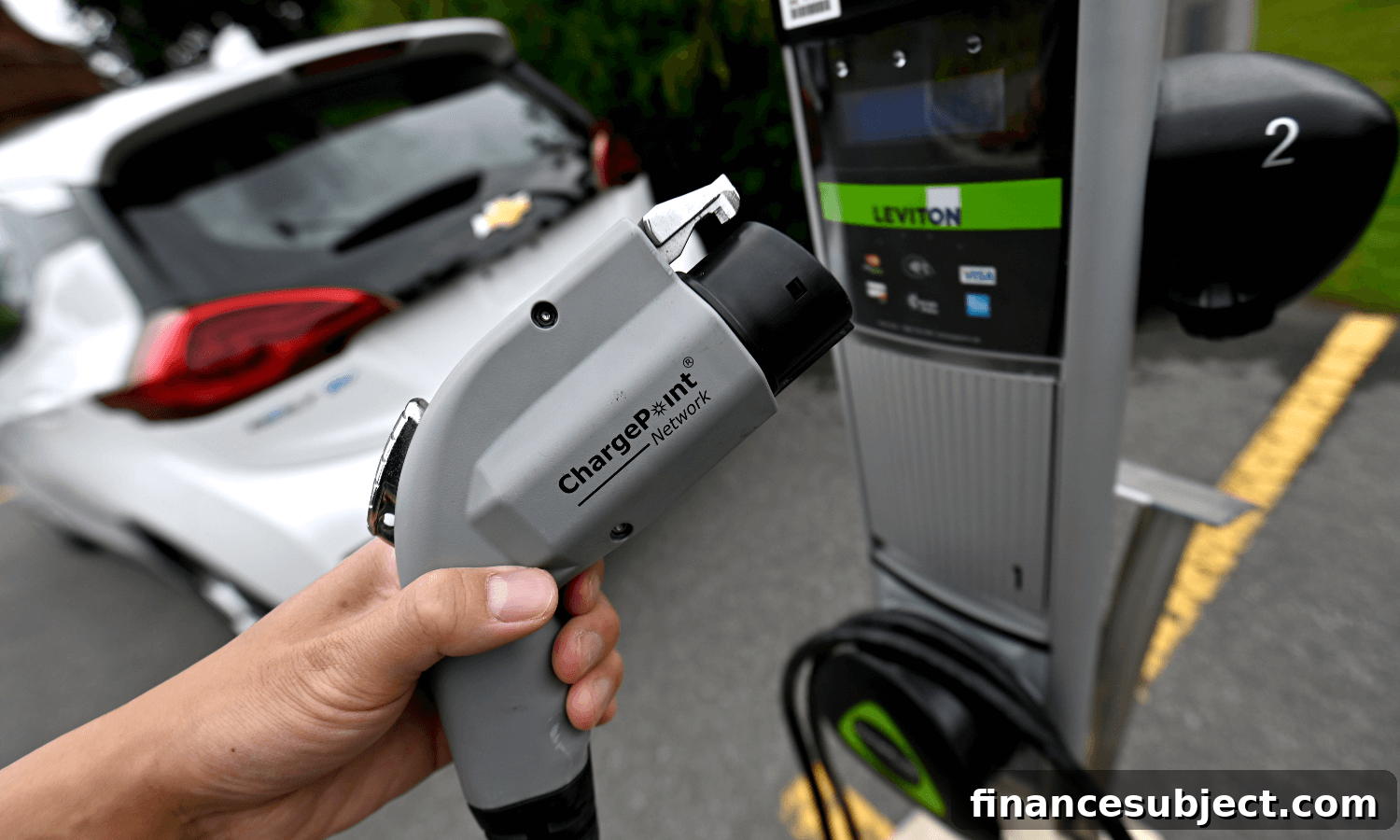
Respondents ranked limited driving range, high purchase price, costly battery replacements and patchy charging infrastructure as the top barriers to choosing an EV. Range anxiety and concerns about charging outside the home were repeatedly cited as linked issues.
“The lack of charging infrastructure and the range anxiety is sort of working hand‑in‑hand,” Rogers said, noting that many potential buyers feel uncertain about relying on public chargers when they cannot plug in at home.
Improving the public charging network and making chargers more visible and reliable would reduce range anxiety and could remove one of the main obstacles to wider EV adoption, she added.
Those infrastructure concerns are significant because Canada has set an ambitious policy goal: all new light‑duty vehicle sales should be zero‑emission by 2035. The federal phase‑out plan is staged, with 20% of new vehicle sales aimed to be zero‑emission by 2026, 60% by 2030 and full phase‑out by 2035.
Rogers warns that falling purchase intent for electric vehicles increases pressure on meeting those targets, because consumer uptake must accelerate substantially to match policy timelines.
Economic factors are also at play. Inflation and higher interest rates have tightened household budgets, making the higher sticker price of many electric models a deterrent. Data cited in the report from Canadian Black Book puts the average price of an electric vehicle around $73,000 in 2023, a level that puts many mainstream buyers out of reach.
Manufacturers are responding to shifting demand: some automakers have delayed or scaled back EV production plans as interest softens. For example, Ford postponed its original timetable for EV production at its Oakville, Ont., facility by two years, reflecting the need to align supply plans with market realities.
Resource highlight
Compare car insurance quotes and save
In under five minutes, compare personalized auto insurance quotes from Canada’s leading providers to find a plan that fits your vehicle and budget.
Powered by ratehub.ca
Government incentives not enough to bolster demand for EVs
Financial incentives and rebates have helped spur EV purchases: the EY report found that 28% of Canadians consider government incentives an important factor when choosing a vehicle. Yet incentives alone appear insufficient to drive mass adoption, particularly when affordable EV options are limited.
“Even though incentives are available for them to take … that incentive on its own probably isn’t enough to change that consumer behaviour,” Rogers said, pointing out that price sensitivity and access to charging remain fundamental hurdles.
Among buyers who do consider an EV, high gasoline prices, environmental impact and available monetary incentives rank as the most important motivators. While these factors attract early adopters, converting the next, broader segment of buyers will be more challenging.
Rogers explains that early adopters—those willing to pay a premium and adapt their routines—are readily persuaded. The next wave of buyers, however, will likely be more price conscious and more dependent on convenient charging at home or nearby, so closing the gap requires more affordable models, stronger incentives where needed, and a dependable, widespread charging network.
Newsletter
Get free MoneySense financial tips, news & advice in your inbox.
More about autos:
- Best EVs in Canada
- How to buy a car in Canada and get the best loan rate
- Should you buy or lease your new car in Canada?
- Driving underwater: Is your car worth less than what you’re paying for it?