


Media mojo
The Canadian media long celebrated Mark Carney, praising him as a “superstar” central bank governor and a strong steward of monetary policy. That warm reception, however, has not been mirrored across the Atlantic. Some British tabloids have been far less flattering, dismissing him with quips such as “more Clark Kent than Superman” as he adjusts to the spotlight at the Bank of England.
Affordable housing
Even with a reported £1.3‑million annual salary at the Bank of England, Carney’s family has faced the very real challenge of finding housing in one of the world’s most expensive cities. Earlier this year his wife, Diana, publicly noted on social media that locating a suitable home in London was proving difficult. The anecdote underlines how London’s tight housing market and high prices affect newcomers—even those with high incomes—and it humanizes the financial figure at the centre of major economic debates.
Our mediocre economy
Canada’s economy has not been booming, but it weathered the global financial crisis relatively well compared with many peers. Growth has been modest, yet the country avoided the deepest shocks that hit other economies. By contrast, parts of the British economy have remained strained and continue to face structural pressures. That contrast is central to the scrutiny surrounding Carney’s move: he left a comparatively stable environment to take the helm of a central bank confronting difficult headwinds.
The political ring
Carney’s arrival in London also fueled speculation about political ambitions. Observers and opponents alike have wondered whether a highly visible central banker might be tempted to cross into politics. In response to those concerns—and to objections from some members of Parliament—Carney reportedly gave assurances that he would not pursue political office while serving in Britain and indicated he planned to return to Canada in 2018. That promise was intended to reassure critics that his role would remain strictly technocratic and focused on monetary stability rather than partisan politics.
Hey Britain! We’re a solid “B” — you’re just a “D”
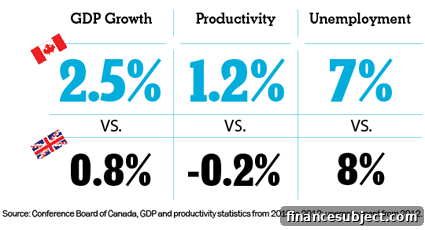
According to the Conference Board of Canada’s “How Canada Performs” 2012 economic report card, Canada ranked sixth among 16 peer countries and received an overall grade of B for its economic performance. The United Kingdom, by contrast, was placed 14th and received a D grade. The report highlighted differences in several key indicators—GDP growth, productivity and unemployment—where Canada outperformed the UK. These comparative grades serve as a snapshot of relative macroeconomic health and influence perceptions among investors, policymakers and the public.
The implications of those rankings extend beyond headlines. A stronger performance on growth, productivity and employment tends to support greater policy flexibility and stronger fiscal and monetary credibility. For Carney, the move from Canada to lead the Bank of England meant taking responsibility for an economy with lower relative metrics in those areas, and for a financial system still coping with legacy problems and ongoing adjustment. His decisions would therefore be watched not only for their technical merits but also for what they signalled about the Bank’s ability to restore confidence.
In short, Mark Carney’s tenure at the Bank of England combined celebrity-level media attention, personal challenges common to many London arrivals, and the heavy burden of managing a complex economy. The contrast between Canada’s respectable grade and the UK’s weaker showing helps explain why his transfer was so closely analysed: it was not only a change of office but a shift into a tougher economic landscape with higher expectations and greater scrutiny.