

Student credit cards are designed to be easier to qualify for than standard cards. You don’t always need an established credit history or full-time income to apply, which makes them ideal for many students. That ease of approval usually means student cards offer fewer premium perks or high-end rewards than traditional unsecured cards, but many still provide useful benefits such as cash back, points, low interest rates, or help building credit.
Below we highlight top student credit cards in Canada across several categories — cash back, travel, low interest, secured, store, and entertainment — to help you choose the right card based on your spending habits and goals.
Featured credit cards
BMO CashBack Mastercard – Student
PC Mastercard
Scotiabank Scene+™ Visa Card
The best student credit cards in Canada
Canada offers many credit card options, but students without a long credit history or stable income often have a narrower selection to choose from. That limitation can actually make it easier to pick a card that matches your spending patterns and financial goals.
| Category | Credit card | Annual fee | Who is it best for? |
|---|---|---|---|
| Cash back | BMO CashBack Mastercard | $0 | Students who spend most on groceries and prefer cash back over points. |
| Travel | CIBC Aeroplan Visa Card for Students | $0 | Students focused on earning points toward flights and travel perks. |
| Low-interest | Desjardins Flexi Visa | $0 | Students who expect to carry a balance and want a lower interest rate. |
| Secured card | Home Trust Secured Visa | $0 | Students whose primary goal is to build or rebuild credit. |
| Store card | PC Mastercard | $0 | Students who mainly shop at Loblaws-owned stores and want store-based rewards. |
| Entertainment | Scotiabank Scene+ Visa Card for Students | $0 | Students who frequently buy movie tickets, concessions, or shop with Scene+ partners. |
Best student cash back card: BMO CashBack Mastercard
Card type: Unsecured
Minimum income requirement: N/A
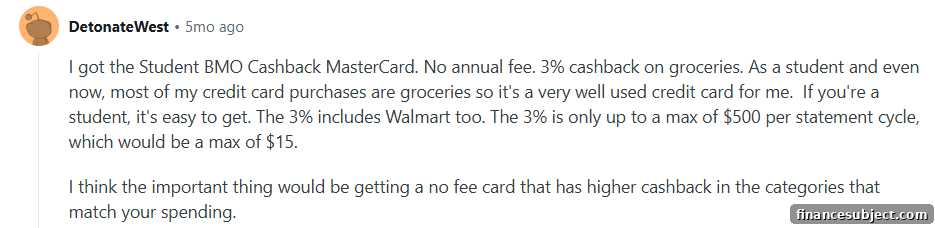
The BMO CashBack Mastercard is a solid option for students who want straightforward cash back without an annual fee. It offers 3% cash back on groceries, 1% on recurring bills, and 0.5% on other purchases. Additional benefits include statement credit redemption options and discounts at select partners. Note there is a monthly cap of $500 for the boosted grocery and recurring bill categories.
BMO CashBack Mastercard
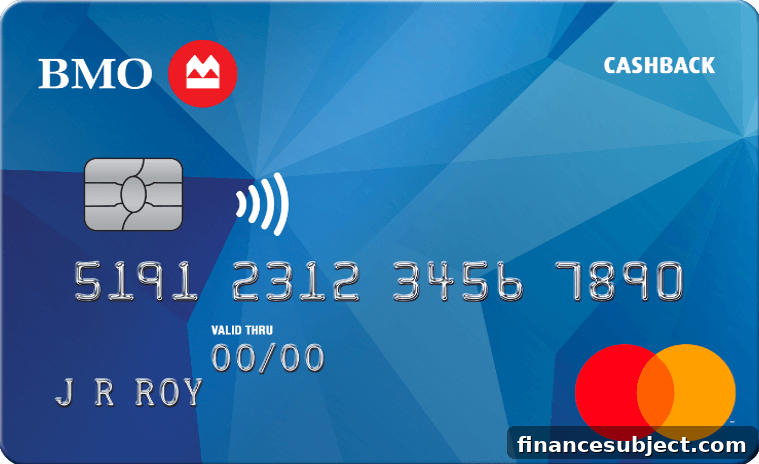
Annual fee: $0
Rewards: 0.5%–3% cash back (3% on groceries; 1% on recurring bills; 0.5% on everything else)
Welcome offer: Earn up to 5% cash back in your first three months (conditions apply).
Card details
| Interest rates | 21.99% on purchases, 23.99% on cash advances and balance transfers |
| Income required | None specified |
| Credit score | None specified |
Pros
- Generous 3% cash back on groceries among no-fee student options
- Flexible cash back redemption options
- Additional discounts and partner offers
Cons
- Monthly cap of $500 on boosted categories
- Low base earn rate of 0.5% on other purchases
- Some food outlets excluded from the grocery category
Best travel credit card for students: CIBC Aeroplan Visa Card for Students
Card type: Unsecured
Minimum income requirement: N/A
This Aeroplan-branded student card is ideal for students who want to earn travel rewards. It awards 1 Aeroplan point per $1 on gas, EV charging, grocery purchases and Air Canada transactions, and 0.67 points per $1 on other purchases. The card typically includes an introductory points bonus and perks such as a complimentary SPC+ membership that offers discounts at participating brands.
CIBC Aeroplan Visa Card for Students

Annual fee: $0
Rewards: 0.67–1 point per $1
Welcome offer: Earn 10,000 Aeroplan points after your first purchase (approx. $200 value).
| Interest rates | 20.99% on purchases; 22.99% on cash advances (21.99% in Quebec) |
| Income required | None specified |
| Credit score | None specified |
Pros
- Aeroplan points are valuable for travel redemptions, often offering good value for flights
- Ability to redeem points with Air Canada and partners with flexible options
- Some travel-related insurance and benefits included
Cons
- Lower earn rate on everyday spending
- Limited value if you don’t fly with Air Canada or its partners
Best low-interest credit card for students: Desjardins Flexi Visa
Card type: Unsecured
Minimum income requirement: N/A
The Desjardins Flexi Visa offers one of the lowest purchase interest rates among no-fee student cards. It doesn’t offer rewards, but it does include protections like mobile device coverage, limited travel insurance, rental car discounts, and an option to pay eligible purchases in monthly installments — features that can help students manage costs when they need more time to pay down a balance.
Desjardins Flexi Visa

Annual fee: $0
Rewards: None
Welcome offer: None
| Interest rates | 10.90% on purchases; 12.90% on cash advances |
| Income required | Not specified |
| Credit score | Not specified |
Pros
- One of the lowest regular purchase interest rates for no-fee cards
- Emergency medical coverage for short trips and eligible purchase installment options
Cons
- No rewards or welcome bonuses
- Limited branch availability in some regions
Best secured credit card for students: Home Trust Secured Visa
Card type: Secured
Minimum income requirement: N/A
The Home Trust Secured Visa is a strong choice for students who need to build or rebuild credit. Approval is practically guaranteed when you supply a security deposit that sets your credit limit. You can typically choose between a no-fee option with a higher interest rate or a modest annual-fee option with a lower interest rate.
Home Trust Secured Visa
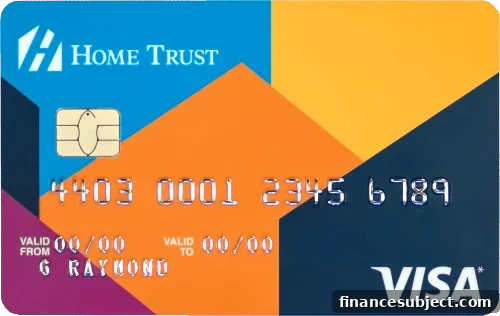
Annual fee: $0
Rewards: None
Welcome offer: None
| Interest rates | 19.99% on purchases and cash advances (other rate option: 14.90% with a $59 annual fee) |
| Income required | None specified |
| Credit score | 300 or higher |
Pros
- Very high approval likelihood
- Reports to major credit bureaus to help build credit history
- Credit limit tied to your deposit, up to $10,000
- Options to choose a lower-rate product with a modest fee
Cons
- No rewards program
- Minimum security deposit required (typically $500)
- Not available to Quebec residents
Best store credit card for students: PC Mastercard
Card type: Unsecured
Minimum income requirement: N/A
The PC Mastercard is useful for students who frequently shop at Loblaws banner stores and related partners. It rewards grocery and drugstore purchases with higher point rates, and offers fuel perks at Esso and Mobil. Points are redeemable through the PC Optimum program at many nationwide locations.
PC Mastercard
Annual fee: $0
Welcome offer: Earn 20,000 points when you spend $50 or more at participating stores within 60 days.
| Interest rates | 21.99% on purchases; 22.97% on cash advances |
| Income required | None specified |
| Credit score | 560 or higher |
| Point value | 1 PC Optimum point = $0.001 (10,000 points = $10) |
Pros
- High earn rates for grocery, drugstore and select purchases
- Easy point redemption at many Loblaws banner locations
- No cap on points earned
Cons
- Points are less flexible than cash back
- Minimum redemption increments apply
- Relatively high purchase interest rate
Best student credit card for entertainment: Scotiabank Scene+ Visa for Students
Card type: Unsecured
Minimum income requirement: $12,000
The Scotiabank Scene+ Visa is a great fit if you frequently visit Cineplex theatres or shop with Scene+ partners such as Sobeys and Home Hardware. It earns accelerated points on eligible purchases and makes it easy to redeem points for movies, food, travel, and select merchandise.
Scotiabank Scene+ Visa card

Annual fee: $0
Rewards: 2 Scene+ points per $1 at Sobeys banner stores and Cineplex; 1 point per $1 elsewhere
Welcome offer: Earn up to 10,000 bonus Scene+ points within the first three months (offer periods vary).
| Interest rates | 20.99% on purchases; 22.99% on cash advances and balance transfers |
| Income required | $12,000 per year |
| Credit score | 660 or higher |
| Point value | 1 Scene+ point = $0.01 when redeemed for travel, store purchases, and Cineplex rewards |
Pros
- Versatile Scene+ program with many redemption options
- No annual fee and points earned on all purchases
- Car rental discounts at participating providers
Cons
- Minimum income requirement
- Limited included insurance coverage
How we determine the best cards
Our selections prioritize factors that matter most to students: the likelihood of approval (including income requirements), reasonable or no annual fees, practical rewards or savings, and features that help build credit. We focus on cards that are accessible to students and provide clear, measurable value for common student spending categories.
Compare all student credit cards
Use comparison tools to match card features to your priorities — whether that’s cash back on groceries, travel rewards, a low APR, or a secured card to build credit. Look at annual fees, welcome offers, interest rates, and any minimum income or credit score requirements before you apply.
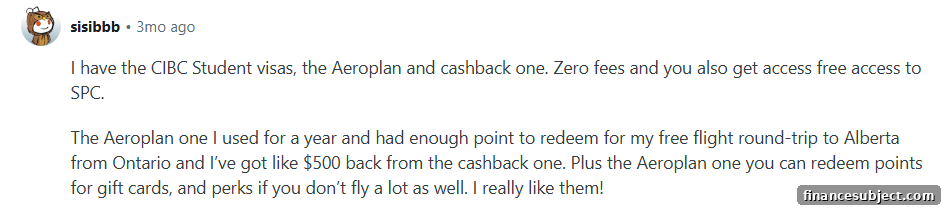
Reddit reviews: Which credit cards do Canadian students love?
Real user feedback can help you decide. Reddit and online forums often highlight specific cards like the CIBC Aeroplan Visa for students, noting which cards deliver good value for common student spending patterns. Take such comments with caution and cross-check the details in the official card terms.
Ultimately, the best student credit card is the one that aligns with your spending habits, helps you avoid fees and interest, and supports building a positive credit history.
Types of student credit cards
Student cards vary by purpose. Consider these common types:
- Cash back: Earn a percentage back on purchases, often as a statement credit or deposit.
- Low-interest: Lower purchase APR for students who plan to carry a balance.
- No-fee: No annual fee, though other fees and interest still apply.
- Travel: Earn points or miles redeemable for flights, hotels, and travel perks.
- Rewards: Flexible redemption options for points, merchandise, gift cards or travel.
Some cards combine features, such as no-fee rewards cards.
Pros and cons of student credit cards
Pros
- Easier approval compared with many standard cards
- Opportunity to build a credit history when used responsibly
- Many cards offer practical rewards, discounts or basic protections
- Good way to learn responsible credit management
Cons
- Risk of overspending if you don’t stick to a budget
- Missed or late payments can harm your credit score
- Lower credit limits may restrict larger purchases
- Student cards usually offer fewer perks than standard unsecured cards
Should you get a student credit card?
Getting a student credit card is a personal decision. If you’re disciplined about spending and paying your balance on time, a student card is a useful tool to start building credit. If you’re unsure, becoming an authorized user on a trusted family member’s card can be an alternative, though it may not always help your credit score depending on whether the issuer reports authorized user activity to credit bureaus.
The bottom line: If you can manage your spending and pay on time, a student credit card can be a smart step toward establishing credit.
How to make the most of a student credit card
1. Know your payment due dates
Record your billing due date and plan payments around it. Set reminders in your calendar so you never miss a payment.
2. Pay your balance in full each month
Paying in full avoids interest charges and builds a positive payment history, both of which help your credit score.
3. At least pay the minimum if you can’t pay in full
Always pay the minimum on time to avoid late fees and credit damage; however, carrying only the minimum balance will generate significant interest over time.
4. Avoid maxing out your card
Keep your credit utilization low by using your card for smaller purchases you can repay quickly. High utilization can hurt your credit score.
FAQs
Which bank is best for a student credit card?
There isn’t a single best bank. Many students choose a card from a bank where they already have a chequing or savings account to make payments easier.
What is the golden rule when using a credit card?
Always try to pay your credit card balance in full each month to avoid interest charges and late fees.
Does it hurt your credit to have a card and not use it?
Keeping a card open and in good standing won’t hurt your credit. Making occasional small purchases and paying them off can prevent the issuer from closing the account.
What happens to my student credit card after I graduate?
Your student card remains open after graduation unless you or the issuer close it. As your income and credit score increase, consider upgrading to a card with benefits that better match your needs.
Newsletter
Get free financial tips, news & advice in your inbox.
Read more about student finances:
- What to do when you have insufficient or unused RESP funds
- How to manage your money as a student in Canada
- The best student bank accounts in Canada
- RESP vs RRSP vs TFSA: What’s best for education savings?