
- Transat A.T. Inc.
- Empire Company Ltd.
- Algoma Steel
Also read
Canada’s best dividend stocks
Canadians’ travel appetite still healthy, but desire to visit U.S. fading: Transat
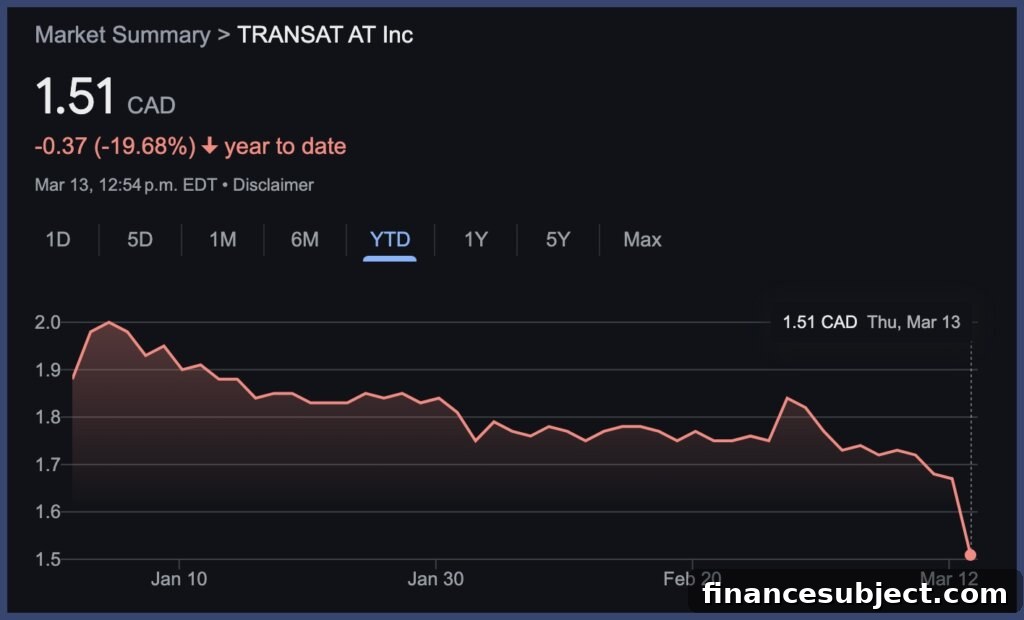
Transat A.T. Inc. (TSE: TRZ)
- Q1 net loss: $122.5 million, up from a $61 million loss a year earlier.
- Revenue: $829.5 million, up from $785.5 million a year earlier.
Transat A.T. Inc.’s CEO, Annick Guérard, says Canadians remain keen to travel even as economic worries grow amid an escalating trade dispute with the United States. The company continues to see strong bookings for transatlantic routes, but demand for U.S. destinations has declined noticeably in recent months.
Transat only serves two U.S. destinations in Florida, yet those roughly 300 monthly flights account for nearly 12% of its total capacity. The company trimmed its U.S. capacity by about 10% last month after bookings fell, according to aviation data from Cirium. Guérard acknowledged that tariff threats and a weaker Canadian dollar have created uncertainty and could curb consumer confidence, but so far bookings have remained resilient.
Operationally, the airline continues to suffer from reduced fleet availability after a recall of Pratt & Whitney turbofan engines. Guérard said the groundings have had a “severe negative impact” and she expects disruptions to persist through the year as the company manages aircraft shortages.
For the quarter ended Jan. 31, Transat reported a net loss of $122.5 million, compared with a $61-million loss a year earlier. On an adjusted basis the company posted a $75-million loss, a slight improvement from a $76-million adjusted loss in the prior year. Adjusted loss per share narrowed to $1.90 from $1.97. Revenue rose nearly 6% to $829.5 million, driven by a 1% increase in revenue passenger miles, a measure of paying passengers multiplied by distance flown.
Return to table of contents.
Sales of U.S. products “dropping” at Empire-owned grocers amid tariff uncertainty
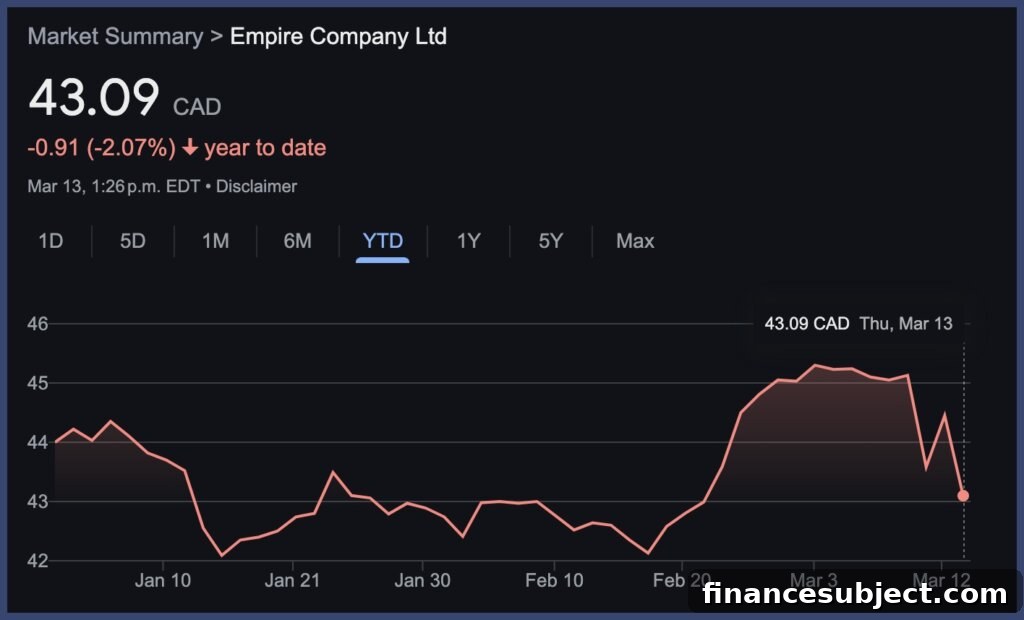
Empire Company Ltd. (TSE: EMP.A)
- Q3 earnings: $146.1 million, or 62 cents per diluted share, up from $134.2 million, or 54 cents a year earlier.
- Revenue: $7.73 billion, up from $7.49 billion a year earlier.
Michael Medline, CEO of Empire Co. Ltd., said customers have been shifting away from U.S.-sourced products and actively choosing Canadian options as tariff concerns rise. In a typical year about 12% of Empire’s retail products come from the U.S., but that share is falling as the company shifts suppliers to meet consumer demand for domestic and non-U.S. items.
Medline noted many product categories have viable alternatives, though fresh produce is hardest to replace during Canadian winters. He warned that over time tariffs could mean higher costs or a reduced assortment if certain products are no longer competitive on shelves. Empire is working with suppliers to limit price increases for shoppers; for example, Lindt has shifted production so chocolate supplied to Canada will come from Europe rather than the U.S.
Empire owns multiple banners including Sobeys and FreshCo. The company reported third-quarter net income of $146.1 million for the 13-week period ended Feb. 1, equal to 62 cents per diluted share, up from $134.2 million, or 54 cents per diluted share, a year earlier. Adjusted earnings were the same as the prior year at 62 cents. Quarterly sales rose to $7.73 billion, driven by a 2.5% increase in same-store sales (2.6% excluding fuel).
Management highlighted healthier demand for items such as meat and produce, larger basket sizes, and fewer customers shopping across multiple stores—signals of recovering consumer behavior. Empire’s e-commerce business also showed significant growth: total sales across the retailer’s Voilà service and third-party platforms like Instacart and Uber Eats increased by 72% year over year.
Empire’s operating income from investments and other operations fell, mainly because of higher participation and redemption in the Scene+ loyalty program, a trend also noted by competitors. CFO Matt Reindel, who will retire in May, was praised by Medline for his leadership during the pandemic and subsequent inflationary period.
Return to table of contents
Algoma Steel foresees challenges, opportunity from trade war as it works to cut costs
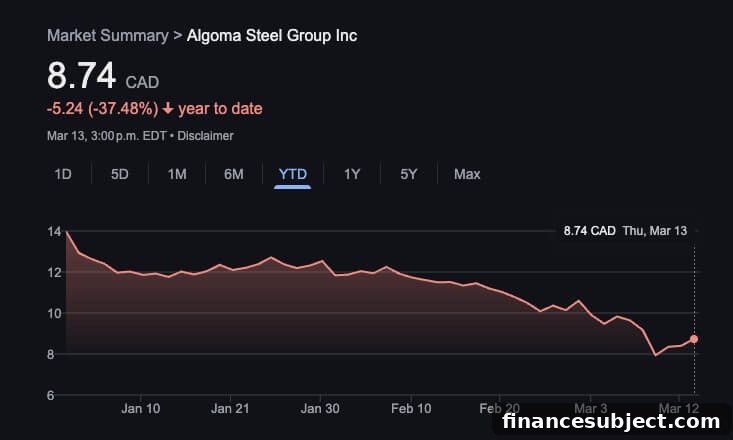
Algoma Steel Group Inc (TSE: ASTL)
- Net loss: $66.5 million, improved from a $84.8 million loss a year earlier.
Algoma Steel’s CEO Michael Garcia said the company expects federal action to support the industry amid tariff-related disruption, but he emphasized Algoma is already pursuing aggressive cost reductions in response to the trade tensions.
Garcia described the introduction of tariffs on steel and aluminum as adding uncertainty to an integrated North American market. He expressed hope that rational dialogue between Canada and the U.S. will restore normal trade, but acknowledged near-term volatility after the U.S. imposed 25% tariffs on Canadian steel and aluminum and Canada responded with reciprocal tariffs on U.S. goods.
Despite the challenges, Garcia sees opportunity: roughly 3.5 million tonnes of U.S. steel entered the Canadian market over the past year, and reduced U.S. imports could create space for domestic suppliers to capture more market share, particularly for plate sales. He also noted potential upside if Canadian defence and shipbuilding programs adopt “buy Canadian” requirements.
For the quarter ended Dec. 31, Algoma reported a net loss of $66.5 million, or a net loss per diluted share of 61 cents, compared with a loss of $84.8 million and 78 cents per share a year earlier. The company attributed the result to softer realized steel prices and higher costs, which offset higher shipments, and said tariff uncertainty, U.S. election dynamics and interest-rate concerns affected pricing and buying patterns.
Newsletter
Get free MoneySense financial tips, news & advice in your inbox.
Read more stock market news:
- Earnings reports: Loblaw, Walmart and more
- Earnings reports: Cineplex, Sun Life Financial and more
- Earnings reports: Canadian banks report Q1 earnings
- Stock market news for investors: Tariff talk, economic uncertainty feature on Q4 earnings reports