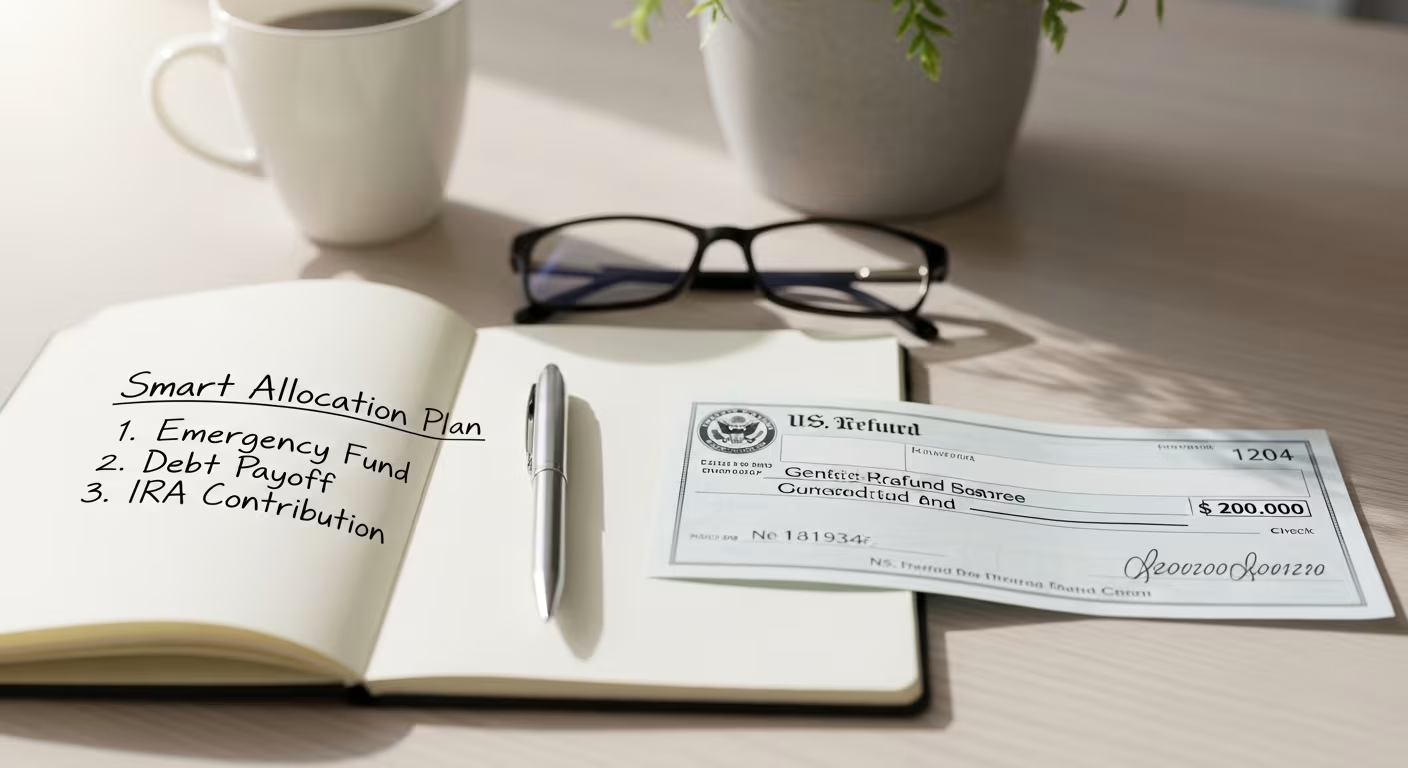
Getting a tax refund can feel like a windfall, but it's actually money you overpaid throughout the year. The average federal tax refund is around $3,000—a significant sum that can meaningfully improve your financial situation when used wisely. Here's how to make the most of your refund.
For federal tax brackets and deduction amounts, use the IRS 2026 tax inflation adjustments as the official reference point.
Average Tax Refund (2026): $2,850
The average federal tax refund is approximately $2,850. While getting a refund feels good, it actually means you overpaid taxes throughout the year—you gave the government an interest-free loan.
Better approach: Adjust your W-4 withholding so your refund is close to $0. That extra $238/month ($2,850/12) in your paycheck, invested at 7% return, grows to approximately $4,000 more per year than letting the IRS hold it.
Smart Ways to Use a Tax Refund (Ranked by Impact)
| Priority | Use | Why | ROI |
|---|---|---|---|
| 1 | Pay off credit card debt | Eliminates 23.77% interest | 23.77% guaranteed |
| 2 | Build emergency fund to $1,000 | Prevents future debt | Priceless |
| 3 | Max out IRA contribution | Tax-advantaged growth | 7-10% average |
| 4 | Fund HSA | Triple tax advantage | 7-10% + tax savings |
| 5 | Pay extra on student loans | Reduces total interest | 5-8% guaranteed |
| 6 | Invest in brokerage account | Long-term wealth building | 7-10% average |
| 7 | Professional development | Increase earning power | 20-100%+ ROI |
| 8 | Home maintenance | Prevents expensive repairs | Varies |
What NOT to Do With Your Refund
- Treat it as a windfall and spend it on non-essentials: This is how refunds evaporate without improving your financial position.
- Let it sit in checking: Transfer it to a high-yield savings account (5% APY) or invest it immediately.
- Use a refund anticipation loan: These charge fees equivalent to 50-100%+ APR. Wait the 2-3 weeks for direct deposit.
The $2,850 Invested Over Time
| Strategy | Value After 10 Years | Value After 20 Years | Value After 30 Years |
|---|---|---|---|
| Invest each year's $2,850 refund at 7% | $39,400 | $116,700 | $269,000 |
| Pay off $2,850 credit card debt (23.77% APR) | Save $670/year in interest | Save $13,400 cumulative | N/A (debt free!) |
| Put in HYSA (5%) | $35,800 | $94,200 | $190,400 |
Understanding Your Refund
What a Refund Really Is
A tax refund is not a gift from the government—it's your own money being returned.
Why you got it: Your withholdings exceeded your actual tax liability. You essentially gave the government an interest-free loan.
Average refund (2026): Approximately $3,000
Should You Adjust Withholding?
Large refund? Consider adjusting W-4 to keep more in each paycheck.
Math example:
- $3,000 refund ÷ 26 paychecks = $115 per paycheck
- $115 invested monthly at 7% = ~$1,400 in first year
However: Some people prefer forced savings through over-withholding. Know yourself.
Priority 1: Financial Foundation
Build Emergency Fund
If you have no emergency fund: This is priority one.
Target: 3-6 months of essential expenses
Where to keep it: High-yield savings account (earning 4-5% APY in 2026)
$3,000 refund impact: Creates substantial emergency buffer or adds to existing fund
Pay Off High-Interest Debt
Credit card debt is a guaranteed 20%+ return when paid off.
Example:
- $3,000 credit card balance at 24% APR
- Paying it off saves ~$720 in first year's interest
- That's a 24% guaranteed return
Priority order for debt payoff:
- Credit cards
- Personal loans
- Car loans (high rate)
- Student loans
- Mortgage (lowest priority for extra payments)
Catch Up on Bills
If behind on bills: Getting current prevents:
- Late fees
- Service disconnections
- Credit damage
- Collection actions
Priority 2: Future Security
Max Out Retirement Contributions
Roth IRA: $7,500 limit (2026)
- $3,000 refund covers nearly half
- Tax-free growth for decades
HSA: $4,300 individual / $8,550 family
- Triple tax advantage
- Can be used for retirement healthcare
Boost 401(k): Increase contribution rate for rest of year
Open Investment Account
If retirement accounts are maxed: Open taxable brokerage
Simple approach: Index fund investment
- Total stock market fund
- S&P 500 fund
- Target-date fund
$3,000 invested at 7%:
- 10 years: ~$5,900
- 20 years: ~$11,600
- 30 years: ~$22,800
Start 529 for Education
If you have children: Education savings
$3,000 invested at 7%: - 18 years: ~$9,500 tax-free for education
State tax deduction: Many states offer deduction for contributions
Priority 3: High-Impact Spending
Home Down Payment Savings
Saving for a house? Dedicated savings accelerates timeline.
$3,000/year for 5 years at 4% = ~$16,250 Impact: Significantly closer to down payment goal
Necessary Major Purchases
Items that improve life quality or save money long-term:
- Reliable used car (if needed for work)
- Essential appliances (energy-efficient = future savings)
- Home repairs (preventing bigger problems)
- Mattress or furniture (quality matters for health)
Invest in Yourself
Education and skills:
- Professional certification
- Online courses (coding, marketing, etc.)
- Industry conference
- Books and learning materials
Career advancement: New skills can increase earning potential far beyond refund amount
Priority 4: Quality of Life
Health and Wellness
Investments that pay off:
- Dental work (preventing expensive problems)
- Vision care (glasses, eye exam)
- Mental health support
- Gym membership or equipment you'll actually use
- Quality food and nutrition
Experiences Over Things
Research shows: Experiences provide more lasting happiness than material purchases.
Ideas:
- Family vacation (creates memories)
- Concert or event you've wanted to attend
- Classes or lessons (cooking, music, language)
Small Splurges
It's okay to enjoy some of your refund.
Guidelines:
- After addressing high-priority items
- Within reason (maybe 10-20% of refund)
- Something meaningful to you
Priority 5: Give Back
Charitable Giving
If financial foundation is solid:
- Support causes you care about
- May qualify for deduction next year
- Creates positive impact
Helping Family
Assist family members (within healthy boundaries):
- Help with bills or education
- Gift toward their goals
- Within gift tax exclusion ($19,000/year per recipient in 2026)
What NOT to Do: The Basics
Lifestyle Inflation
Temporary money shouldn't fund permanent expenses:
- Don't use refund to upgrade to more expensive apartment
- Don't commit to higher car payment
- Don't sign up for expensive ongoing services
Impulse Purchases
The "found money" trap:
- Refund feels like bonus money
- Temptation to blow it quickly
- Buyer's remorse follows
Instead: Wait 48-72 hours before any major purchase decision
Leaving It in Checking
Money in checking disappears:
- Small purchases add up
- No intentional allocation
- No growth
Instead: Immediately transfer to designated purpose (savings, investment, debt payment)
Ignoring It
Some people leave refund in low-yield account or don't deposit check promptly.
Opportunity cost: $3,000 earning 0.1% vs. 4-5% = ~$120-150/year difference
Create Your Refund Plan
Before Refund Arrives
- Assess your financial situation
- Prioritize goals
- Allocate percentages
Sample Allocation Plans
"Getting Stable" plan (financial foundation weak):
- 50%: Emergency fund
- 40%: High-interest debt
- 10%: Small reward
"Building Wealth" plan (foundation solid):
- 60%: Roth IRA
- 25%: Additional investments or 529
- 15%: Experience or quality purchase
"Debt Elimination" plan (aggressive debt payoff):
- 90%: Debt payment
- 10%: Celebration of progress
"Balanced" plan (foundation solid, reasonable goals):
- 30%: Retirement accounts
- 30%: Savings goals (house, car, etc.)
- 20%: Home improvement or needs
- 20%: Fun and experiences
Maximizing Future Refunds (or Reducing Them)
If You Want Smaller Refund
Adjust W-4 to increase take-home pay:
- More money available throughout year
- Can invest monthly vs. lump sum
- Compound growth starts earlier
If You Prefer Large Refund
Understand the tradeoff:
- Forced savings mechanism
- No earnings on that money all year
- Works for some personalities
Either Way
- Review withholding annually
- Adjust after major life changes
- Use IRS withholding calculator
Taking Action
When Refund Arrives
- Deposit immediately
- Don't touch it for 24-48 hours
- Review your pre-made plan
- Execute transfers to designated purposes
- Set up automatic contributions for ongoing goals
After Allocation
- Track progress toward goals
- Celebrate the smart decisions
- Plan for next year's refund
- Consider W-4 adjustment
Your tax refund is an opportunity—not for impulse spending, but for meaningful financial progress. Whether you're building an emergency fund, crushing debt, investing for retirement, or enjoying a well-deserved experience, intentional use of your refund creates lasting impact. Make a plan before the money arrives, and watch your financial situation improve year after year.
Building a System So You Never Depend on Tax Refunds
The goal is to stop using the IRS as a savings account:
Step 1: Use the IRS Tax Withholding Estimator (irs.gov) to calculate the correct W-4 settings for your situation.
Step 2: Adjust your W-4 to target a near-zero refund ($0-500). This puts an extra $150-250/month in your paycheck.
Step 3: Automate the extra paycheck money into a high-yield savings account or investment account. Set up the transfer for the same day you get paid.
Step 4: By year-end, you have $1,800-3,000 in a savings/investment account EARNING interest, instead of waiting for the IRS to return your money with zero interest.
Over 30 years: The difference between investing your own money monthly versus waiting for an annual refund is approximately $15,000-30,000 in additional investment returns. The IRS does not pay interest on your overpayment—but a high-yield savings account at 5% APY does.
Exception: If you lack the discipline to save the extra paycheck money and would spend it, a forced "savings" through overwithholding (i.e., a refund) is better than nothing. But the optimal strategy is always to keep your money working for you throughout the year.
The Psychology of Tax Refunds
A tax refund feels like a windfall, but it is your own money returning to you. Behavioral economists call this "mental accounting"—we treat refunds differently than regular income, making us more likely to spend them on discretionary items.
Reframe your refund: This is not a bonus from the government. It is money you overpaid—the equivalent of giving someone a $2,850 interest-free loan and being happy when they repay you. You would never voluntarily lend $2,850 interest-free to a stranger for 12 months. Yet that is exactly what a tax refund represents.
The exception: If receiving a lump sum refund is the only way you save, then overwithholding serves a purpose. A $2,850 refund saved is better than $238/month spent. But the optimal strategy remains keeping your money, investing it monthly, and building wealth throughout the year rather than waiting for an annual check.
Comments (0)
No comments yet. Be the first to share your thoughts!
Leave a Comment