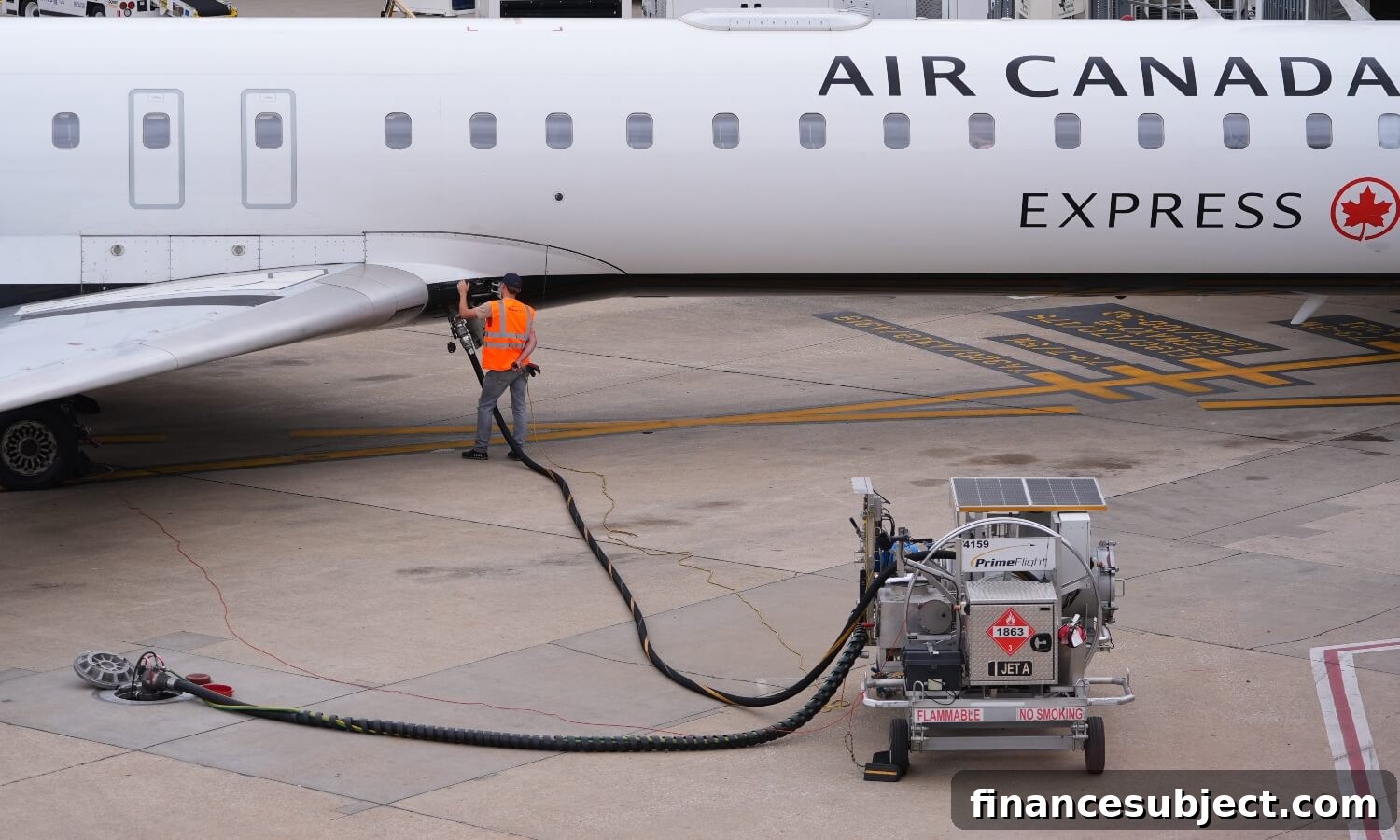
Skyrocketing jet fuel costs threaten to push airfares up and reduce flight frequencies well into the peak summer travel season, even as signs emerge that oil flows from the Persian Gulf may resume. Iran’s foreign minister said the Strait of Hormuz was “completely open” for commercial shipping after a ceasefire between Israel and Lebanon, but uncertainty persists because U.S. measures continue to block some Iranian ports. Even if the agreement holds, experts warn it will take weeks for oil shipments to normalize and considerably longer for jet fuel output to return to pre-conflict levels because several refineries in the region were damaged.
Fuel surge drives higher ticket prices
The energy shock created by the Iran conflict and the effective seven-week closure of the Strait of Hormuz already has airlines factoring steep fuel costs into fares, and that price pressure is expected to persist for months, according to independent aviation analyst Rick Erickson. “The prices will go up,” he said. “Over the summer of 2026 … there will not be any deals. And believe me, you’re going to have to pay.”
Canadian carriers have responded by increasing base fares and adding fuel surcharges that range from roughly $25 to $60 per ticket on some routes. Air Canada, for example, recently raised baggage fees for certain fares—moving the first checked bag price in its basic economy from $35 to $45 on domestic, U.S. and sun-destination flights—and announced temporary suspensions of selected services. The airline confirmed plans to pause flights to New York City’s JFK from Toronto and Montreal between June 1 and Oct. 25.
Across Canada, several routes have been scaled back or removed. Air Canada said it will reduce flights from six cities to New York-area airports to 34 daily frequencies from 38, and it is contacting affected customers to offer alternatives. The carrier is also suspending service between Toronto and Salt Lake City from June 30 until sometime next year, and has paused flights between Fort McMurray, Alta., and Vancouver as of May 28. The Toronto–Yellowknife route will be suspended effective Aug. 30, and a planned Montreal–Guadalajara route has been cancelled.
These reductions underscore how airlines expect higher jet fuel costs to persist through spring and summer even if tanker traffic resumes. Globally, carriers are trimming schedules as rising fuel bills make some services uneconomic. Lufthansa said it will gradually reduce mainline flying and ground several regional aircraft, KLM announced hundreds of European cancellations to and from Amsterdam, and many Asian and Middle Eastern operators have curtailed capacity.
Canada shielded, but global ripple effects loom
North American airlines draw much of their jet fuel from Canadian and U.S. refineries, which offers some insulation compared with Europe and Asia that rely heavily on Middle Eastern supplies. Still, passengers in Canada may feel the fallout when international carriers cut less profitable routes or ground less efficient aircraft, limiting connections and reducing options. The International Energy Agency has noted that the Middle East supplies a large share of Europe’s jet fuel imports, and warned that some countries could face shortages within weeks.
Canada is relatively well positioned, with several domestic refineries producing kerosene-based aircraft fuel and more than four-fifths of the jet fuel used in Canada coming from domestic sources, says John Gradek, an aviation management instructor at McGill University. However, fuel pricing is linked to global markets. “Why are we paying Middle East pricing for fuel if we are self-sufficient in fuel? The answer is the same as when we talk about gasoline for your car: our pricing models are based on the world price,” Gradek said. He described current aviation fuel markets as the most severe he has seen.
Air Canada has indicated it does not expect immediate supply shortages, and WestJet says it has not yet changed its network but is evaluating the summer schedule and may make adjustments to balance fuel availability. Even if Gulf refinery damage proves less severe than feared, Gradek notes that repairs, ramping production and long shipping times mean higher prices will likely remain in place for some time.
Pricey travel likely to stick around
Higher fares could persist even longer if shippers avoid the Strait of Hormuz because U.S. enforcement measures remain in place. U.S. officials have said such measures will continue while longer-term arrangements are negotiated, which could influence carriers’ decisions to maintain tighter schedules. Despite rising costs and the risk of disruption, consumer appetite for travel remains generally robust. A recent consumer survey found demand steady even as fuel costs and airfares climb.
At the same time, the crisis has created opportunities for some carriers to expand in markets where competitors have pulled back. Air Canada increased service between Toronto and Delhi to twice daily and deployed larger aircraft on select Toronto–London–Mumbai flights as Middle Eastern carriers reduced flying in certain corridors. Airlines are adapting operations, reassigning capacity, and using strategic adjustments to manage higher fuel bills and changing demand.
For travelers, the immediate implications are clear: expect fewer bargain fares, more schedule changes on specific routes, and the possibility of limited connections abroad as global carriers rationalize flying to cope with elevated jet fuel prices. For the aviation industry, the priorities remain preserving profitable routes, managing supply chains for fuel, and adjusting capacity in response to rapidly shifting market conditions.
Read more about travel:
- Canadians booking earlier as fuel costs drive travel uncertainty
- Saving money on vacation doesn’t have to mean sacrificing fun
- Trade homes, not cash: A new way to see the world
- Jet fuel surge pushes airline fares higher