

Aya Kinsey, 18
Occupation: University student
Annual income: Not yet established (likely some freelance income)
Financial goals: Build credit and travel
In September, Aya Kinsey began her first year at Western University in London, Ontario, where she is studying economics. This is the first time she has lived away from her family in Toronto; she shares a dorm room with another student.
Before starting school, Aya applied for her first credit card — an Alterna Savings Cash Back Visa — because she already had a primary banking relationship with Alterna Savings and Credit Union. She also uses EQ Bank, but getting a card from her credit union felt like the simplest option.
As a new cardholder, Aya has not yet established a credit score. She wants to build that score while earning rewards on everyday spending, whether through cash back or travel points; she is already an Aeroplan member and enjoys traveling to visit family and friends abroad.
Aya enjoys travel: she’s visited Greece and Japan, where she has relatives, and has travelled within North America, including Cuba and Florida. She has also spent time in Halifax with friends. While she plans to travel around Canada, her long-term interest is visiting more destinations in Europe.

What credit card features does she need?
Like many students, Aya is ambitious, eager to travel and focused on finding solid financial footing. Given her existing relationship with Alterna, it made sense for her to take the Alterna Savings Cash Back Visa. Many Canadians tend to stick with familiar institutions when choosing accounts and cards. That said, Aya could benefit from exploring other card options to better match her goals: building credit, earning useful rewards and keeping fees low while her income is modest.
Aya’s Alterna card uses the Collabria rewards program, which awards 1 point per $1 on groceries, gas, public transit, select recurring bills and digital streaming purchases, and 0.5 points per $1 on other purchases. The value of Collabria points varies with redemption type: cash back typically yields better value (about $0.01 per point when redeemed in set increments), while travel, merchandise or gift card redemptions often provide less value per point. In practice, cardholders often realize a maximum return near 1% back, and frequently less.
Traveling is clearly a priority for Aya, so a card that lowers flight costs or earns meaningful travel rewards would be useful. At the same time, she is newly responsible for tuition and living expenses, and her income this year is likely to be limited; she hopes to pick up freelance work in content marketing to supplement her studies.
Right now, Aya’s main objectives should be to build a strong credit score and keep her finances under control while she completes her education. A disciplined approach to on-time payments and reasonable use of her available credit will support both goals. As her income grows after graduation, she will become eligible for higher-tier travel cards that offer premium travel benefits.
Resource highlight
Find a card that fits your needs
Use a card-matching tool or a simple checklist of your typical spending categories to compare features like rewards, annual fees and eligibility requirements. No personal identification number is required to begin a basic search for suitable cards.
Which credit card should she get?
Credit card pick #1: CIBC Aeroplan Visa Card for Students
The CIBC Aeroplan Visa Card for Students would meet many of Aya’s needs. It is a no-fee student card that does not require a stated income to apply. Because Aya is already an Aeroplan member, this card would allow her to earn Aeroplan points faster through the “earn points twice” feature that combines Aeroplan membership earnings with card-earn rates.
CIBC Aeroplan Visa Card for Students

Annual fee: $0
- 1 point per $1 on Air Canada purchases, groceries and gas/EV charging
- 0.67 points per $1 on most other purchases
Welcome offer: Earn 10,000 Aeroplan points with your first purchase (approximately $200 value)

Card details
| Interest rates | 20.99% on purchases and 22.99% on cash advances (21.99% in Quebec) |
| Income required | None specified |
| Credit score | None specified |
| Point value | Varies by redemption type |
Under the card’s earn structure, Aya would collect 0.67 points per $1 on most purchases and 1 point per $1 on targeted categories like groceries and Air Canada purchases. Aeroplan points, when redeemed for travel, often equate to approximately $0.02 per point on average, which can translate into a roughly 2% return on flights and certain grocery purchases — a meaningful boost for an aspiring traveler.
The card also frequently includes a welcome bonus: the 10,000-point offer after the first purchase would be enough for a one-way short-haul economy flight in North America, which could help Aya visit friends or family early in her studies. Keep in mind that Aeroplan award pricing and availability can be complex, so it helps to learn the redemption rules before relying on points for travel.
Not a customer of the card issuer? That’s fine
In Canada, you can apply for a credit card from a financial institution even if you don’t hold a bank account there. Payments can typically be made via your own bank’s bill-pay service, by branch, by pre-authorized debit, telephone or by mailing a cheque, depending on the issuer’s options.
Credit card pick #2: Tangerine Money-Back Credit Card
A second strong option is the Tangerine Money-Back Credit Card, which focuses on straightforward cash back rather than travel points. This card asks for a personal or household income of $12,000 to qualify and typically prefers applicants with a modest credit history. Aya may reach this income threshold through freelance work or summer employment and can build the necessary credit profile by using and responsibly managing her current card.
Tangerine Money-Back Credit Card
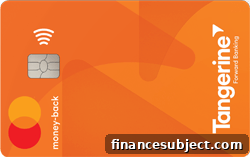
Annual fee: $0
- 2% cash back in up to two categories you choose (groceries, gas, dining and others)
- 0.5% cash back on all other purchases
Welcome offer: New cardholders typically receive an elevated cash-back rate for a limited period
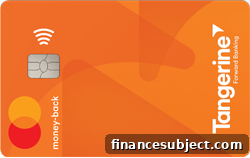
Card details
| Interest rates | 20.95% on purchases, 22.95% on cash advances and balance transfers |
| Income required | Personal or household income of $12,000 |
| Credit score | Typically 660 or higher |
The key benefit of the Tangerine card is simplicity and flexibility: Aya can choose two categories that align with her biggest spending areas to earn 2% back, and if she deposits rewards directly into a Tangerine Savings Account, a third 2% category is available. She can adjust her chosen categories after opening the account, though some restrictions and holding periods may apply.
For a student who plans purchases carefully and aims to maximize everyday savings, the Tangerine card’s cash-back structure can be very effective. Whichever card Aya selects, consistently paying off the balance in full and on time is the most important step toward building a strong credit score.
If you’d like tailored card recommendations, contact the publication’s editorial team with a brief description of your spending habits and card preferences.
Newsletter
Get financial tips, news and practical advice in your inbox.
Further reading about credit cards
- The best credit cards in Canada
- The best student credit cards in Canada
- Visa vs. Mastercard: What are the differences and do they matter?
- What happens if you don’t use your credit card?