

Kyle Prevost, creator of 4 Steps to a Worry-Free Retirement, Canada’s DIY retirement planning course, shares financial headlines and offers context for Canadian investors.
U.S. inflation battle: Mission not accomplished
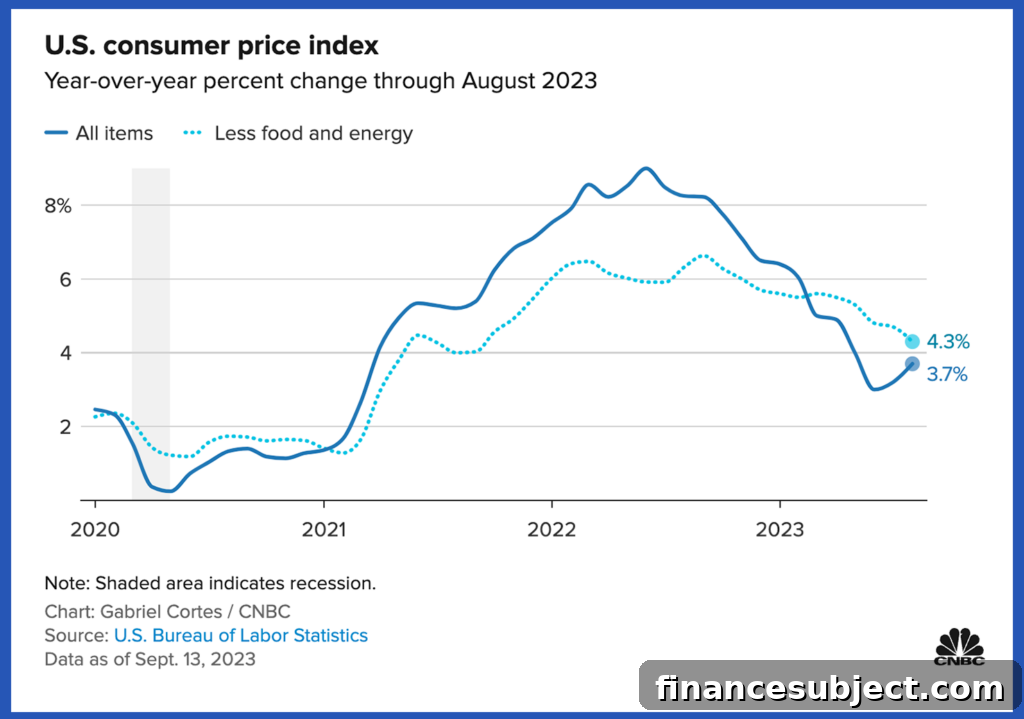
Despite rising interest rates and hawkish remarks from U.S. Federal Reserve Chair Jerome Powell, the American economy is still showing surprising resilience. The U.S. Consumer Price Index (CPI) update for August surprised to the upside, with headline inflation measuring 3.7% year over year.
On the positive side, continued strength in the economy supports jobs and gives workers leverage when negotiating wage increases. From an inflation perspective, however, a tight labor market combined with persistent price pressures makes it harder for the Fed to justify easing up on rate hikes.
Across the Atlantic, the European Central Bank also raised its key rate this week to 4%, up from 3.75%—the highest in the bank’s history. Only a few years ago the ECB was grappling with deflation risks and maintained a negative policy rate of -0.50%.
Highlights of the U.S. CPI report
- Overall CPI rose 0.6% from July to August.
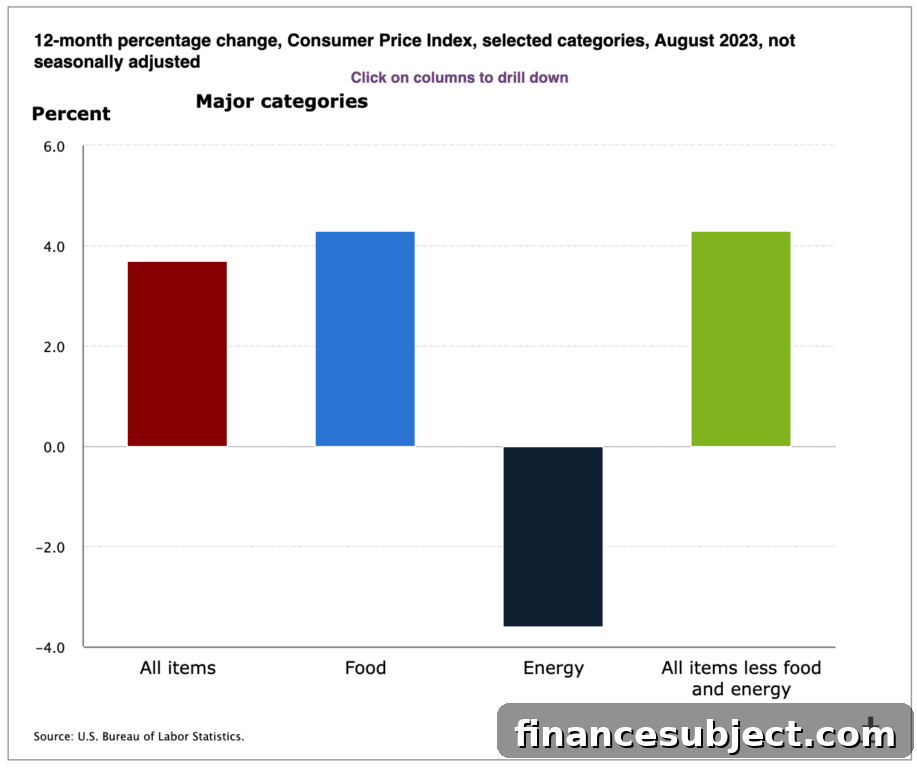
- Headline CPI was up 3.7% year over year.
- Core CPI, which excludes volatile food and energy prices, increased 4.3% year over year.
- Core CPI was 4.7% year over year in July.
- Energy costs rose 6.7% year over year, while gasoline prices were nearly 15% lower than August 2022.
- Inflation for used and new vehicles has cooled, with year-over-year increases of 2.9% and 3.1%, respectively.
- Shelter remains the largest contributor to inflation at 5.9%, with rents up 7.2% year over year.
- Airfare was a notable disinflation, down more than 13% year over year.
Markets appear to interpret these mixed signals as reason for the Fed to hold rates steady at the upcoming meeting. Futures pricing currently assigns a high probability that the Fed will pause next week, although a majority of observers still see another rate increase likely later in the year.
READ NOW
Adobe and Oracle beat expectations—but still disappoint
Tech earnings this week produced a reminder that market expectations often matter more than results. Adobe and Oracle both reported results that beat consensus estimates in some respects, yet their stocks fell on mixed forward guidance and the pullback in growth momentum.
Earnings highlights of the week
- Adobe (ADBE): Adjusted earnings per share were about $4.09 versus roughly $3.98 expected, on revenue around $4.89 billion versus a $4.87 billion forecast. The shares slipped modestly on the news despite the beat.
- Oracle (ORCL): Adjusted EPS came in near $1.19, slightly above expectations, while revenue at about $12.45 billion narrowly missed forecasts. Oracle shares dropped sharply after management tempered near-term sales growth expectations.
Oracle’s steep share decline—its largest since the early 2000s—illustrates how forward-looking expectations drive markets. Although the company still reported solid execution, a notable slowdown in cloud revenue growth versus prior quarters was enough to disappoint investors who had priced in continued acceleration. Even so, Oracle shares remain well ahead year to date for long-term holders.
Adobe’s results were healthy, but with the stock already up substantially this year, even a modest miss on expectations or cautious guidance can cause short-term selling. Management emphasized sustained customer confidence and highlighted investments in AI-enhanced products as a strategic focus.
READ NOW
Canadian consumers prefer value over luxury
Canadian shoppers are increasingly budget conscious, and recent quarterly results from Dollarama and Roots underscored that trend. The contrast between a value retailer and a lifestyle brand was clear in sales performance and investor reactions.
Canadian earnings highlights
- Dollarama (DOL/TSX): Adjusted EPS around $0.86 beat expectations near $0.77, with revenue of approximately $1.46 billion versus $1.40 billion forecast. Shares rose after the strong results.
- Roots (ROOT/TSX): Reported a loss per share of about $0.12 versus an expected loss near $0.10, on revenue roughly $49.4 million compared with $47.2 million expected. The stock was essentially unchanged following the report.
Dollarama’s performance reflects increased customer traffic as households prioritize value. Dollarama’s management cited strong comparable-store sales growth and continued plans to expand, including opening dozens of new locations across Canada over the next year. For many shoppers, low-price consistency and convenience remain powerful draws.
Roots, by contrast, continues to struggle with margin pressures despite inventory reductions. Management emphasized improved liquidity and manageable debt levels, but profitability has yet to recover. The company’s stock has been range-bound for an extended period, reflecting investor skepticism about a near-term turnaround.
The best Canadian bank is—drum roll—EQ
When ranking Canadian banks by long-term total shareholder return, one surprising name stands out: Equitable Bank. Over the last decade Equitable delivered a dramatic return, driven by a focused business model and an efficient digital deposit franchise.
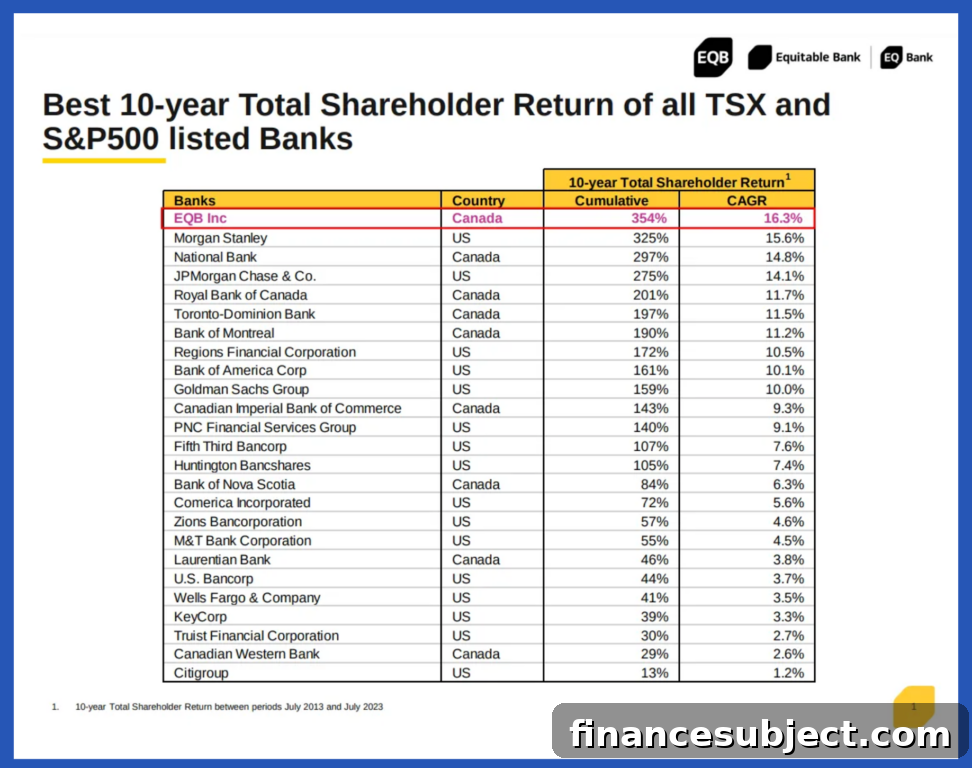
Equitable Bank’s outperformance reflects a strategy of dominating niche lending sectors—such as equipment finance, alt-A mortgages, reverse mortgages and specialty finance—while building a highly efficient online consumer bank to attract low-cost deposits. That combination has allowed the bank to channel deposits into higher-margin lending and generate attractive returns for shareholders.
While the Big Six Canadian banks remain appealing for diversification and stability, Equitable’s focused approach shows how smaller lenders can outperform by leveraging digital deposit platforms and specialized lending products.
USE TOOL