
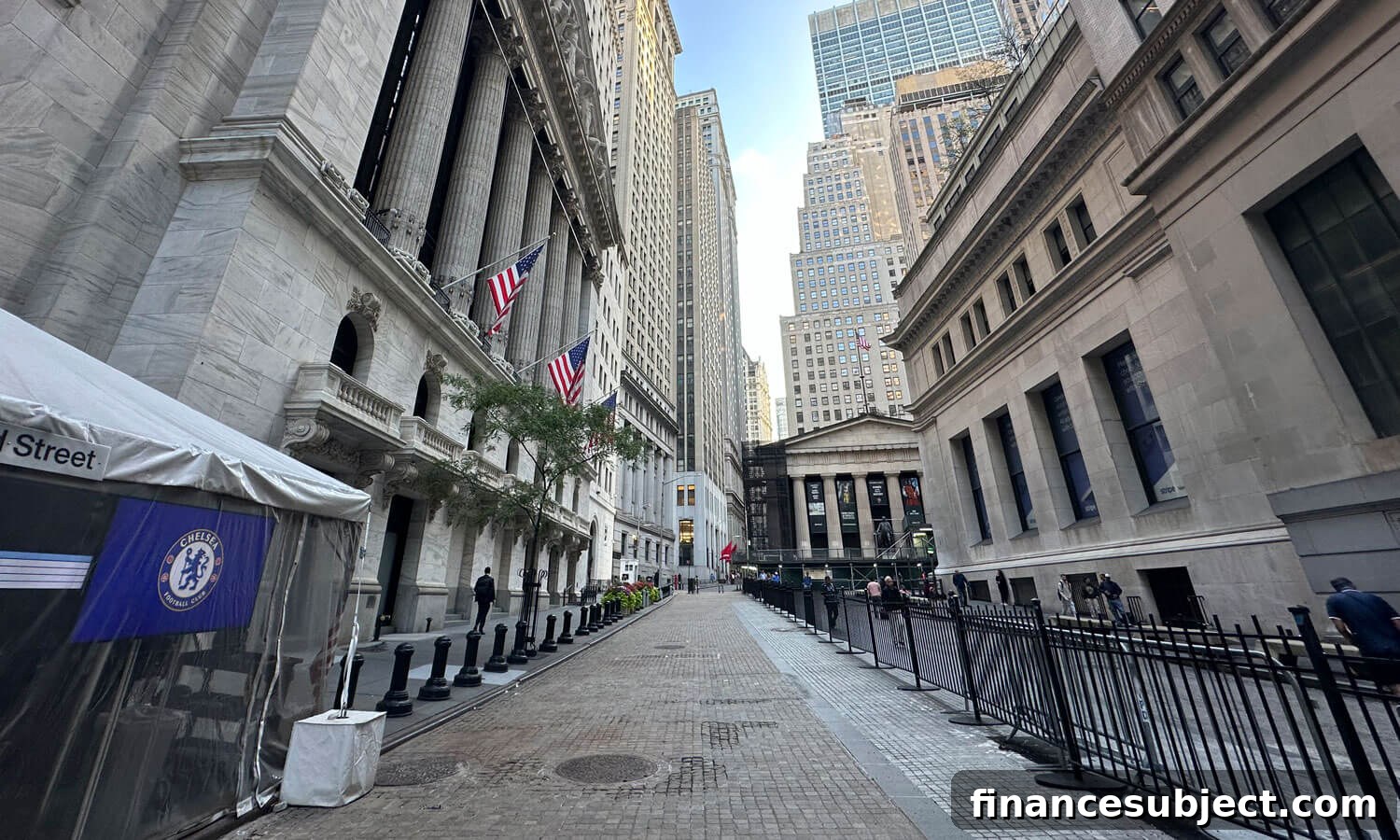
U.S. stocks pushed higher Friday, closing near record levels after Federal Reserve Chair Jerome Powell confirmed what markets had long anticipated: the Fed is preparing to cut interest rates in the near term to support the economy.
The S&P 500 climbed 1.1% following Powell’s widely watched speech, narrowing its gap to just 0.6% below the index’s all-time high set last month. The rally has recovered most losses from the sharp, summer downturn. The Dow Jones Industrial Average added 462 points, or 1.1%, closing above 41,000 for the first time since its July record. The Nasdaq composite rose 1.5%.
Also read
The best online brokers, ranked and compared
U.S. Fed Chair Jerome Powell’s speech on August 23
Powell’s remarks marked a notable shift from the Fed’s aggressive tightening campaign that began two years ago, when rising inflation forced policymakers to raise rates to multi-decade highs. The goal then was to cool demand by making borrowing more expensive for households and businesses, slowing the economy to bring inflation down.
While he emphasized that the job is not finished, Powell described several inflationary pressures in the past tense and said the U.S. job market “is no longer overheated.” That change allows the Fed to focus more on its other mandate: supporting an economy that is slowing but has, so far, avoided a recession.
“The time has come for policy to adjust,” Powell said. “The direction of travel is clear, and the timing and pace of rate cuts will depend on incoming data, the evolving outlook, and the balance of risks.” He stopped short of committing to specific timing or sizes for cuts, leaving markets to parse future data for guidance.
Bank of Canada recent cuts
“Canadians are experiencing rate cut déjà vu today, as the Bank of Canada (BoC) slashed its trend-setting overnight lending rate by a quarter of a per cent. It’s the second rate cut in as many months from the central bank. It implemented its first on June 5, bringing an end to a prolonged, 11-month rate hold and officially putting Canada on track for lower borrowing costs.”
Read the full article: Making sense of the Bank of Canada interest rate decision on July 24, 2024
Impact on Treasury yields
Treasury yields have already fallen significantly since April as investors priced in an eventual Fed easing. The main uncertainties are how deep the Fed’s cuts will be and how rapidly they will come. Futures markets currently imply a strong chance of about a one percentage point reduction in the federal funds rate by year-end, according to CME Group data — a level that would require larger or multiple moves beyond the usual quarter-percentage-point steps.
If markets are too optimistic and the Fed moves more cautiously, bond yields could rise again. That reversal could pressure stocks and other risk assets that benefited from declining yields this spring and summer.
How the markets are responding
Volatility has returned on days when yields spike: the S&P 500 recently posted its worst one-day loss in more than two weeks after Treasury yields climbed. Investors now closely monitor each economic release for clues about how Powell and other Fed officials will interpret the data.
On Friday, Powell’s tone sparked a broad market rally. Small-cap stocks led the advance, with the Russell 2000 jumping about 3%. Smaller companies typically gain more from rate cuts because they rely more on borrowing to fund growth.
Nvidia and Big Tech stock, too
More than 80% of companies in the S&P 500 rose on the session. The biggest individual contributor was Nvidia, which surged 4.5%. Nvidia has faced ups and downs this summer amid concerns that investors overextended in AI-driven names, but its shares have climbed again ahead of an upcoming earnings report.
Retailers and restaurants
Corporate results have generally come in better than expected this reporting season. Ross Stores rose 1.8% after beating analysts’ estimates for both revenue and profit; however, CEO Barbara Rentler noted that lower- and moderate-income shoppers still feel the effects of elevated prices. At the same time, Red Robin Gourmet Burgers plunged 8.2% after reporting a larger-than-expected quarterly loss and pointing to a slowdown in restaurant traffic.
Overall, the S&P 500 finished the day up 63.97 points at 5,634.61. The Dow closed at 41,175.08, up 462.30, and the Nasdaq gained 258.44 to finish at 17,877.79.
Newsletter
Get free MoneySense financial tips, news & advice in your inbox.
Bond and stock markets
In bond markets, the 10-year Treasury yield fell to about 3.79% from 3.86% late Thursday, while the two-year yield — which tends to track expectations for Fed policy — dropped to approximately 3.91% from 4.01%.
International equity markets were mixed. European indexes edged higher, while Asian markets finished mostly mixed. In Tokyo, the Nikkei 225 rose 0.4% after Bank of Japan Governor Kazuo Ueda signaled that future rate increases, if any, would be gradual. Earlier in the summer, a surprise BOJ move helped spark volatility when leveraged investors were forced to unwind crowded trades, and subsequent comments from officials helped calm markets.
Read more about stocks:
- The best dividend stocks in Canada
- Disney earnings: Results show profit, stock falls 2%
- Shopify weathering softening consumer spending
- Scotiabank increases U.S. foothold with stake in KeyCorp