Highlights that caught my eye this week.
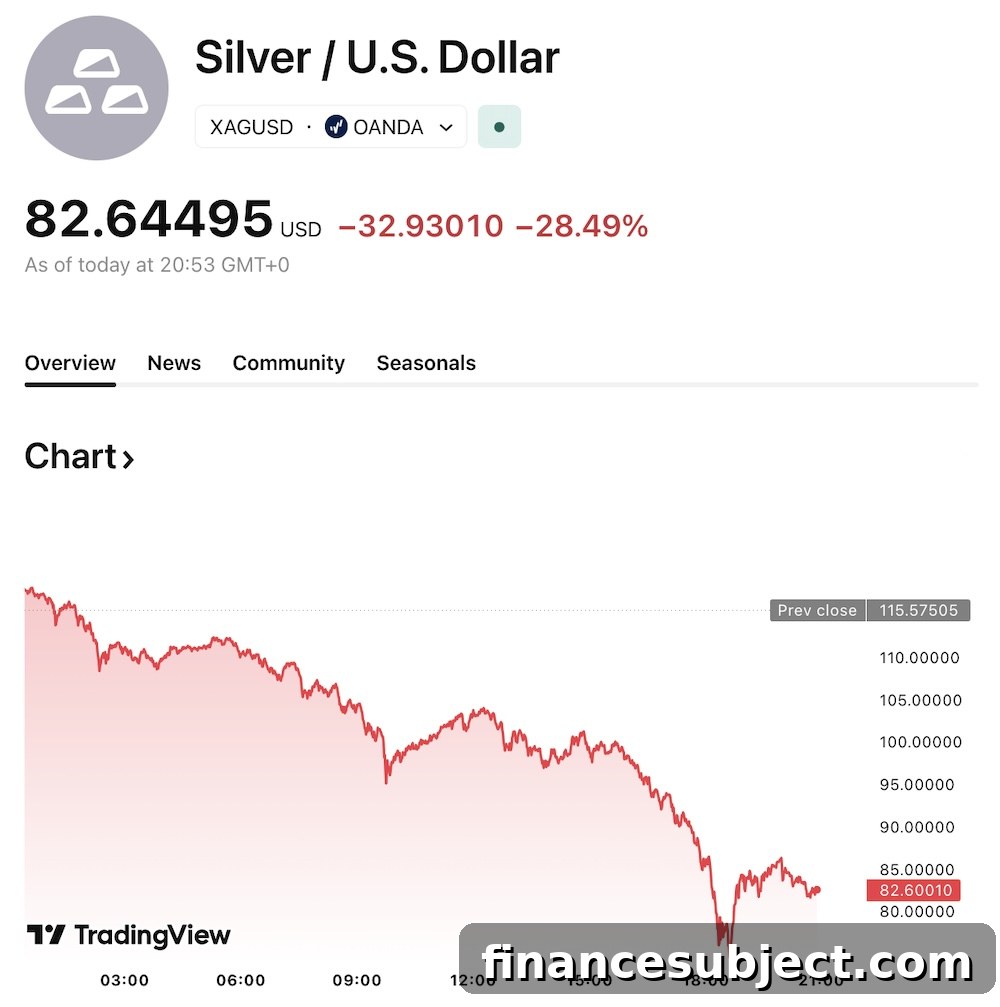
Where were you during the Great Silver Crash of 30 January 2026? Hiding behind the sofa, or celebrating a perfectly timed short on the way to buy something extravagant?
[Yes, it’s “Lambo” as in the car—don’t worry, I know the difference.]
This wasn’t a stock market wipeout. Equities largely carried on in what some call a Schrödinger Bubble. The headline event was the dramatic move in silver.
The price of silver plunged more than 30% at one point on Friday, 30 January 2026 — a single-day drop that rivals the scale of some major equity sell-offs. For an asset that had been on a parabolic run, such an abrupt reversal was alarming, if not entirely surprising.
Silver surfer
Gold and silver had climbed steadily for months, and silver’s rise became especially aggressive. Rapid, extended rallies often end in sharp corrections; this drop was one of those corrections writ large.
Market commentators offered various explanations — from changes in Fed expectations following reports about the next Federal Reserve chair to simple profit-taking. In truth, the timing of a crash like this is often unclear until after the fact. What does stand out is the speed and scale of the move, which strongly suggests heavy leverage and a forceful short-covering squeeze.
Large leveraged positions in futures and exchange-traded products can amplify moves in either direction. When a highly overbought metal meets a catalyst — political news, liquidity shifts, margin calls — the result can be violent. That appears to be what happened with silver on that Friday.
There’s always the temptation to look for a single villain. Maybe competing hedge funds and aggressive books helped accelerate the fall. Maybe the unwind revealed crowded trades and fragile positioning. Whatever the precise mechanics, the episode is a reminder that fast-rising assets can fall just as fast.
[Yes, the pundit on the business channel says he “knows.” That doesn’t mean the market cares.]
Have a great weekend.