

Kyle Prevost, creator of 4 Steps to a Worry-Free Retirement, Canada’s DIY retirement planning course, summarizes recent financial headlines and explains what they mean for Canadian investors.
Shopify struggles
Canada’s e-commerce leader—often the country’s second- or third-largest company by market value—reported mixed results on earnings day. While Shopify beat revenue and per-share earnings expectations for the quarter, the market reacted negatively to a softer outlook for free cash flow, driving the stock sharply lower.
Shopify earnings highlights
Shopify reports in U.S. dollars and is listed on both the Toronto and New York exchanges.
- Shopify (SHOP/TSX): EPS $0.34 (consensus about $0.31), and revenue $2.14 billion (consensus about $2.08 billion).
The stock fell more than 13% the day of the report, though it remains up roughly 14% year to date. Management highlighted record gross merchandise volume: the platform processed $75.1 billion in merchandise during the fourth quarter, a 23% increase from the prior year, and reported a net profit of $657 million compared with a loss in the same quarter of 2022.
Shopify executives pointed to strong customer activity during the holiday season—handling millions of requests per second on peak days—and emphasized geographic expansion opportunities in regions such as Latin America and Asia-Pacific. Still, investors focused on the company’s guidance that free cash flow will be materially lower than previously indicated. That shift in expectations is what sparked the sharp pullback in the share price.
Growth and transaction volume are impressive, but profitability and cash generation matter most in the current environment of higher-for-longer interest rates. Investors appear to be demanding clearer evidence of durable profits, which makes forecasting the timing and magnitude of Shopify’s sustained profitability difficult. That uncertainty has increased stock volatility and left shareholders debating whether the company can sustain growth while tightening cost controls.
Canadian pipelines and utilities—boring and dependable
Two major midstream companies and a pair of utilities released earnings this week, delivering largely predictable results consistent with capital-intensive, regulated industries.
Pipeline and utilities highlights
Key financials from recent reports:
- Enbridge (ENB/TSX): EPS $0.64 (consensus about $0.66), revenue $11.30 billion (consensus about $13.35 billion).
- Keyera (KEY/TSX): EPS $0.21 (consensus about $0.53), revenue $1.78 billion (consensus about $1.64 billion).
Keyera’s earnings per share missed expectations due to certain one-time charges not captured in analyst estimates, but the stock barely moved after the release. The company emphasized balance-sheet improvement: net debt to adjusted EBITDA stood at roughly 2.2x, comfortably below its 2.5x–3.0x target range. With a dividend payout ratio near 53% of free cash flow, Keyera’s dividend appears secure for now.
Enbridge carries more leverage—debt-to-EBITDA around 4.1x—but continues to generate steady cash flow from its diversified midstream and utility businesses. The company announced a 3.1% dividend increase, marking the 29th consecutive year of a raise, though investors appear cautious: the share price fell on the day of the announcement and the stock is down year-to-date. Enbridge recently announced workforce reductions to manage costs amid geopolitical uncertainty, persistent inflation and higher borrowing costs, underscoring the sensitivity of capital-intensive firms to interest rates.
Canadian utilities highlights
Utilities remain steady and predictable:
- Fortis (FTS/TSX): EPS $0.53 (in line with expectations), revenue $2.88 billion (slightly below consensus).
- Hydro One (H/TSX): EPS $0.30 (in line with expectations), revenue $1.98 billion (above consensus).
These regulated businesses typically produce stable cash flows and are sensitive to rate and regulatory environments. For investors seeking income and lower volatility, pipelines and utilities remain attractive components of many Canadian portfolios.
Cameco is painting a bigger picture
Cameco’s recent quarter missed earnings-per-share expectations modestly, and the stock has slipped more than 11% over the past five trading days. Still, the broader picture for the uranium producer is strong.
Cameco’s earnings highlights
Reported results:
- Cameco (CCO/TSX): EPS $0.21 (consensus about $0.25), revenue $844 million (consensus about $815 million).
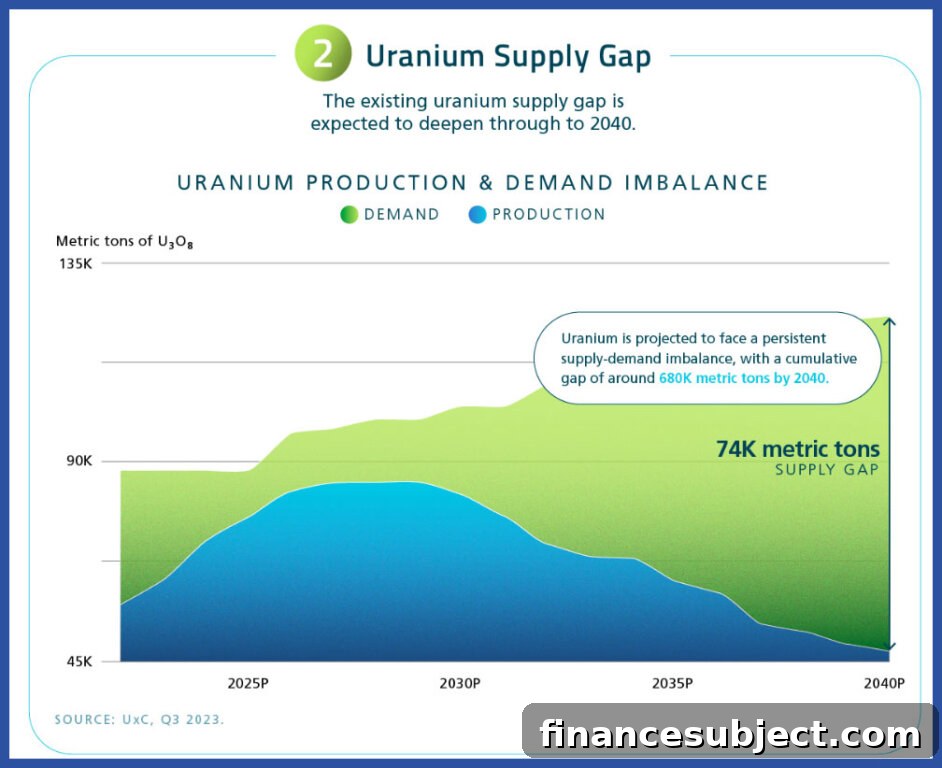
Despite the small miss, Cameco has delivered excellent returns over the past year and multiple years, reflecting growing investor enthusiasm for nuclear energy. Management argues the uranium market is entering sustained, multi-year growth driven by rising interest in nuclear power as part of decarbonization strategies. Spot uranium prices rose markedly in 2023, and many industry observers expect continued strength.
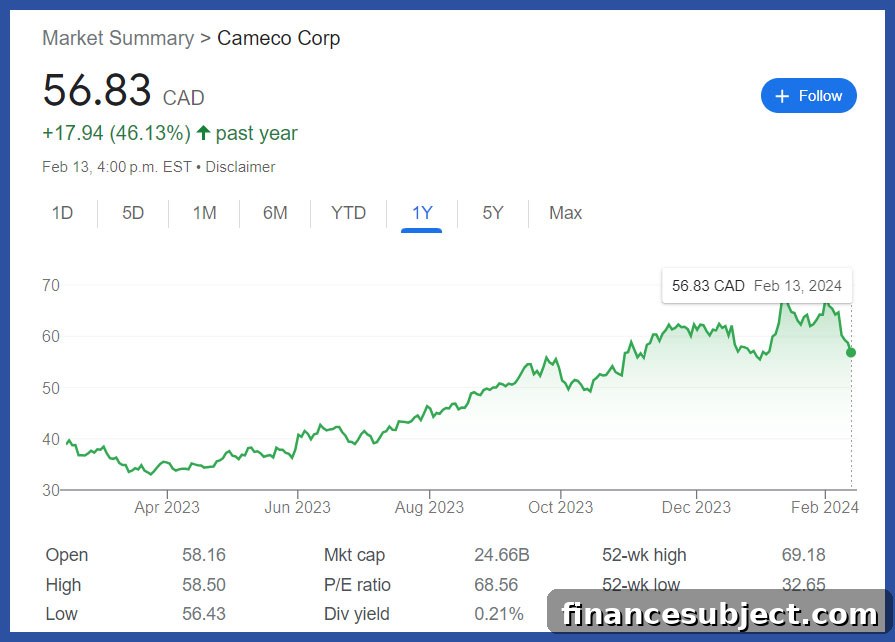
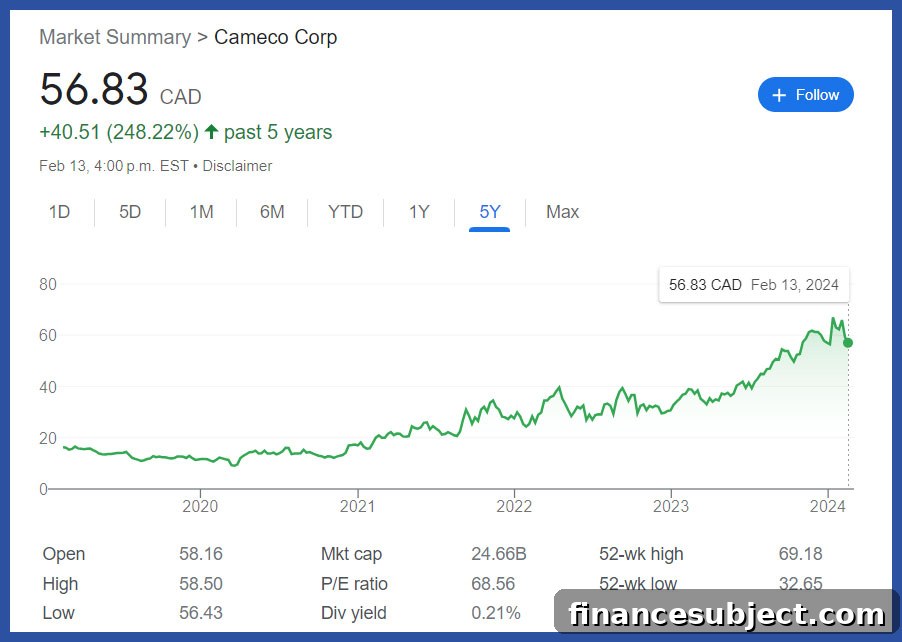
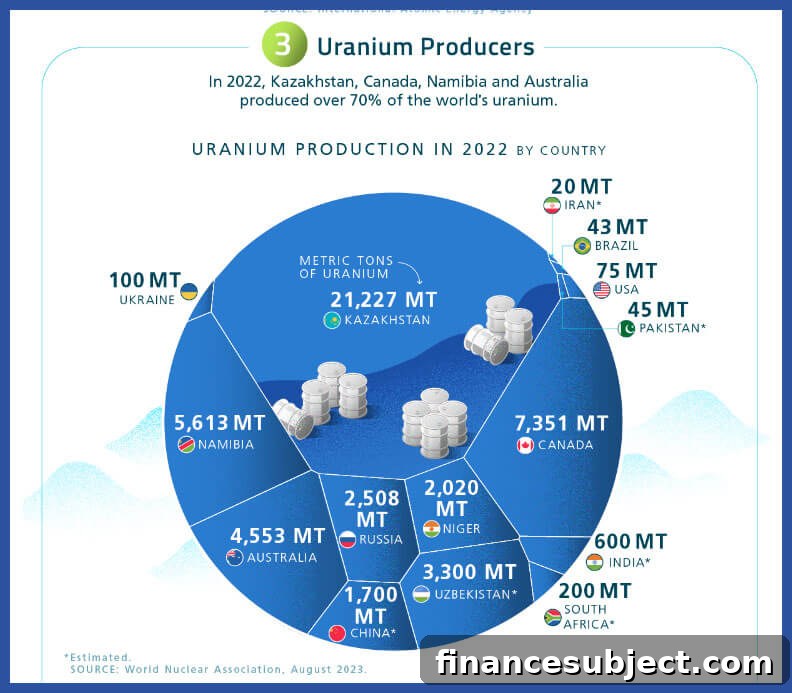
Cameco produces an important share of global uranium supply and has exposure to production and services across several regions, including joint ventures in Kazakhstan and recent acquisitions that broaden its geographic footprint. For investors who want direct exposure to uranium and the shift toward low-carbon baseload power, Cameco is a prominent option—though the key question remains whether current market prices already reflect anticipated growth.
Challenges at Barrick
Barrick Gold remains profitable with gold near USD $2,000 per ounce, but operational setbacks and higher-than-expected costs tempered investor enthusiasm. The company reported solid fundamentals—strong cash flow, minimal net debt and a maintained dividend—but production and cost guidance were revised lower due to equipment and operational issues.
- Barrick has a strong balance sheet with essentially no net debt.
- Free cash flow rose about 50% in 2023 versus 2022.
- The quarterly dividend of $0.10 will be maintained, yielding just under 3%.
- A $1 billion share buyback program is planned for 2024 after no repurchases in 2023.
Mining earnings highlights
Latest result:
- Barrick Gold (ABX/TSX): EPS $0.27 (consensus about $0.21), revenue $3.06 billion (consensus about $3.14 billion).
Production challenges in some operations and a higher total cost per ounce led to a share-price decline of roughly 20% so far this year. While the company remains cash-generative, miners face execution risk, and short-term operational setbacks can meaningfully affect returns.
A moment of perspective
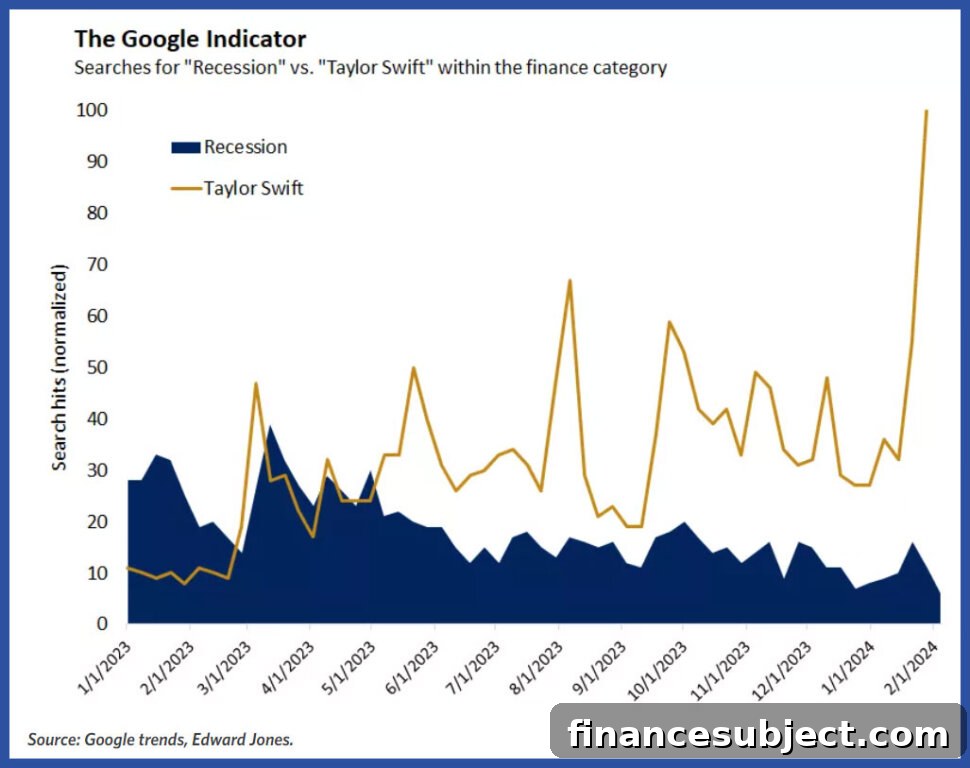
To close on a lighter note: consumer and cultural signals can sometimes reflect broader economic sentiment. When searches for entertainment and pop culture outpace searches for recession-related topics, it signals a shift in public focus—and in investor sentiment, too. Small signs like this can be a useful reminder to keep a long-term view.
Read more about investing:
- How might inflation impact your retirement plans?
- What is a cashable GIC?
- Will GIC rates keep going up in 2024?