
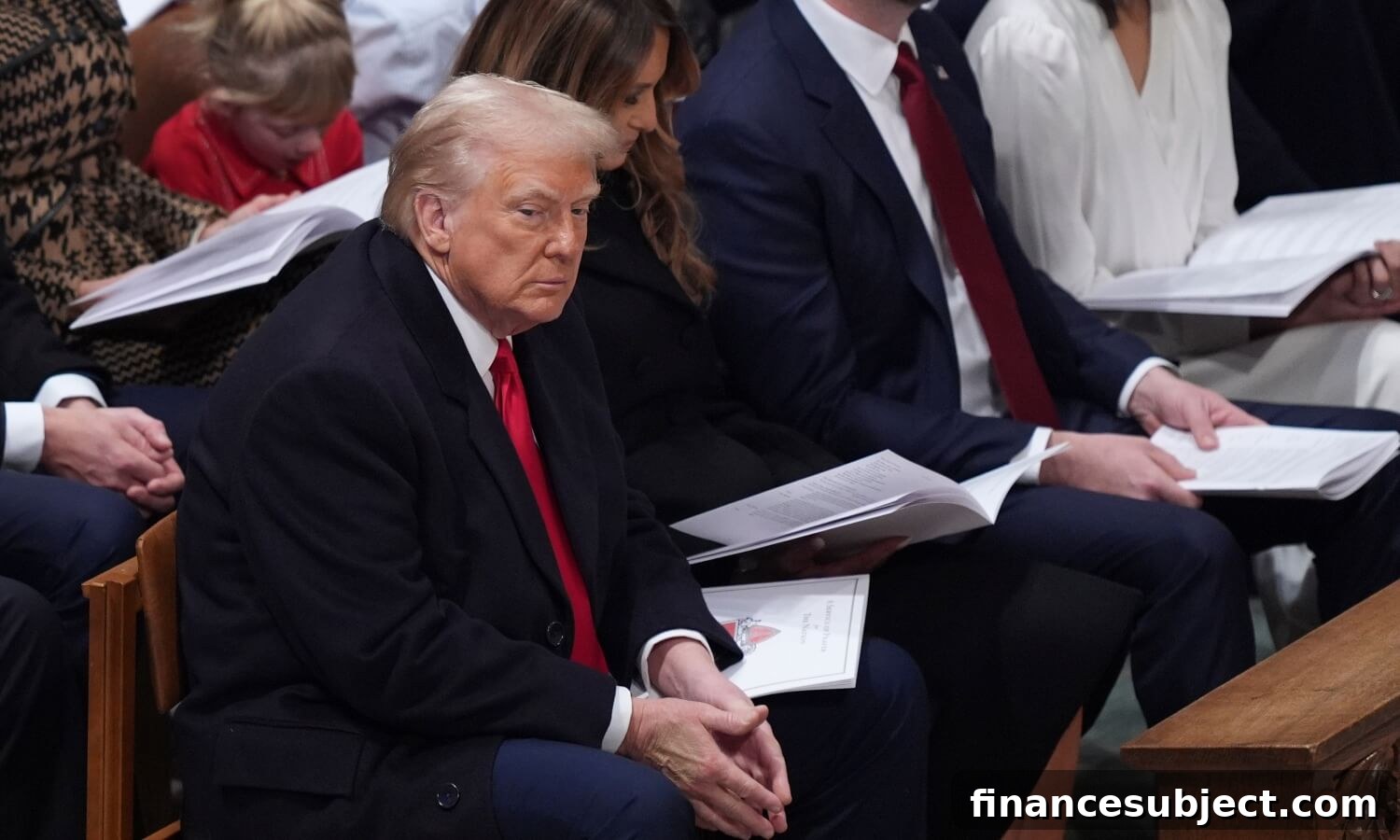
A CIBC analysis warns that broad tariffs imposed by the United States could shave a significant share off Canada’s economy. The report assesses several possible tariff scenarios on goods imported from Canada, weighing potential exemptions for key sectors such as oil, gas and automobiles and estimating the likely impact on Canadian GDP.
The bank’s study models tariff rates ranging from 10% to 20% and explores scenarios that carve out commodities or the auto industry. Even with exemptions for commodities — which account for nearly half of Canadian exports to the U.S. — a 20% tariff could reduce Canada’s gross domestic product by as much as 3.25% according to CIBC. A more limited scenario, where a 10% levy excludes both commodities and autos (together representing roughly 60% of exports to the U.S.), would still trim GDP by an estimated 1.35%.
Newsletter
Get MoneySense financial tips, news & advice in your inbox.
Canada’s response to threat of U.S. tariffs
Prime Minister Justin Trudeau has said Canada would respond to punitive U.S. tariffs and that “everything is on the table.” The CIBC report highlights why sweeping tariffs would carry costs not only for Canada but for the United States as well: many U.S. industries are tightly integrated with Canadian suppliers, particularly in energy and autos. Those sectors supply vital inputs and rely on complex, cross-border supply chains that cannot be easily or quickly replicated.
CIBC points out that the oil and gas sector alone represents roughly 28% of Canada’s exports to the United States, while the auto sector accounts for about 14%. Targeting those industries would risk increasing American inflation, undermining domestic employment in integrated operations and contradicting stated U.S. policy goals around energy. For these reasons, the report judges that some exemptions are plausible — but even with exemptions, the economic drag would remain material.
The study also notes that a permanent, sweeping 25% tariff is unlikely in the immediate term. Practical hurdles — including administrative implementation, the need for negotiations and the strong risk of retaliatory measures from Canada — make such an outcome less probable. CIBC’s view is that while rhetoric and threats raise uncertainty, a full-scale trade war producing a sustained 25% tariff across the board would face high political and economic resistance.
How serious is Trump?
U.S. President Donald Trump publicly discussed the possibility of tariffs on Canadian goods and has referred to using import taxes to reshape trade relationships. At several points he has suggested steep tariffs, including comments about 25% levies, and has said bluntly that the U.S. “doesn’t need” certain foreign-made products. However, policy steps taken to date have been more incremental: on inauguration day the administration ordered a review of alleged unfair trade practices and later signed an executive order directing that the study be completed by April 1.
The CIBC analysis focuses on the immediate economic effects of an initial tariff and does not attempt to quantify the additional consequences of retaliatory measures or a wider escalation. As the federal government in Ottawa has emphasized, Canada’s priority is to avoid tariffs while remaining prepared to respond if they are imposed. At a cabinet retreat in Montebello, Que., Mr. Trudeau stressed that Canada can supply the energy, critical minerals and resources U.S. industry needs — a reminder of the mutually dependent nature of the two economies.
Canada’s deep ties to the U.S. auto and energy sectors
A separate analysis from TD Economics reinforces the argument that auto manufacturing and energy exports create deep economic links between Canada and the United States. TD economists point out that claims about the share of cars produced in Canada that are sold in the U.S. can be misleading; estimates vary, and recent presidential remarks appear to overstate Canada’s share by around ten percentage points.
Shifting auto production from Canada to the United States would be possible in theory but faces significant near- to medium-term constraints. Replacing Canada’s roughly 1.5 million annual vehicle exports would require large capacity investments and time, and would also risk disruption to complex supply chains that span the continent.
TD’s study also stresses the centrality of Canadian energy exports to the bilateral trade balance. Canadian oil, natural gas and electricity exports are responsible for a substantial portion of the U.S. trade deficit with Canada. The report notes that, without those energy flows, the United States would move from running a trade deficit with Canada to recording a trade surplus of about $60 billion. In short, energy exports materially shape the trade statistics and economic interdependence that make abrupt policy shifts costly to both sides.

Get up to 3.00% interest on your savings without fees.

Lock in a guaranteed interest rate for your deposit.

Short-term promotional rate available on eligible deposits.
Trump’s trade deficit comments called into question
President Trump has suggested that the United States effectively “subsidizes” Canada by as much as US$200 billion, a figure that TD Economics says is difficult to reconcile with official statistics. Economists Marc Ercolao and Andrew Foran note that the number appears to be roughly four to five times larger than reported trade figures would support.
They emphasize that a trade deficit is not the same as a subsidy. When Americans buy Canadian goods and services, they are receiving value in exchange for the dollars spent. The U.S. trade deficit with Canada largely reflects factors such as strong U.S. consumer demand and the importance of Canadian energy exports — not a one-way transfer of wealth. Policymakers should therefore be cautious about conflating trade balances with subsidies when framing potential tariff responses.
Overall, both CIBC and TD caution that protectionist measures would be costly and disruptive. The economic ties between Canada and the U.S. run deep: integrated manufacturing, energy flows and long-standing supply chains mean that tariffs would create friction, raise costs for consumers and businesses on both sides, and risk retaliation that would amplify losses. The consensus among these Canadian economic analyses is that negotiations, targeted exemptions and measured responses are the most likely paths forward if tensions escalate, and that outright, sustained trade warfare would be harmful to each country’s economy.
Read more about the economy:
- Canada’s inflation rate ticks lower to 1.8% in December
- Canadians’ financial stress grows despite interest rate cuts
- Will Canada’s economy grow in 2025?
- GST holiday break: Is it good for Canada’s economy?