

Why trust us
MoneySense is an established personal finance publication with a long history of helping Canadians make informed money decisions. Our editorial team works with qualified personal finance experts and compares offerings from major banks, credit unions and card issuers to highlight notable features, fees and rewards options.
The Bank of Montreal (BMO) is one of Canada’s largest banks and provides a wide selection of personal credit cards. Whether you’re a student building credit, seeking no-fee cash back, focused on travel perks, or looking for a low-rate option to manage balances, BMO has cards aimed at different priorities. Below is a concise guide to standout BMO cards, what they offer and important details to compare before applying.
Best BMO no-fee credit card
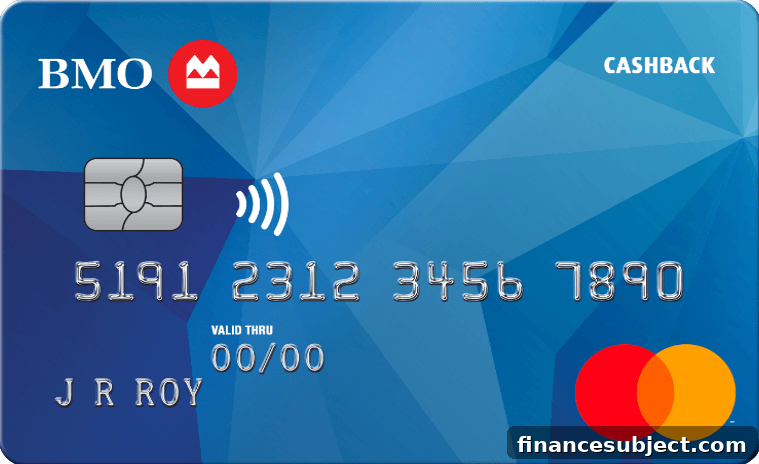
At a glance: The BMO CashBack Mastercard is a strong no-fee option if grocery rewards matter to you: it pays 3% cash back on groceries (capped at $500 in grocery spending per month), 1% on recurring bill payments and 0.5% on all other purchases. Redemptions are flexible and can be deposited into a BMO chequing or savings account, used as a statement credit or applied to other BMO accounts.
BMO CashBack Mastercard
go to site
Annual fee: $0
Earn rate: 3% on groceries (up to $500/month), 1% on recurring bills, 0.5% on other purchases
Welcome offer: Up to 5% cash back in the first 3 months; introductory balance transfer rate available with a transfer fee.
go to site
Card details
| Interest rates | 21.99% on purchases; 23.99% on cash advances and balance transfers |
| Income required | Not specified |
| Credit score | Not specified |
Pros
- High grocery earn rate for a no-fee card: 3% (first $500/month).
- Flexible redemption options, including deposits to BMO chequing/savings or statement credits.
- Low barrier to entry with no annual fee.
Cons
- Grocery cash back is capped at $500 per month, which limits rewards for larger households.
- Base earn rate of 0.5% on most purchases is modest compared with other cash back cards.
- Fewer premium benefits such as travel insurance or extensive travel perks.
Best BMO cash back credit card
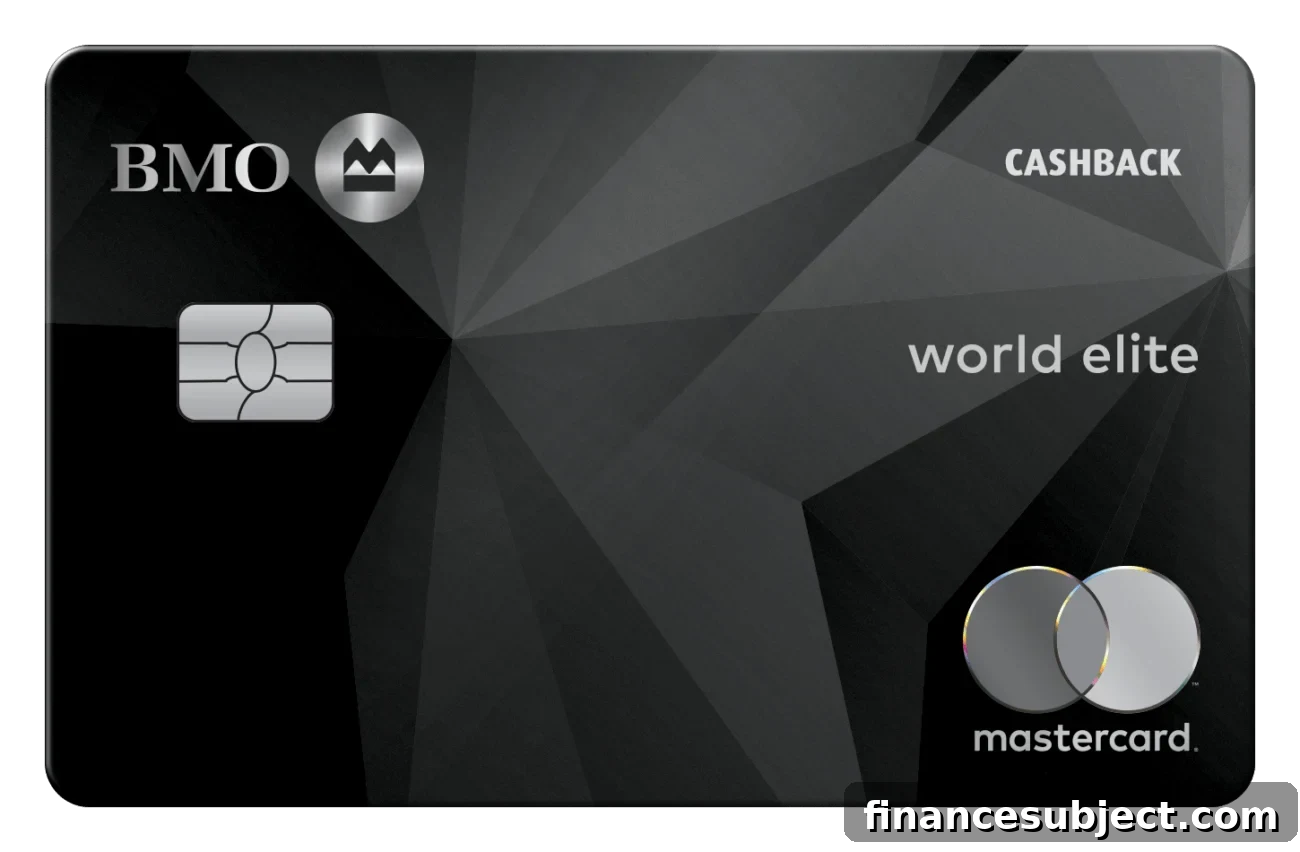
At a glance: The BMO CashBack World Elite Mastercard targets everyday Canadian spending with higher earn rates in categories like groceries, transit and gas. Monthly caps apply to accelerated categories, which reduces upside for heavy spenders, but the card can still deliver strong value for moderate spend profiles. The card also offers roadside assistance and other practical benefits.
BMO CashBack World Elite Mastercard
go to site
Annual fee: $139 (first-year fee often waived)
Rewards: Up to 5% on groceries, 4% on transit, 3% on gas and EV charging, 2% on recurring bills, 1% on other purchases (subject to monthly caps).
Welcome offer: Up to $650 in value with the first-year fee waiver and an introductory balance transfer promotion in many offers.
go to site
Card details
| Interest rates | 21.99% on purchases; 23.99% on cash advances and balance transfers (21.99% in Quebec) |
| Income required | Personal income $80,000 or household $150,000 |
| Credit score | Typically 680+ |
Pros
- High earn rates in practical categories like groceries, transit and gas.
- Includes complimentary roadside assistance.
- Can deliver good cash back for moderate spenders who stay within category caps.
Cons
- Monthly caps on accelerated categories reduce earnings for heavier spenders.
- Higher income requirement than many mainstream cards.
Best BMO credit card for dining and transit
At a glance: The BMO eclipse Visa Infinite is tailored to food and transit spending, offering 5 BMO Rewards points per $1 on qualifying dining, groceries, gas and transit purchases, and 1 point per $1 on other purchases. It also includes a $50 annual lifestyle credit and optional additional cardholder benefits that can boost points earnings.
BMO eclipse Visa Infinite

go to site
Annual fee: $120 (often waived first year)
Rewards: 5 points per $1 on dining, groceries, gas and transit; 1 point per $1 on other purchases.
Welcome offer: Significant introductory package that can include bonus points, statement credits and first-year fee waiver depending on promotion.

go to site
Card details
| Interest rates | 21.99% on purchases; 23.99% on cash advances and balance transfers |
| Income required | Personal $60,000 or household $100,000 |
| Credit score | Typically 725+ |
| Point value | 1 BMO Rewards point ≈ $0.0067 when redeemed for travel |
Pros
- Very strong earn rate on dining, groceries, gas and transit—likely to suit urban and food-focused spenders.
- $50 annual lifestyle credit adds value each year.
- Includes mobile device protection and other cardholder benefits.
Cons
- BMO Rewards points deliver best value when redeemed for travel; other redemptions return less value.
- Base earn value is modest when converted to dollars outside of bonus categories.
- Travel insurance on the card is useful but not the most comprehensive available.
Best BMO travel credit card
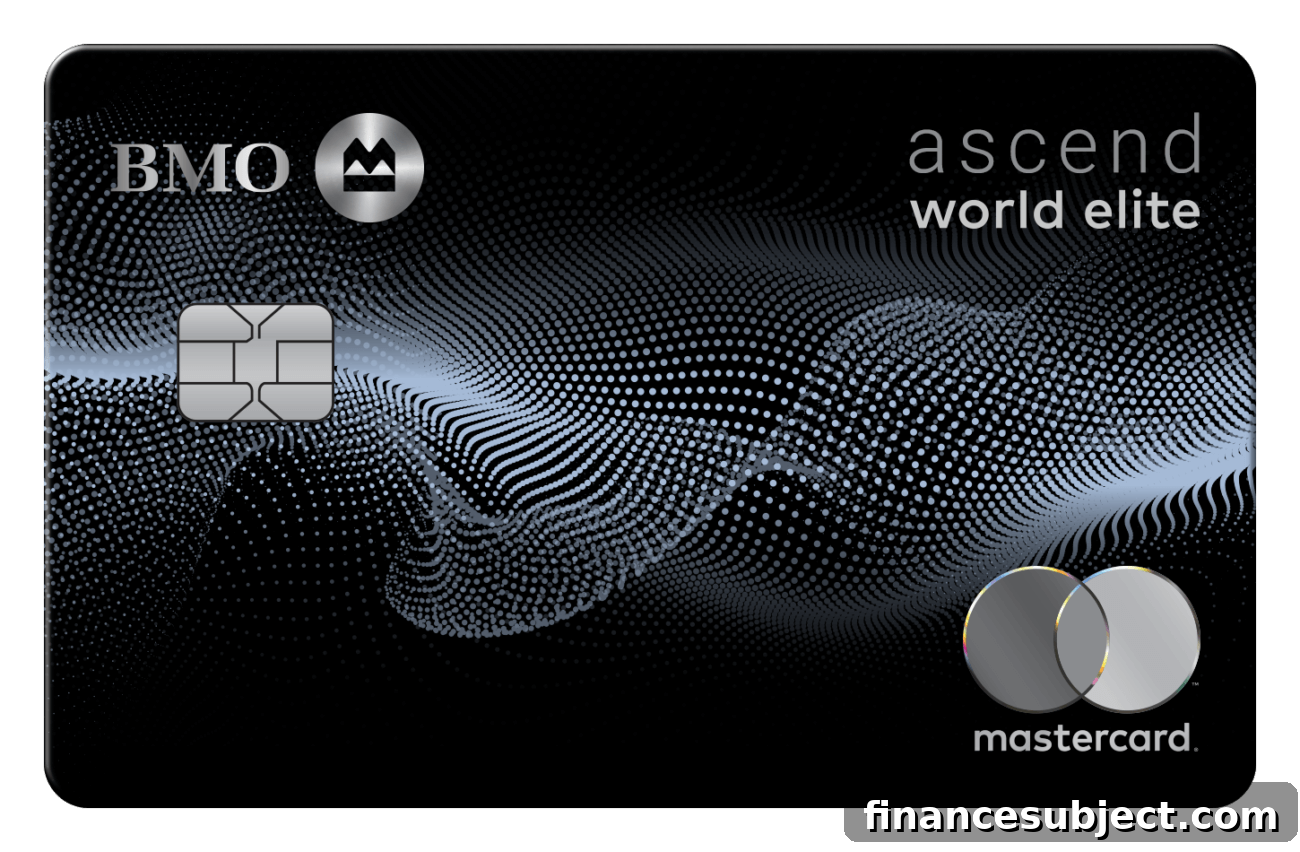
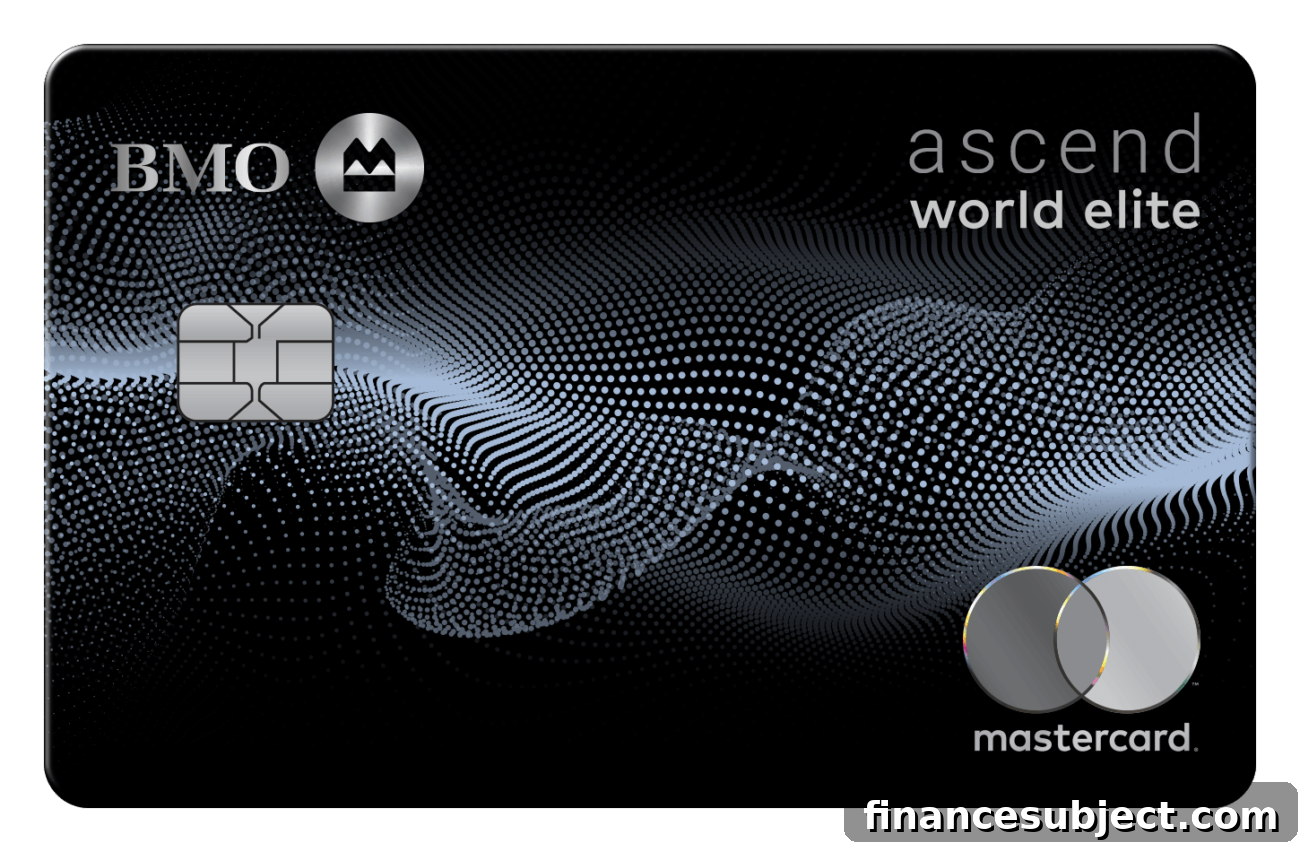
At a glance: The BMO Ascend World Elite Mastercard targets travelers with comprehensive travel insurance, membership benefits like Mastercard Travel Pass by DragonPass (including several complimentary lounge passes), and competitive rewards for travel purchases. It rewards travel spending with a higher point earn rate and includes other premium protections.
BMO Ascend World Elite Mastercard
go to site
Annual fee: $150
Rewards: 5 points per $1 on eligible travel, 3 points per $1 on dining and entertainment, 1 point per $1 on other purchases.
Welcome offer: Generous introductory packages typically include bonus points, lounge passes and first-year fee waivers for primary and authorized users.
go to site
Card details
| Interest rates | 21.99% on purchases; 23.99% on balance transfers and cash advances |
| Income required | Personal $80,000 or household $150,000 |
| Credit score | Typically 700+ |
| Point value | 1 BMO Rewards point ≈ $0.0067 when redeemed for travel |
Pros
- Complimentary DragonPass Mastercard Travel Pass membership and lounge access with included passes.
- Comprehensive travel insurance and strong travel earning rates.
- Flexible redemption via Pay with Points for travel bookings.
Cons
- Points are most valuable for travel redemptions; other redemptions return less value.
- Annual fee is above average for some travel-focused cards.
Best BMO low interest credit card
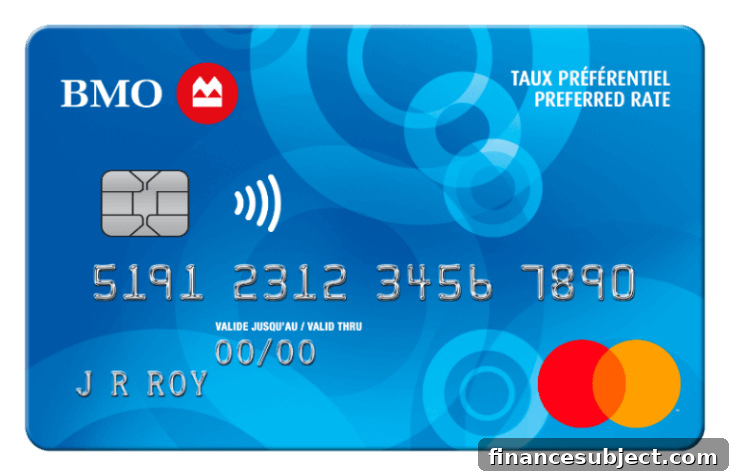
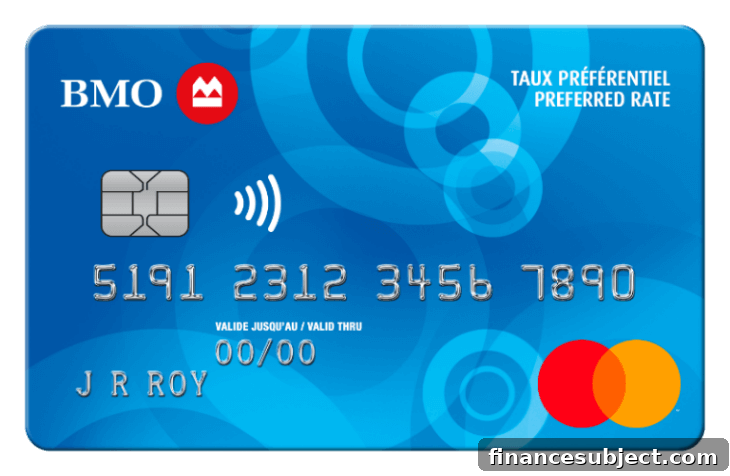
At a glance: For cardholders who occasionally carry a balance or want a lower interest option, the BMO Preferred Rate Mastercard offers a more manageable purchase rate than typical cards. It has a modest annual fee and often features extended introductory balance transfer promotions that can help consolidate debt at a lower cost.
BMO Preferred Rate Mastercard
go to site
Annual fee: $29 (often waived first year)
Low interest: Around 13.99% on purchases; low-rate balance transfer promotions commonly available.
Welcome offer: Extended 0% introductory balance transfer periods with a transfer fee in many promotions.
go to site
Card details
| Interest rates | Lower rates for cash advances and balance transfers compared with many cards (see issuer for current details) |
| Income required | From around $15,000 personal or household |
| Credit score | Typically 700+ |
Pros
- Low ongoing purchase rate helps reduce interest costs for those who carry balances.
- Lower cash advance rate than many standard cards.
- May include balance transfer promotions and fee waivers for the first year.
Cons
- Few premium perks beyond purchase protection and extended warranty.
- Balance transfers generally carry a transfer fee and introductory periods vary.
Best BMO premium rewards credit card
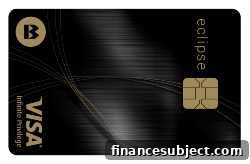
At a glance: The BMO eclipse Visa Infinite Privilege is a high-end rewards card with premium travel and lifestyle benefits. A large annual fee is offset in part by a substantial annual lifestyle credit, airport privileges, lounge access and enhanced travel insurance. It’s best suited to frequent travellers and high spenders who can make use of the card’s benefits.
BMO eclipse Visa Infinite Privilege
go to site
Annual fee: $599
Rewards: 5 points per $1 on groceries, gas, travel, dining and drugstores; 1 point per $1 on other purchases.
Welcome offer: Large introductory packages can include bonus points, lounge passes, lifestyle credits and added benefits for authorized users.

go to site
Card details
| Interest rates | 21.99% on purchases; 23.99% on cash advances and balance transfers (rates may vary by province) |
| Income required | Personal $150,000 or household $200,000 |
| Credit score | Typically 760+ |
| Point value | 1 BMO Rewards point ≈ $0.0067 for travel redemptions |
Pros
- Generous lifestyle credits and airport privileges including lounge visits.
- High earn rates across several common spending categories.
- Comprehensive travel insurance and premium travel benefits.
Cons
- Very high annual fee and high income requirements make it a niche product for those who will maximize perks.
- Travel coverage limits for older cardholders are more restrictive on some cards.
Best BMO student credit card
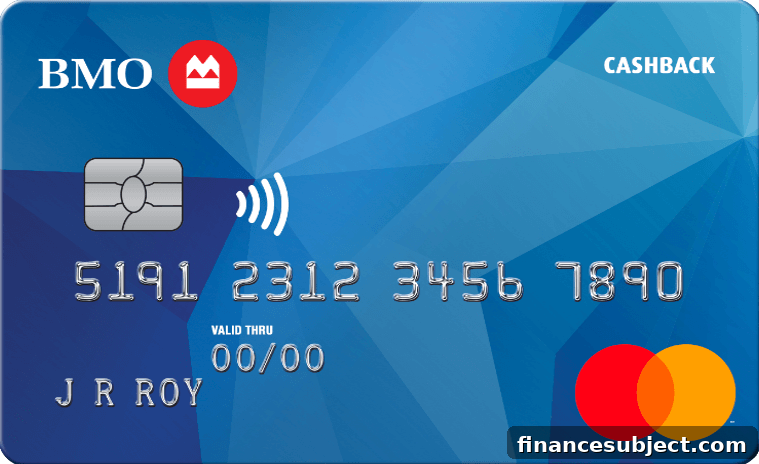
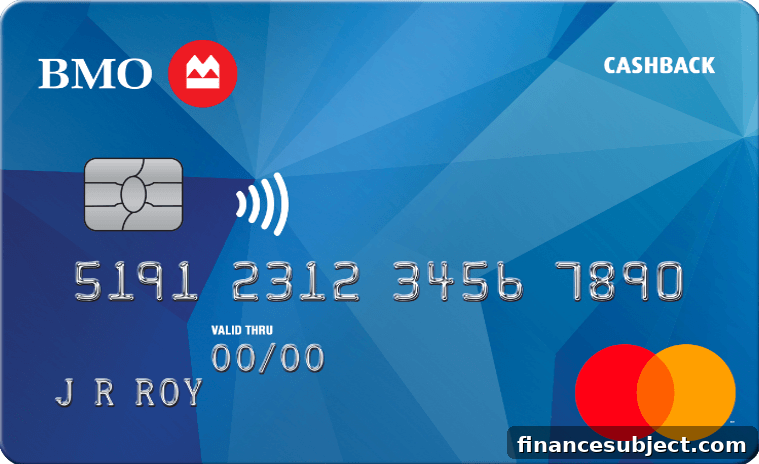
At a glance: The student variant of the BMO CashBack Mastercard offers the same simple and approachable rewards structure—3% on groceries (subject to the same monthly cap), 1% on recurring bills and 0.5% on other purchases—with no annual fee. It’s a suitable starter card for students wanting to build credit while earning straightforward cash back.
BMO CashBack Mastercard (Student)
go to site
Annual fee: $0
Rewards: 3% on groceries, 1% on recurring bills, 0.5% on other purchases
Welcome offer: Promotional cash back offers may apply for new cardholders.
go to site
Card details
| Interest rates | 21.99% on purchases; 23.99% on cash advances and balance transfers |
| Income required | Not specified |
| Credit score | Not specified |
Pros
- No annual fee and straightforward cash back structure suited to students.
- Flexible redemption options into BMO accounts or as statement credits.
- Includes basic purchase protection and extended warranty.
Cons
- Monthly caps on bonus categories limit rewards for higher grocery spend.
- Low base earn rate (0.5%) on most non-bonus purchases.
About BMO Rewards
What is the value of BMO Rewards points?
The BMO Rewards program offers flexible redemption options and values points differently depending on how you redeem them. Points generally deliver the best value when redeemed for travel through the rewards portal. Typical valuations are:
- Travel: 150 BMO points = $1 → 1 point ≈ $0.0067 (about 0.67%)
- Non-travel redemptions: 200 BMO points = $1 → 1 point = $0.005 (about 0.5%) for statement credits, gift cards or merchandise
How to redeem BMO Rewards points
BMO Rewards points are redeemed through the issuer’s rewards portal. You can use points to book travel (flights, hotels, packages) via the portal or to apply statement credits, buy gift cards, or use other redemption options. Phone bookings may be available but can include a service fee.
When comparing BMO cards, consider your typical monthly spending, whether category caps will limit your rewards, and which perks (travel insurance, lounge access, roadside assistance, device protection) matter most. For many cardholders, redeeming points for travel provides the best value, while cash-back cards are easier to understand and use for everyday savings.