

Kyle Prevost, creator of 4 Steps to a Worry-Free Retirement, Canada’s DIY retirement planning course, shares financial headlines and offers context for Canadian investors.
Facebook thrives—the rest of tech, not so much
This week four major tech companies reported quarterly results. All beat analyst expectations for earnings and revenue, but only Meta Platforms (often called Facebook) produced results that genuinely excited investors.
Big tech earnings highlights
All figures are in U.S. dollars unless noted otherwise.
- Microsoft (MSFT/NASDAQ): Earnings per share $2.93 (versus $2.78 expected) and revenue $62.02 billion (versus $61.12 billion predicted).
- Alphabet (GOOGL/NASDAQ): Earnings per share $1.64 (versus $1.59 expected) and revenue $86.31 billion (versus $85.33 billion predicted).
- Meta (META/NASDAQ): Earnings per share $5.33 (versus $4.96 predicted) and revenue $40.1 billion (versus $39.18 billion predicted). Meta also announced its first-ever cash dividend of $0.50 per share.
- Apple (AAPL/NASDAQ): Earnings per share $2.18 (versus $2.10 predicted) and revenue $119.58 billion (versus $117.91 billion predicted).
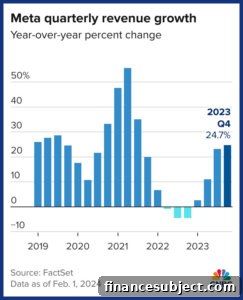
Meta’s strong ad revenue growth, lower expenses and the dividend announcement drove a dramatic share-price jump in after-hours trading. The stock’s recent surge caps a big run that began in late 2022, even while the company’s virtual-reality division posted a large quarterly loss.
By contrast, Microsoft and Alphabet saw their stocks fall despite solid results. That reaction likely reflects very high market expectations after strong performance in 2023 and early 2024. It’s worth remembering both companies remain up year-to-date—Microsoft by over 7% and Alphabet slightly positive for the year despite short-term pullbacks.
All three companies highlighted cloud computing as a primary growth driver. They also noted ongoing cost-cutting initiatives, including layoffs, intended to improve efficiency.
Apple too beat estimates but faced investor concern over a 13% sales decline in China and weaker iPhone revenue guidance, sending shares lower in after-hours trading.
CP and Brookfield keep a steady hand on the profit tiller
On the Canadian earnings front, Brookfield Infrastructure and Canadian Pacific Kansas City (CP) reported results that emphasized steady cash flows and continued operational focus.
Canadian earnings highlights
Figures are in Canadian dollars unless otherwise noted.
- Brookfield Infrastructure Corp (BIP/TSX): Reported an EPS loss of USD $0.20 (versus an expected USD $0.11) and revenue of USD $4.97 billion (versus USD $2.03 billion predicted). Large acquisition and disposition activity can make individual quarters appear volatile.
- Canadian Pacific Kansas City Ltd. (CP/TSX): Reported EPS of $1.18 (versus $1.12 expected) and revenue of $3.78 billion (versus $3.68 billion predicted).
Brookfield’s results can be complex because the company frequently buys, sells and restructures assets—so headline numbers may not reflect the underlying performance. Management emphasized successful capital recycling and increased free funds from operations (FFO), and the market responded calmly, with modest stock gains.
CP’s results reflected improving operational efficiency. The company raised its operating ratio, which contributed to stronger margins. Executive commentary focused on the benefits of the Kansas City Southern integration and on capturing synergies from an expanded North American rail network.
Both companies signalled confidence in cash flow stability and capital allocation, an important consideration for income-focused investors who rely on dividends and predictable distributions.
The U.S. Federal Reserve puts the brakes on its rate-cut momentum
Markets fell after the U.S. Federal Reserve held interest rates steady and softened language about the timing of future cuts. Chair Jerome Powell’s remarks suggested rate cuts are unlikely in the near term, although policymakers still expect easing later in the year.
The U.S. Federal Reserve announcement brief
Key takeaways from the Fed’s statement and recent economic data:
- A rate cut in March is now considered unlikely.
- Policymakers still expect rate reductions at some point this year, but timing is uncertain.
- Futures markets continue to price several cuts in 2024, reflecting some divergence between markets and the Fed’s tone.
- Inflation continues to trend downward, easing pressure on tighter monetary policy.
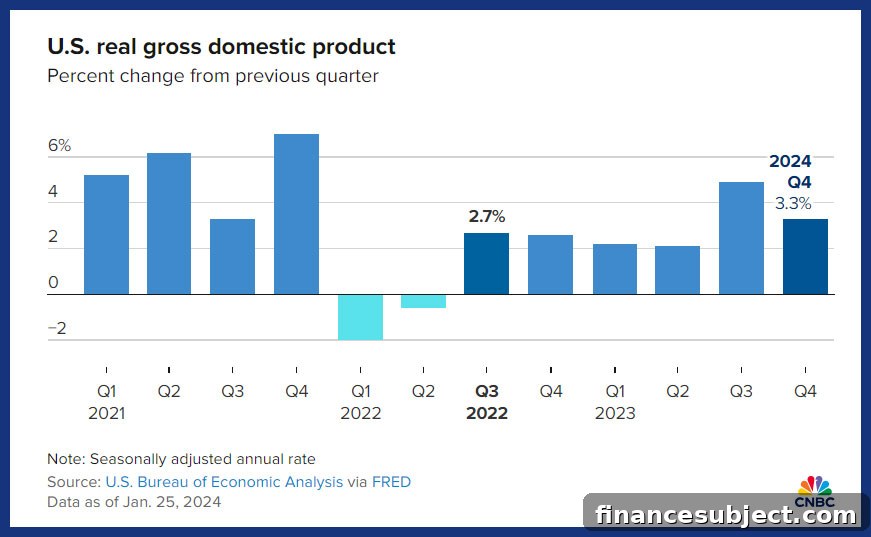
- Solid U.S. GDP growth reduces immediate pressure on the Fed to lower rates quickly.
In Canada, GDP data showed modest growth late in the year, easing short-term recession concerns. However, per-capita GDP has been slipping, which warns there are still challenges beneath the surface of headline growth rates.
Canadian investors: confident, but often overestimate their knowledge
Questrade’s recent Investment Sentiment Survey—conducted by Leger—highlights how many Canadians feel about saving and investing. Most respondents stress long-term planning and prioritize retirement savings, which is encouraging.
Survey highlights
- 73% believe staying the course is the best way to meet retirement goals.
- 62% say saving for retirement remains a priority despite higher living costs.
- Nearly half report investing the same or more in the current economic climate.
- 37% say digital tools have made building wealth easier.
The survey also found many people consider themselves financially literate while simultaneously relying on their financial institutions for education—an indicator that self-assessed knowledge can overstate actual understanding.
Self-reported confidence is common across many domains, and finance is no exception. Emerging technologies and social platforms can help with research, but they’re not substitutes for core investing principles: focus on earnings growth, efficient markets, diversification and low fees. These fundamentals remain relevant regardless of the tools used to access information.
It’s positive to see Canadians focused on the long term, but it’s also important to be discerning about information sources and to seek trustworthy, transparent guidance when planning for retirement.
Read more about investing:
- How might inflation impact your retirement plans?
- What is a cashable GIC?
- Will GIC rates keep going up in 2024?