Kyle Prevost, editor of Million Dollar Journey and founder of the Canadian Financial Summit, reviews the week’s financial headlines and explains what they mean for Canadian investors.
Hitting our head on the U.S. debt ceiling
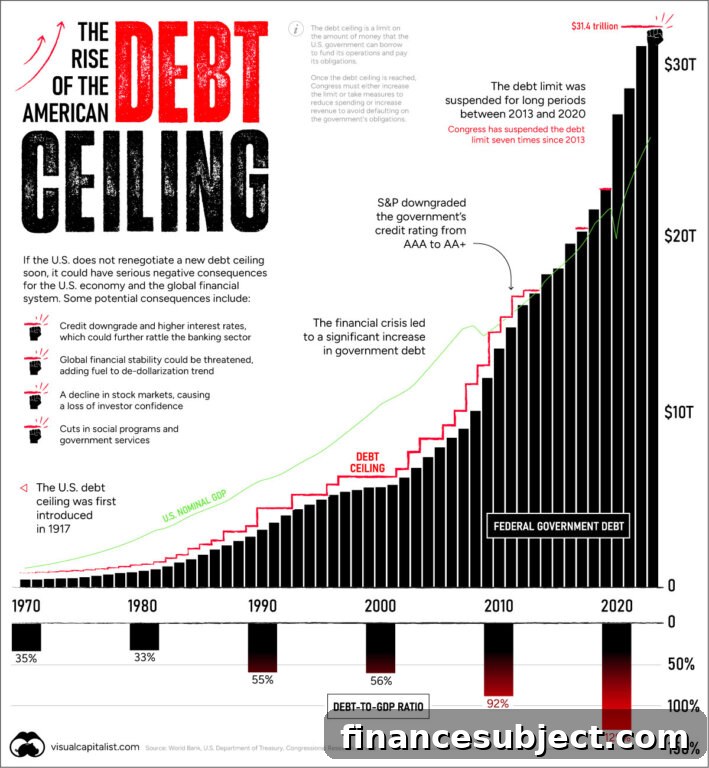
The dominant market story this week was the ongoing drama around the U.S. debt ceiling. While political debates are not our primary focus, politics and economics are tightly linked — and this episode has real consequences for global markets.
For readers unfamiliar with the situation, the key questions are straightforward:
- What is the U.S. debt ceiling?
- How serious is the risk?
- Does it matter to Canadian investors?
The debt ceiling is a statutory cap set by Congress on how much the U.S. Treasury can borrow. It is not a vote on new spending; rather, it authorizes borrowing to cover obligations already approved by prior budgets. If Congress does not raise or suspend the limit, the Treasury could run out of cash to meet its commitments.
Accounting for government receipts and payments is complex, with tax inflows, social program disbursements and other cash flows moving daily. Treasury Secretary Janet Yellen has repeatedly warned that the department could exhaust its extraordinary measures by an estimated date, creating a risk of missed payments unless lawmakers act.
The potential economic fallout is serious. A failure to resolve the debt limit could trigger a sharp economic contraction, widespread layoffs, and shocks to global financial markets. U.S. government debt is widely treated as a low-risk store of value; a default or prolonged brinkmanship would undermine that trust, push up borrowing costs, and trigger a reassessment of risk across asset classes.
Many economists and analysts have modeled the consequences. Some scenarios show very large contractions in equity markets and severe disruption to credit markets if the U.S. were to default on its debt. That is why this issue matters beyond U.S. political theater — it matters to anyone with investments tied to global markets, including Canadians.
That said, history offers some comfort: Congress has raised or suspended the debt limit many times, often across administrations of both parties, and the United States has never actually failed to meet its debt obligations. Recent reports from Washington signaled a growing likelihood of a negotiated deal to raise the ceiling while pairing it with spending parameters, and markets responded positively when those talks showed progress.
From an investor’s perspective, the challenge is assessing a low-probability but high-impact event. Analysts’ estimates of the odds of a failure to avert default have varied widely. Even if the probability is modest, the consequences would be large — so investors and institutions are beginning to price that tail risk into markets. If you have U.S. exposure in a portfolio, it’s prudent to consider how you would respond to heightened volatility and credit stress.
If you are concerned, political engagement by citizens is one way to help reduce the odds of a harmful outcome. Cooler heads and pragmatic compromise historically tend to prevail when the economic stakes are this high.
Canadian banks prioritize rainy day contingencies over quarterly profits
Canada’s major banks posted a subdued earnings season as they increased provisions for potential credit losses. That conservative approach trimmed profit margins this quarter but strengthens resilience if economic conditions worsen.
Canadian bank earnings highlights
Bank of Montreal (BMO/TSX): Earnings per share of $2.93 (vs. $3.23 expected) and revenues of $8.44 billion (vs. $8.26 billion expected).
Bank of Nova Scotia (BNS/TSX): Earnings per share of $1.70 (vs. $1.77 expected) and revenues of $7.93 billion (vs. $8.01 billion expected).
Royal Bank of Canada (RY/TSX): Earnings per share of $2.65 (vs. $2.81 expected) and revenues of $13.52 billion (vs. $13.16 billion expected).
Canadian Imperial Bank of Commerce (CIBC/TSX): Earnings per share of $1.70 (vs. $1.63 expected) and revenues of $5.70 billion (vs. $5.69 billion expected).
Toronto-Dominion Bank (TD/TSX): Earnings per share of $1.94 (vs. $2.08 expected) and revenues of $12.54 billion (vs. $12.38 billion expected).
Investor reactions were muted overall. CIBC outperformed the group, rising a little over 2% on its report day, while BMO and TD fell roughly 4% on their respective announcement days. Scotia and RBC posted modest declines as well.
The broader takeaway is that Canada’s banking system remains conservatively managed. Increased provisions reduce near-term earnings but help banks weather credit stress without destabilizing the system. For income-oriented investors, these results reinforce the value of long-term perspective when evaluating bank stocks.
American retailers keep heads above water
Retail earnings continued to show mixed but generally resilient results across major U.S. chains. The market appears to have an accurate read on retailer performance, and many large names reported results close to expectations.
U.S. retail earnings highlights
- Dollar Tree (DLTR/NYSE): EPS $1.47 (vs. $1.54 expected); revenues $7.32 billion (vs. $7.27 billion expected).
- Best Buy (BBY/NYSE): EPS $1.15 (vs. $1.09 expected); revenues $9.47 billion (vs. $9.52 billion expected).
- Costco (COST/NYSE): EPS $2.93 (vs. $3.29 expected); revenues $52.60 billion (vs. $54.57 billion expected).
- Lowe’s (LOW/NYSE): EPS $3.67 (vs. $3.45 expected); revenues $22.35 billion (vs. $21.68 billion expected).
In the technology sector, Nvidia surprised to the upside. The AI-driven demand story remains powerful: Nvidia reported EPS that outperformed estimates and its stock surged, reflecting investor enthusiasm for AI-focused growth.
Remember that stock markets always go up… eventually
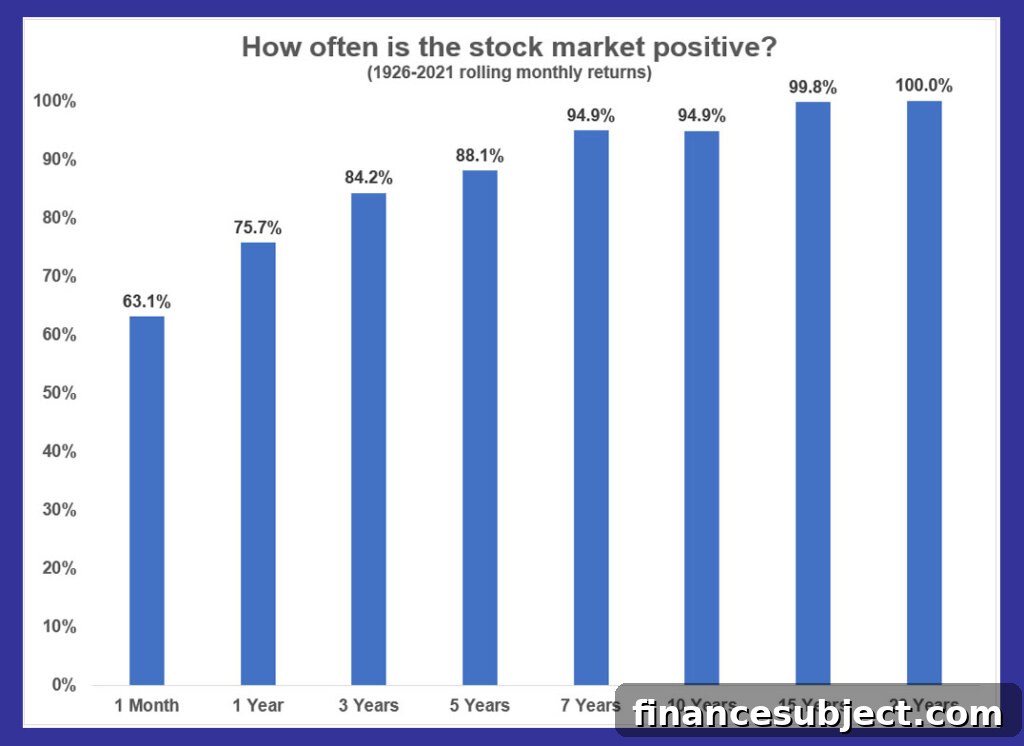
Amid short-term volatility and political shocks, it helps to keep long-term market history in perspective. Data reviewed by financial commentators shows that the U.S. stock market rises in roughly three of every four years and that five-year windows historically produce positive outcomes far more often than not.
Key lessons for long-term investors:
- Market returns are positive most of the time, but they are punctuated by periods of fast losses and recovery.
- Short-term headlines can create anxiety, but long-term compounding — especially when dividends are included — has historically rewarded patient investors.
- Portfolio resilience and a clear plan are more important than attempting to time every headline-driven move.
Optimism in investing is not blind faith; it’s an evidence-based expectation that diversified capital markets recover and grow over time. Staying diversified, maintaining an appropriate risk profile, and having a plan for volatility will help you navigate events like the debt-ceiling standoff or corporate earnings surprises.
This article is presented by an advertising partner.
It was independently produced by MoneySense and is presented with financial support from the partner.
Kyle Prevost is a financial educator, author and speaker. When he’s not on a basketball court or in a boxing ring, he helps Canadians with their finances at MillionDollarJourney.com and through the Canadian Financial Summit.