

This week, Cut the Crap Investing founder Dale Roberts reviews key financial headlines and provides context for Canadian investors.
U.S. inflation cooled in November
Before we get to the rate decision, let’s examine the inflation reading released Tuesday that helped set expectations for a 50-basis-point (bps) hike in the U.S. This followed a 50-bps hike in Canada last week.
Recent Canadian rate moves:
- 1%: up 50 bps on April 13
- 1.5%: up 50 bps on June 1
- 2.5%: up 100 bps on July 13
- 3.25%: up 75 bps on September 7
- 3.75%: up 50 bps on October 26
- 4.25%: up 50 bps on December 7
The U.S. consumer price index (CPI) for November showed inflation easing more than expected. Headline CPI rose 7.12% year over year versus the 7.3% consensus—about 0.18 percentage points lower than forecast. Core CPI, which excludes food and energy, eased to 5.96% versus an expected 6.10%, a 0.14 percentage-point improvement.
Markets reacted positively at first: stocks rallied early on Tuesday, with the S&P 500 up about 2.5% in early trading before settling and closing the day roughly 0.7% higher. Canadian and international equities moved in step with the U.S. rally.
Because inflation appears to be moving in the right direction, some investors hoped the Federal Reserve might “pivot” to less aggressive rate increases. In today’s usage, a pivot usually means slowing the pace of hikes and possibly pausing to assess the economic impact. Keep in mind there’s a lag between policy moves and their effect on the economy—often a year or longer—so the Fed must be careful not to stop tightening too soon.
The Fed follows Canada with a 50-bps hike
The Federal Reserve reduced the size of its rate hike to 50 bps, mirroring Canada’s recent move. Rate increases act like a brake on the economy, and policymakers are trying to find the right balance between slowing inflation and avoiding a sharp economic slowdown.
As I wrote in August 2022, managing inflation is like physics meeting economics: picture inflation as a ball on an elastic band falling from the sky. The Fed’s job is to apply just enough force to slow that descent so the ball settles within a target range—generally around 2% to 3%.
U.S. rate moves in 2022:
- 0.5%: up 25 bps on March 17
- 1%: up 50 bps on May 5
- 1.75%: up 75 bps on June 16
- 2.5%: up 75 bps on July 28
- 3.25%: up 75 bps on September 21
- 4%: up 75 bps on November 3
- 4.5%: up 50 bps on December 15
Federal Reserve Chair Jerome Powell said bringing inflation back toward the Fed’s 2% goal “will likely require a restrictive stance for some time.” He noted the labor market remains very tight, with demand for workers still exceeding supply. Powell also indicated the Fed’s so-called terminal rate—the peak policy rate—will likely be higher than earlier projections. The median outlook now points to a terminal rate around 5% or slightly above, but the Fed plans to move in smaller increments and remain “data dependent.”
Powell’s key remarks and timing emphasized that changing the inflation target is not under consideration and that the focus is on where the policy rate will land and how long it will remain restrictive. He underscored the need for more evidence that inflation is falling and warned that upside risks to inflation persist. While the pace of hikes has slowed, the Fed signaled there could be additional increases in smaller steps next year.
Markets reacted to Powell’s press conference, with U.S. equities ending Wednesday lower by about 0.6%. Stocks slipped further into Thursday after jobless claims came in lower than expected—data the Fed wants to see weaken somewhat as part of the disinflation process. The Bank of England also raised rates by 50 bps, contributing to the tone of global tightening.
Overall, stocks have softened after recent rate moves and were down modestly over the past week and nearly 3% over the past month as investors weigh the likelihood and severity of a potential earnings impact from higher rates.
The Fed’s next scheduled meetings are in February, March, May and June 2023. By late spring or early summer we may reach a pause in rate increases and move into a watch-and-see period if incoming data support that approach.
Views differ on whether a recession is necessary to bring inflation down. U.S. Treasury Secretary Janet Yellen has expressed optimism that inflation has peaked or is already in decline, noting improvements in shipping and energy costs and a generally healthy banking and household sector. She emphasized there is always recession risk, but she believes policy can slow growth enough to reduce inflation without forcing people out of work on a large scale.
“Shipping costs have come down. Delivery lags have shortened. Gas prices are down. I think we’ll see a substantial reduction in inflation in the year ahead, if there’s not an unanticipated shock. There are always risks of a recession, but we have a very healthy banking system and healthy business and household sectors.” — Janet Yellen
Stock stories of the week
Several corporate and regulatory developments shaped market sentiment this week.
In Canada, the Office of the Superintendent of Financial Institutions (OSFI) set the Domestic Stability Buffer (DSB) at 3% effective February 1, 2023, which requires banks to strengthen capital positions. In response, one major bank issued new shares, effectively diluting existing shareholders by adding roughly $3.15 billion of equity to the pool. Analysts are growing more cautious on the Canadian banking sector as a result.
Elon Musk sold a large block of Tesla shares worth roughly US$3.6 billion, which contributed to pressure on Tesla and sentiment around related businesses.
Microsoft made a strategic investment in the London Stock Exchange while facing regulatory scrutiny over other large acquisitions. Moderna and Merck announced encouraging progress with mRNA-based cancer vaccine research, boosting Moderna shares significantly.
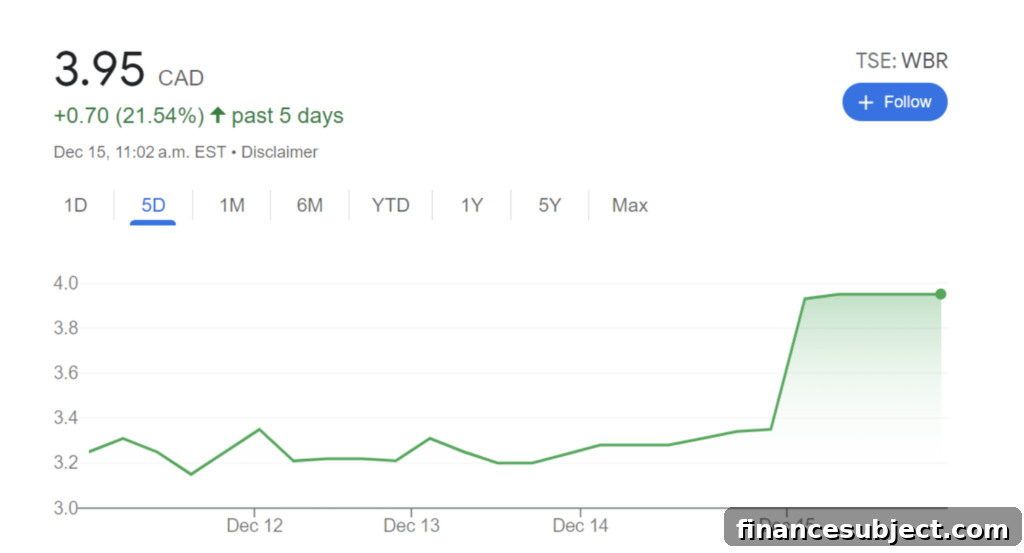
And in Canadian small-cap news, long-standing craft brewer Waterloo Brewing was acquired by a large international brewer for about $144 million. The stock, which had underperformed, jumped sharply on the takeover announcement.
How you might position your portfolio for 2023
I researched market views and spoke with portfolio managers to outline possible positioning for 2023, assuming the soft-landing scenario holds. This is not personal advice—just observations to consider.
In general, what performed well in 2022 may continue to work next year: high-quality companies with strong cash flow, low-to-moderate debt and durable competitive advantages. Defensive sectors, companies with stable earnings and reliable dividends, and assets that hedge inflation (such as energy stocks or certain commodity exposures) could prove useful. Retirees and those near retirement should also consider holding some cash and higher-quality bonds to reduce volatility and provide liquidity.
“The investment theme that worked in 2022 may persist in 2023: quality companies with modest debt, strong free cash flow, and reliable income from dividends.”
In short: prioritize quality, diversify to include inflation-sensitive assets, and maintain a balance of liquid and defensive holdings to navigate uncertainty.
Dale Roberts advocates low-fee investing and writes at cutthecrapinvesting.com. Find market commentary and updates on his social channels.