

Kyle Prevost, editor of Million Dollar Journey and founder of the Canadian Financial Summit, summarizes this week’s financial headlines and explains what they mean for Canadian investors.
The U.S. Fed pauses rate hikes—for now
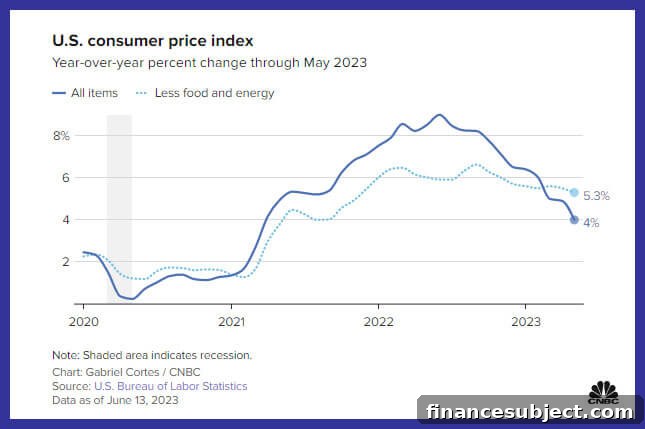
On Wednesday the U.S. Federal Reserve halted its streak of interest-rate increases after 10 consecutive months of hikes that had tightened credit and raised borrowing costs. The decision followed Tuesday’s consumer price index (CPI) release from the Labor Department, which showed headline inflation easing to an annualized rate of 4%, moving closer to the Fed’s long-term 2% goal. That improvement provided clear evidence that tighter monetary policy is having an effect.
At the same time, the core inflation reading—excluding food and energy—remained elevated at about 5.3%, so inflation pressures are not fully resolved. The CPI report also showed sizable year-over-year declines for items such as gasoline, health insurance, airline fees, appliances and vehicle prices, while food, services and shelter continued to be the main drivers of inflation.
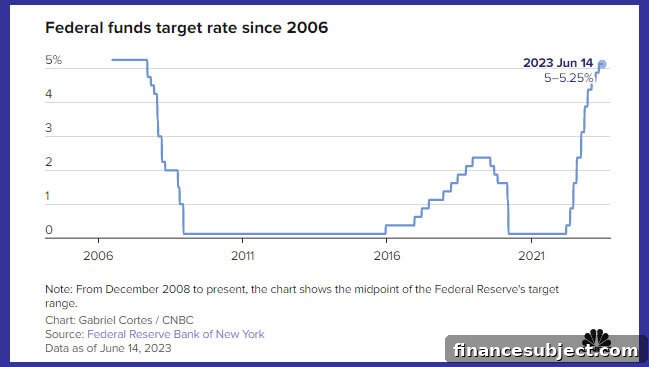
Even as the Fed paused, Chair Jerome Powell warned investors to expect at least two additional quarter-point rate increases before year-end, underscoring that policy remains data dependent and that the full effects of previous tightening are still working their way through the economy.
“We have raised our policy interest rate by five percentage points, and we’ve continued to reduce our security holdings at a brisk pace. We’ve covered a lot of ground and the full effects of our tightening have yet to be felt.”
Jerome Powell
The Fed’s messaging is balancing two risks: cooling inflation without tipping the economy into a recession. Markets reacted positively to the CPI report—U.S. stocks climbed after the release, traded mostly flat the following day, and rallied again later in the week.
Of course, tech stocks are having a great 2023
High interest rates traditionally weigh on growth-oriented technology stocks, but 2023 has been an exception for many large tech names. The market has rewarded companies viewed as leaders in artificial intelligence (AI) and productivity-enhancing software and hardware. While late 2022 and early 2023 were difficult for many tech investors, this year a relatively small group of mega-cap tech companies has driven the broader market’s gains.
The S&P 500 has risen roughly 15% year-to-date, but a substantial portion of that performance is attributable to a handful of giants—Apple, Microsoft, Alphabet, Amazon, Nvidia, Tesla and Meta—often referred to as “the magnificent seven.” Excluding these leaders, many other S&P 500 companies remain down on the year. Similarly, the Nasdaq-focused ETF QQQ is up around 40% YTD, while the Dow Jones Industrial Average shows a much more modest gain near 3.85%.
Much of the roughly USD $4 trillion surge in tech market value has been linked to expectations around AI-driven productivity gains. While I won’t predict an uninterrupted advance, there’s reason to believe AI has more durable long-term potential than fads such as speculative cryptocurrency projects. The recent market rally reinforces a perennial investing lesson: exposure to technologies that expand efficiency and profitability can pay off over time, even if timing and magnitude are uncertain.
Canadian investors seeking tech exposure can consider CAD-hedged strategies that track the Nasdaq 100 or explore domestic technology names listed in Canada. Thoughtful allocation to growth-oriented tech should be balanced with diversification and a long-term plan that fits an investor’s risk tolerance.
Oracle and cruises making waves
Corporate earnings this week highlighted that the tech rally isn’t limited to just the mega-caps. Several enterprise software names reported stronger-than-expected results.
U.S. tech earnings highlights this week:
- Oracle (ORCL/NYSE): Earnings per share of $1.67 versus $1.58 expected; revenues of $13.84 billion versus $13.73 billion forecast.
- Adobe (ADBE/NASDAQ): Earnings per share of $3.91 versus $3.80 expected; revenues of $4.82 billion versus $4.78 billion forecast.
Both companies saw their stock prices react positively to the results—Adobe jumped in after-hours trading, and Oracle outperformed strongly during the week. Beyond software, the broader travel and leisure sector also got a boost: a bullish industry note sparked a rapid re-pricing of cruise-line stocks, with Carnival, Royal Caribbean and Norwegian Cruise Line seeing notable intraday gains.
Oil is definitely the past: How long will it be present?
Oil markets showed mixed signals this week. Goldman Sachs reduced its crude price outlook by about 10%, citing slowing demand growth in China and increased flows from suppliers such as Russia and Venezuela. The bank’s view put a December range near $80 to $86 per barrel, above current levels that have been near $68 to $74 per barrel, despite recent voluntary production cuts announced by OPEC.
At the same time, longer-term energy investment trends are shifting toward clean alternatives. The International Energy Agency (IEA) reported that, in 2022, total energy investment was about $2.8 trillion, with roughly $1.7 trillion directed to clean energy. That implies roughly $1.70 invested in clean energy for every $1.00 invested in oil. For 2023 the IEA expected around $371 billion in oil investment versus about $382 billion for solar. To meet the targets consistent with limiting global warming to 1.5°C, investment would need to scale to roughly $4.5 trillion annually by 2030.
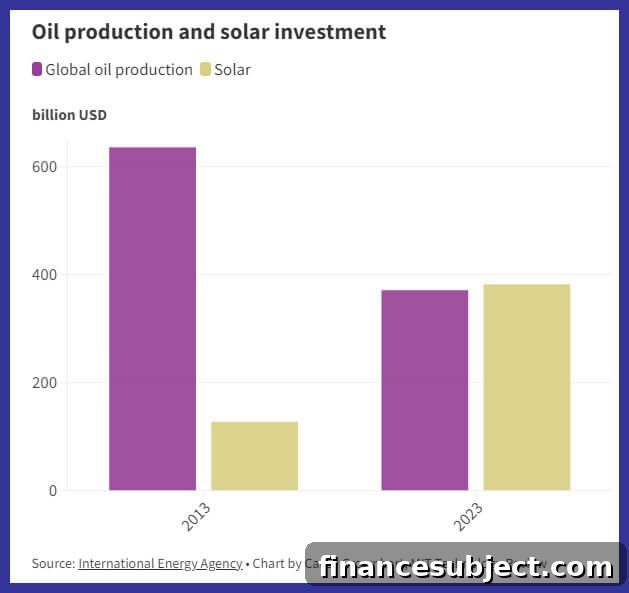
These dynamics help explain why many fossil-fuel companies have prioritized operational efficiency and shareholder returns rather than aggressive expansion. The allocation of capital across energy subsectors will be an important long-term theme for investors as technology and policy continue to reshape demand and supply.
That’s all from me for a few weeks. I’ll be handing the coverage over to Dale Roberts while I take a short break for some rest and recharge. I’ll be back with more market perspective and practical guidance for Canadian investors soon.