

Kyle Prevost, editor of Million Dollar Journey and founder of the Canadian Financial Summit, highlights key financial headlines and provides context for Canadian investors.
Freeland targets Canadian banks again
The federal budget unveiled this week includes several headline-grabbing items, but two lesser-noticed measures could have a meaningful impact on Canadian investors: a new tax treatment for dividends received by banks and insurers, and a new levy on corporate share buybacks. Below I summarize these provisions and explain what they may mean for consumers, shareholders and the broader economy.
Budget 2023: what it means for banks
Bank shareholders already felt the sting from the previous budget’s Canada Recovery Dividend and an additional 1.5% corporate tax on major banks and life insurers. This budget goes further by proposing an amendment to the Income Tax Act that would treat dividends received on Canadian shares held by Canadian banks and insurers as business income. The government estimates this change will raise roughly $3.15 billion over five years starting in 2024.
Because financial services are a largely inelastic necessity and Canada’s banking and insurance industries operate with limited competition, much of this new tax burden is likely to be shifted to consumers. Banks and insurers can raise fees, increase interest spreads, or otherwise adjust pricing for services rather than accepting a permanent reduction in profitability.
That pricing response could come at a difficult moment. Recent market turbulence has raised questions about the cost and availability of capital, particularly after concerns surfaced regarding the risks embedded in convertible and contingent‑convertible (AT1 or “coco”) bonds. If banks face higher funding costs, those costs are likely to be reflected in lending and service pricing for Canadians.
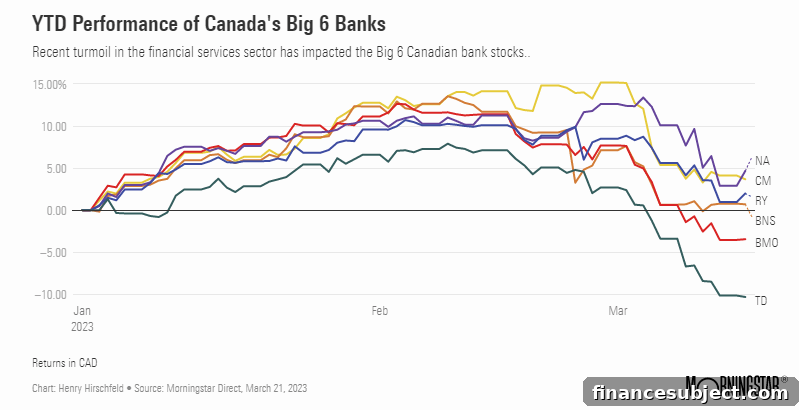
For investors wanting more detail on bank stocks and dividend strategies, there are industry resources and commentary available from independent financial blogs and market analysts.
Budget 2023: buyback tax and corporate behaviour
The budget also introduces a 2% tax on share buybacks. Buybacks occur when a company repurchases its own shares, which typically reduces outstanding share count and can boost per‑share metrics and the market price. Many companies use buybacks to return capital to shareholders in a tax‑efficient way.
The stated aim of the buyback tax is to encourage firms to reinvest profits into growth, workers, and capital expenditures rather than returning capital to shareholders. Business groups, including chambers of commerce, have responded critically, arguing it discourages investment and reduces returns for retail investors.
If the government’s policy goal is to attract or retain investor capital in Canada, another approach might be to consider incentives for productive domestic investment rather than measures that could be perceived as penalizing shareholder returns.
Earnings roundup: BlackBerry, Dollarama and Lululemon
Three notable Canadian companies released quarterly results this week, each reflecting different industry dynamics and investor expectations. The highlights:
Latest earnings in Canada highlights
- BlackBerry (BB/TSX): EPS -$0.02 (versus -$0.07 expected) and revenues of $150 million (versus $151 million expected).
- Dollarama (DOL/TSX): EPS $0.91 (versus $0.85 expected) and revenues of $1.47 billion (versus $1.4 billion expected).
- Lululemon Athletica (LULU/NASDAQ): EPS US$4.40 (versus US$4.26 expected) and revenues of US$2.77 billion (versus US$2.7 billion expected).
BlackBerry reported a substantial annual loss driven largely by an impairment charge tied to delayed government cybersecurity contracts. Management says the company is focused on rebuilding profitability through its cybersecurity business, but persistent cash burn raises solvency concerns if losses continue.
Lululemon delivered strong results and shares jumped after the company reported robust same-store sales growth and a recovery from the inventory overhang it faced previously. Higher holiday season demand and improved inventory balance supported a solid outlook.
Dollarama reported year‑over‑year profit growth of about 27%, which management attributed in part to shoppers seeking value in an inflationary environment. The company also announced a meaningful dividend increase and a significant expansion pipeline, driving confidence in its continued growth trajectory in Canada.
Banking stress, credit tightening and the inflation outlook
Recent bank failures and market worries—most prominently the collapse of Silicon Valley Bank and subsequent stress in regional banking—prompted intense scrutiny of bank capital structures and riskier hybrid instruments. That scrutiny has pushed investors to demand higher yields on certain bank debt, making it costlier for lenders to raise Tier 1 capital.
Higher funding costs and greater regulatory emphasis on capital and liquidity can reduce the supply of credit. Banks may hold larger cushions of deposits and be more selective in new lending, which could dampen investment and consumer spending over time. Reduced credit growth tends to moderate economic activity and, by extension, ease inflationary pressures.
There is also a behavioural component: when households and businesses become more cautious after a wave of negative financial headlines, spending and hiring decisions can change quickly. That slowdown in “animal spirits” makes the job of central banks easier if their goal is to cool demand without triggering a crisis.
Money and happiness: new evidence
“Money does not buy you happiness, but a lack of money certainly buys you misery.”
—Daniel Kahneman
Early research by Kahneman and Deaton suggested a threshold—around US$75,000 in annual income—beyond which additional income had little effect on emotional well‑being. Later work by Matthew Killingsworth challenged that ceiling, finding continued gains in experienced well‑being at higher incomes.
When the researchers collaborated to reconcile the findings, they concluded the relationship is nuanced: income does correlate with increased happiness for most people, but the effect is muted for the unhappiest 20% and becomes more complex at very high income levels. In plain terms, earning more can improve well‑being for many, though diminishing returns appear at very high incomes for some groups.
Future research that pairs income with measures of wealth, savings and financial security would help deepen our understanding of how money and broader financial health relate to life satisfaction.
Kyle Prevost is a financial educator, author and speaker. When he’s not on a basketball court or in a boxing ring, he helps Canadians with personal finance through MillionDollarJourney.com and the Canadian Financial Summit.