

Kyle Prevost, editor of Million Dollar Journey and founder of the Canadian Financial Summit, summarizes the week’s financial headlines and provides context for Canadian investors.
Inflation headlines remain the main focus
Global markets are still reacting primarily to expectations about future monetary policy. This week’s notable event was the U.S. Federal Reserve raising rates by 0.25 percentage points to a range of 4.75%–5.00%. That development grabbed attention, but a quieter — and important — story was Statistics Canada’s update showing disinflationary momentum that supports the Bank of Canada’s recent decision to pause rate hikes.
Statistics Canada reported Canada’s February inflation rate fell to 5.2%, down from 5.9% in January and slightly below consensus. While elevated grocery prices remain a visible burden for many households, two positive details received less coverage:
- Average wages grew faster than inflation for the first time in two years: wages rose 5.4% versus inflation at 5.2%.
- RSM Canada’s forecast suggests inflation could average about 3% by the end of 2023 and reach the 2% target in 2024.
Some food-price swings are driven by supply issues such as avian flu and citrus plant disease — factors the central bank can’t control. Overall, price pressures sensitive to interest rates appear to be moving toward greater stability.
U.S. Fed Chair Jerome Powell reinforced the Fed’s commitment to fighting inflation with the expected quarter-point hike and a clear message that policymakers will continue to raise rates if needed to return inflation to 2%:
“I do still think, though, that there’s a pathway to [a soft landing]. I think that pathway still exists, and, you know, we’re certainly trying to find it.”
“If we need to raise rates, we will […] Of course, we will eventually get a tight enough policy to bring inflation down to 2%.”
Markets reacted in mixed fashion. Some observers attributed recent downward momentum more to renewed banking stress than to the rate decision itself, illustrating how multiple forces are shaping market sentiment right now.
Is the banking turmoil over?
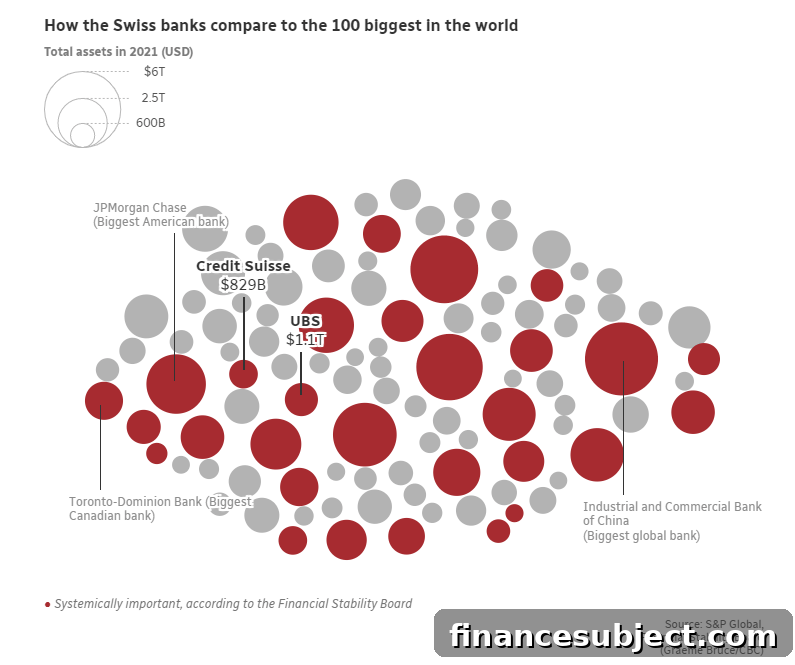
The earlier “bank run” headlines that followed the failure of a few mid-sized U.S. banks and the distress at a Swiss bank eased briefly, creating a sense that the worst had passed. But banking fears returned late in the week as stock moves raised fresh concerns in Europe, and the complex rescue of Credit Suisse by UBS continued to reverberate.
Treasury Secretary Janet Yellen was asked whether the U.S. would extend blanket deposit insurance beyond the FDIC’s standard coverage of USD 250,000. Her answer was firm: she had not considered or discussed blanket guarantees of all deposits. Yet Treasury officials also signaled readiness to act selectively to prevent contagion in the broader system, leaving ambiguity that markets found unsettling.
The dilemma facing policymakers is clear: they want the public to remain confident and not pull deposits, while also keeping banks from assuming that every deposit is effectively insured. That tension — reassuring depositors without encouraging risky behaviour — is difficult to navigate.
Economists warn that if banks are forced to shore up balance sheets because previously held government bonds are marked down, lending could tighten. Fewer loans would slow spending and investment, which could reduce inflation but also risk a sharper economic slowdown.
Swiss banking drama and Credit Suisse
The Credit Suisse episode highlighted structural vulnerabilities and legal complexities around certain bond instruments. In brief:
- The Swiss government facilitated a swift sale of Credit Suisse to UBS, making UBS the dominant large bank in Switzerland and dealing a blow to Switzerland’s reputation for financial stability.
- UBS acquired the 187-year-old bank for USD 3.2 billion under a deal that removed a large portion of value from certain bondholders.
- Shareholders suffered severe losses as equity values fell sharply.
- Credit Suisse had issued contingent convertible bonds (AT1 or “CoCo” bonds) that are structured to convert to equity or be written down if a bank’s capital ratio falls below a defined threshold. When regulators arranged the rescue, that threshold was triggered and around USD 17 billion of those bonds were effectively wiped out.
- AT1 investors have contested the treatment, but experts note the terms of these instruments explicitly allow for conversion or write-down in crisis scenarios. The outcome is unusual and exposed differences in legal and regulatory practices across jurisdictions.
- Canadian banks use similar instruments in limited form, and regulators have emphasized such triggers would likely be activated only in extreme scenarios where capital ratios are dangerously low.
The Credit Suisse episode underlines why fixed-income investors must understand the legal terms and risks of complex bank securities, not just the yield they offer.
GameStop and the retail investor phenomenon
The meme-stock saga continued as investors used options to place speculative bets — reportedly in the hundreds of millions of dollars — on whether shares of GameStop would rise or fall. GameStop surprised some observers by reporting a small profit after cost cuts, which fueled fresh buying despite the company’s longer-term challenges.
The episode is a reminder that markets sometimes disconnect from fundamentals for extended periods. Short sellers remain willing to bet against such stocks, but these contests between retail traders and professional short sellers create volatile, headline-grabbing price swings.
Other earnings in the week showed mixed signals: for example, Nike beat earnings expectations but its stock fell on concerns about inventory growth and margin pressure, emphasizing how markets price both current results and future risks.
Why U.S. markets matter to Canadian investors
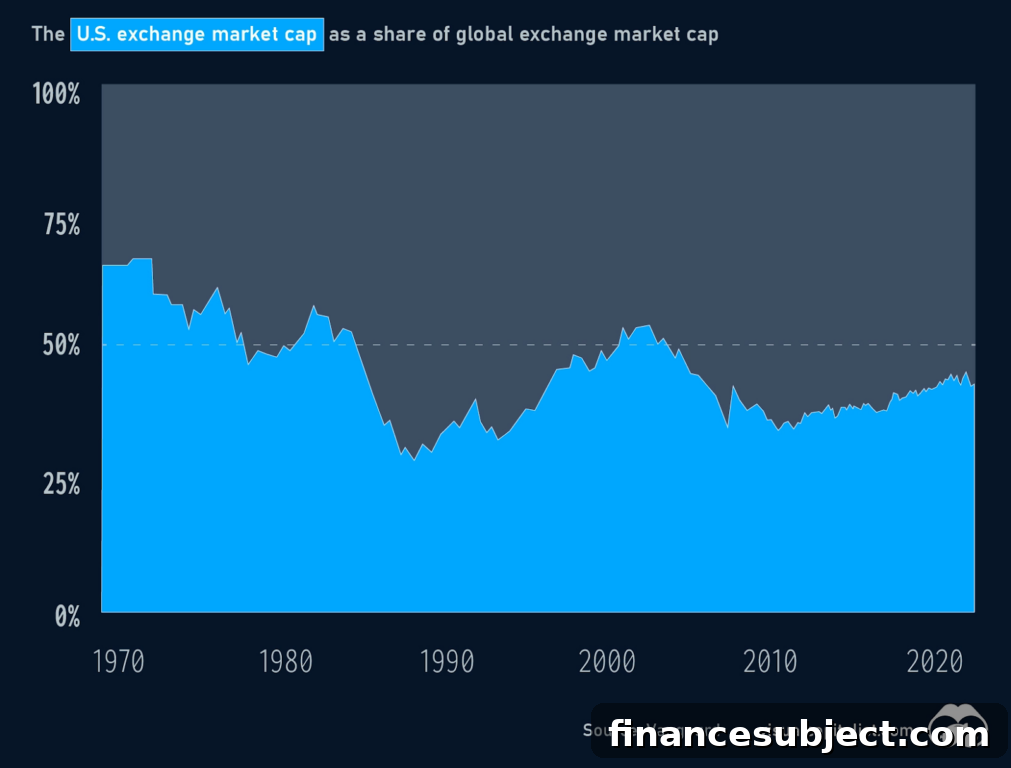
When people talk about “the stock market,” they often mean the major U.S. exchanges. The Toronto Stock Exchange is Canada’s largest market with about 1,500 listings, but the combined scale of U.S. exchanges like the NYSE and NASDAQ dominates global equity capitalization.
That dominance helps explain why many businesses list in the U.S. and why U.S.-focused ETFs can represent a large portion of global equity exposure. For Canadian investors, the concentration of global market cap in U.S. markets underscores the importance of international diversification. A balanced approach might include Canadian holdings for domestic exposure and broader global ETFs for diversification across sectors and geographies.
Kyle Prevost is a financial educator, author and speaker. When he’s not on a basketball court or in a boxing ring trying to recapture his youth, he helps Canadians with their finances at MillionDollarJourney.com and organizes the Canadian Financial Summit.