
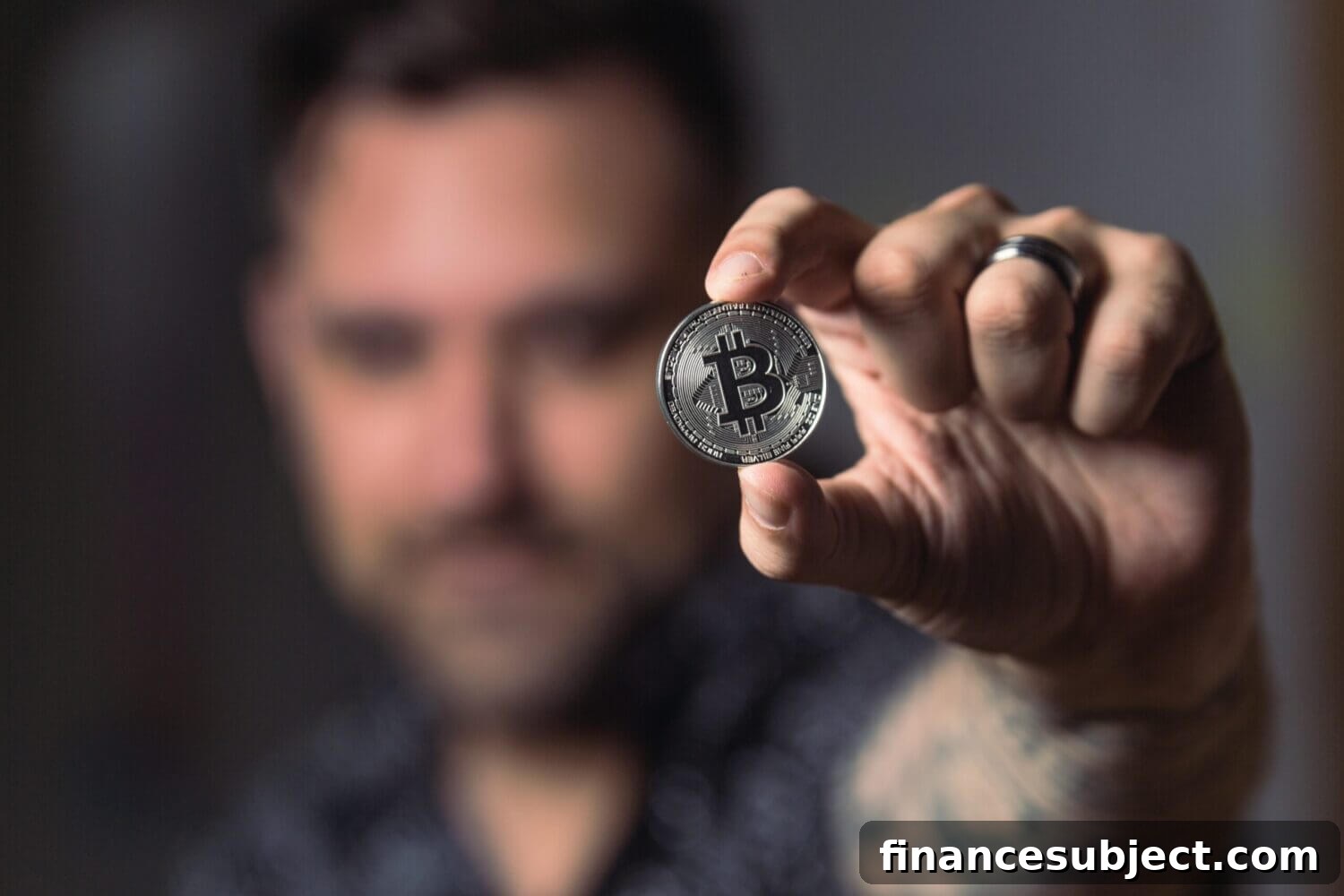
The dramatic rise and sudden fall in bitcoin’s value over recent months made headlines worldwide and stirred intense discussion on social media. The crash rattled the crypto community, but many long-time bitcoin supporters say the wild swings are not a flaw but an intrinsic characteristic of the largest and best-known cryptocurrency.
Bitcoin is one of the most polarizing assets in today’s markets. On one side are skeptics—including some central banks and traditional financial institutions—and on the other are prominent advocates such as Elon Musk, Jack Dorsey and Mark Cuban. Lately, several large U.S. financial institutions and payment processors have shown increasing interest in crypto, and many banks are beginning to explore ways to offer crypto-related services.
Even after bitcoin’s steep decline—falling roughly 50% from the April 2021 peak above US$64,000—enthusiasts remain optimistic and new investors are asking questions. Before you consider participating, here is a clear, practical overview of what bitcoin is, how it works, the risks involved, and the most common ways to buy and store it.
What is bitcoin?
Bitcoin is a digital currency that exists purely online and runs on a decentralized peer-to-peer network. Launched in 2009 by an individual or group using the pseudonym Satoshi Nakamoto, bitcoin functions both as a payment method and as an investment, similar in some ways to traditional fiat money but without a paper form, a central issuing authority, or government control over its supply.
Transactions can be conducted pseudonymously, which removes intermediaries and can make tracing more difficult. This quality appeals to libertarians, technologists and speculators, and it has also attracted some illicit uses. Because transactions are recorded on a public ledger, however, many activities can still be analyzed and traced by forensic tools.
Blockchain: the technology behind bitcoin
Blockchain is the foundational technology for bitcoin and other cryptocurrencies. At its simplest, a blockchain is a distributed digital ledger that records transactions across a network of computers. Each transaction is added to a block and linked cryptographically to previous blocks, creating a chain that is resistant to tampering.
Because the ledger is decentralized and distributed, users can send value across borders without a central intermediary to convert currencies or charge high fees. Once recorded and confirmed on the blockchain, transactions are extremely difficult to alter, thanks to the cryptographic design and consensus mechanisms used by the network.
Is bitcoin a good investment in 2021?
Bitcoin’s price performance has been dramatic: at certain points it delivered very large gains over a one-year period, far outstripping traditional stock indexes. That performance came with extreme volatility, including rapid declines that erased large portions of market value in short periods.
Financial advisors and wealth managers commonly describe bitcoin as a high-risk, high-reward asset. Tina Tehranchian, a senior wealth advisor at Assante Capital Management Ltd., advises that bitcoin is suitable only for investors who can tolerate extreme price swings and who can afford to lose the funds they allocate to it.
Some professionals advocate a disciplined approach to limit volatility risk, such as dollar-cost averaging—buying smaller amounts at regular intervals—and maintaining a long-term investment horizon. Gaby Hui, director at Merkle Science, notes that historical performance comparisons show that crypto has outperformed many equities in recent years, but investors should focus on longer time frames and be prepared for frequent fluctuations.
There are also arguments that bitcoin can diversify a portfolio. Studies have found bitcoin’s correlation with traditional equities to be relatively low at times, so adding a measured allocation to bitcoin could potentially improve portfolio efficiency. Concerns about inflation have further driven some investors to view bitcoin as a digital alternative to gold, in part because its code limits total supply to 21 million units.
Institutional adoption could increase demand, which might influence price appreciation over time. Still, market forecasts vary widely and any projection should be treated cautiously: past performance does not guarantee future results. Whether bitcoin is right for an individual investor depends on risk tolerance, time horizon and overall portfolio composition.
Is bitcoin safe?
Safety in the context of bitcoin has several layers. The bitcoin protocol itself has proven robust over years of operation, but many risks arise from the surrounding ecosystem—exchanges, wallets, custodial services and user practices.
Regulatory changes, central bank policies, and actions by major companies can all cause sharp price swings. Technical risks include exchange hacks, thefts, loss of private keys, and transfer errors. These incidents do not reflect a failure of the underlying blockchain so much as vulnerabilities in the services and tools people use to access it.
Experts advise keeping only what you intend to trade on an exchange and moving long-term holdings into an offline hardware wallet—often called a cold wallet—to reduce exposure to cyberattacks. Popular hardware wallet brands include Ledger, Trezor and CoolWallet. Another option for reducing custody risk is investing via a regulated mutual fund or ETF that holds bitcoin on behalf of investors, as this places custody responsibility with a professional fund manager.
Where to buy bitcoin
There are many ways to buy bitcoin today, and the options vary by country. In Canada, several domestic crypto trading platforms allow purchases with Canadian dollars, including Newton, Wealthsimple, NDAX, Bitbuy, Shakepay and CoinSmart. International platforms such as Crypto.com, Binance and Kraken also support Canadian customers.
For investors who prefer a passive approach and regulated custody, bitcoin mutual funds and ETFs offer exposure without the need to manage private keys. These funds charge management fees but remove the responsibility of secure storage from individual investors.
Bitcoin ATM kiosks (BTMs) are another channel to buy crypto with cash or debit cards; Canada now has many such machines in public locations.
Regardless of how you buy it, the fundamentals of investing remain important: understand the risks, set clear limits, and invest only what you can afford to lose. Educate yourself about fees, custody options and tax implications before making a decision.
Read more on crypto:
- How to buy bitcoin in Canada (and find out where, too)
- How to buy Avalanche (AVAX) in Canada
- How to buy Solana (SOL) in Canada
- Altcoins vs. bitcoin: What to consider while building your crypto portfolio
- Trading tools that can raise your crypto game