
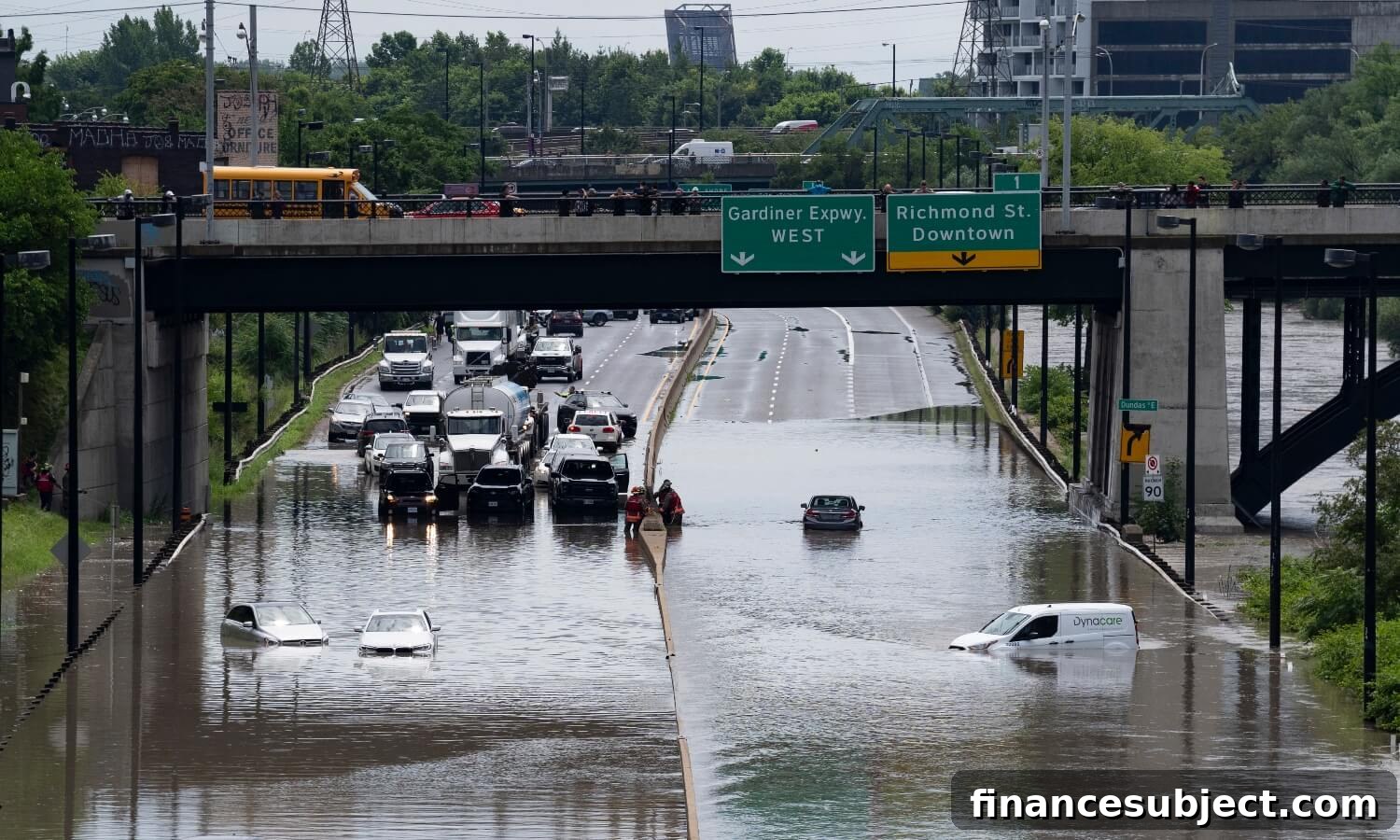
Homeowners across Canada are increasingly adding flood coverage to their policies as extreme weather and intense rainfall events grow more frequent, according to the Insurance Bureau of Canada (IBC).
After the recent flash flooding in southern Ontario, some residents may be discovering that their standard home insurance policies do not include flood protection. Those homeowners could soon be moving to add optional flood coverage to guard against future events.
Renters insurance
Condo insurance
You will be leaving MoneySense. Just close the tab to return.
Does home insurance cover flooding?
“People who live in known flood zones or who have already faced flooding are often more aware of what their policies include and the optional coverages they can buy,” said Rob de Pruis, national director of consumer and industry relations at the IBC. “But newcomers to an area or those who haven’t experienced a flood may not realize their standard policy excludes some flood-related losses.”
Heavy rain swept through Toronto and surrounding regions on Tuesday, inundating major roads and disrupting transit while authorities issued rainfall warnings across southern Ontario. The full scope of insured losses is still being assessed, but officials say the event produced significant flooding in multiple locations.
Severe weather events are becoming more common
Many residents have compared this week’s flooding to the severe Toronto-area storms of July 2013, which produced record rainfall levels and forced tens of thousands to evacuate. A month earlier, catastrophic floods in Calgary also led to widespread evacuations and multiple fatalities. The combined insured losses from those two 2013 events totaled roughly $3.1 billion, the IBC reports.
As storms intensify and happen more frequently, more homeowners are choosing optional flood coverage, and more insurers are offering overland flood protection, according to de Pruis. Overland flood insurance only became widely available after the 2013 events prompted insurers to introduce that product.
The cost of severe-weather claims has risen sharply. About 15 years ago, annual payouts for weather-related claims averaged roughly $700 million. In 2022 and 2023, insurers paid out more than $3 billion per year for claims tied to fires, floods, wind and hail.
Because of these trends, industry representatives are working with government on a national flood insurance program intended to give homeowners access to affordable flood coverage regardless of their location or risk. De Pruis notes that in some high-risk areas, private flood insurance is currently limited or may come at a much higher price.
What’s covered by home insurance
Standard home insurance typically excludes damage from overland flooding unless you purchase specific overland flood coverage. That optional coverage addresses water entering a property from overflowing lakes, rivers or other surface water sources.
Similarly, water damage caused by a sewer backup is usually not covered unless you have added a sewer-backup endorsement to your policy. In contrast, comprehensive auto insurance commonly includes coverage for vehicle damage caused by floodwaters.
Other policy features may help after a flood: food spoiling in a refrigerator due to a power outage might be eligible for reimbursement, and if your home is uninhabitable because of insured damage, your policy could cover additional living expenses while you’re displaced. Coverage details and limits vary by insurer and policy.
How much insurance coverage do you need?
Daniel Ivans, an insurance expert with Ratesdotca and a licensed broker, says many Ontarians should review their policies to ensure they have adequate protection for local flood risk. “As weather becomes more extreme, homeowners need to check their policies carefully and add the coverages that match their level of exposure,” he advised.
Ratesdotca data show a 68% increase in quotes adding water endorsements in June 2024 compared with the previous year, illustrating growing interest in flood-related coverage.
Improving a home’s flood resilience — for example, installing a sump pump — can both reduce potential damage and may lower insurance premiums, according to the IBC.
Steps to take after a flood
If your home or vehicle was affected by flooding, the IBC recommends documenting the damage thoroughly when it’s safe to do so: take photos, write detailed notes, and gather receipts, warranties and proof of purchase for damaged items. Report the loss to your insurer or broker promptly to start the claims process.
Keep receipts for any temporary housing, cleanup or repairs you arrange. These records will help support claims for additional living expenses or recovery work that your policy covers.
Newsletter
Get free MoneySense financial tips, news & advice in your inbox.
Read more about insurance:
- “I discovered water damage in my home. Will insurance cover me?”
- Does your home insurance cover water damage? Probably not
- Home insurance: Are you covered for wildfires, floods and other climate-related disasters?
- How will Canada’s national flood insurance program work?