
When most people picture professional athletes, they think of huge contracts and lucrative endorsement deals. In reality, however, the international sports landscape includes many competitors who struggle financially. For disabled athletes, financial precarity is often the norm rather than an exception.
In Canada, one of the most consistent sources of support for elite para-athletes is carding money provided through the Athlete Assistance Program. In 2024, that program offers $1,765 per month as a living and training allowance for athletes competing at the international level. By contrast, Olympic medallists receive one-time bonuses—$20,000 for gold, $15,000 for silver and $10,000 for bronze—from the Canadian Olympic Committee. Historically, Canadian Paralympians were not paid for winning medals, though that changed beginning with Paris 2024, when Paralympic medallists started receiving the same medal bonuses as their Olympic counterparts. Corporate sponsors, including major brands such as Toyota and Air Canada, have also increased investment in athletes and programs, while athletes and advocates continue to press for more equitable funding.

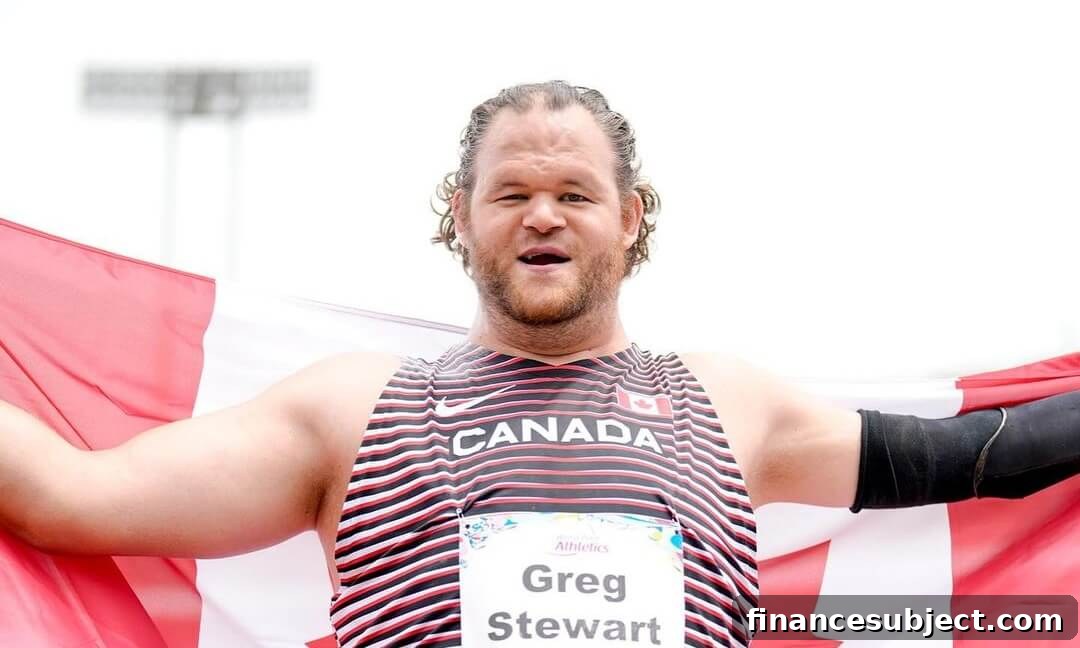
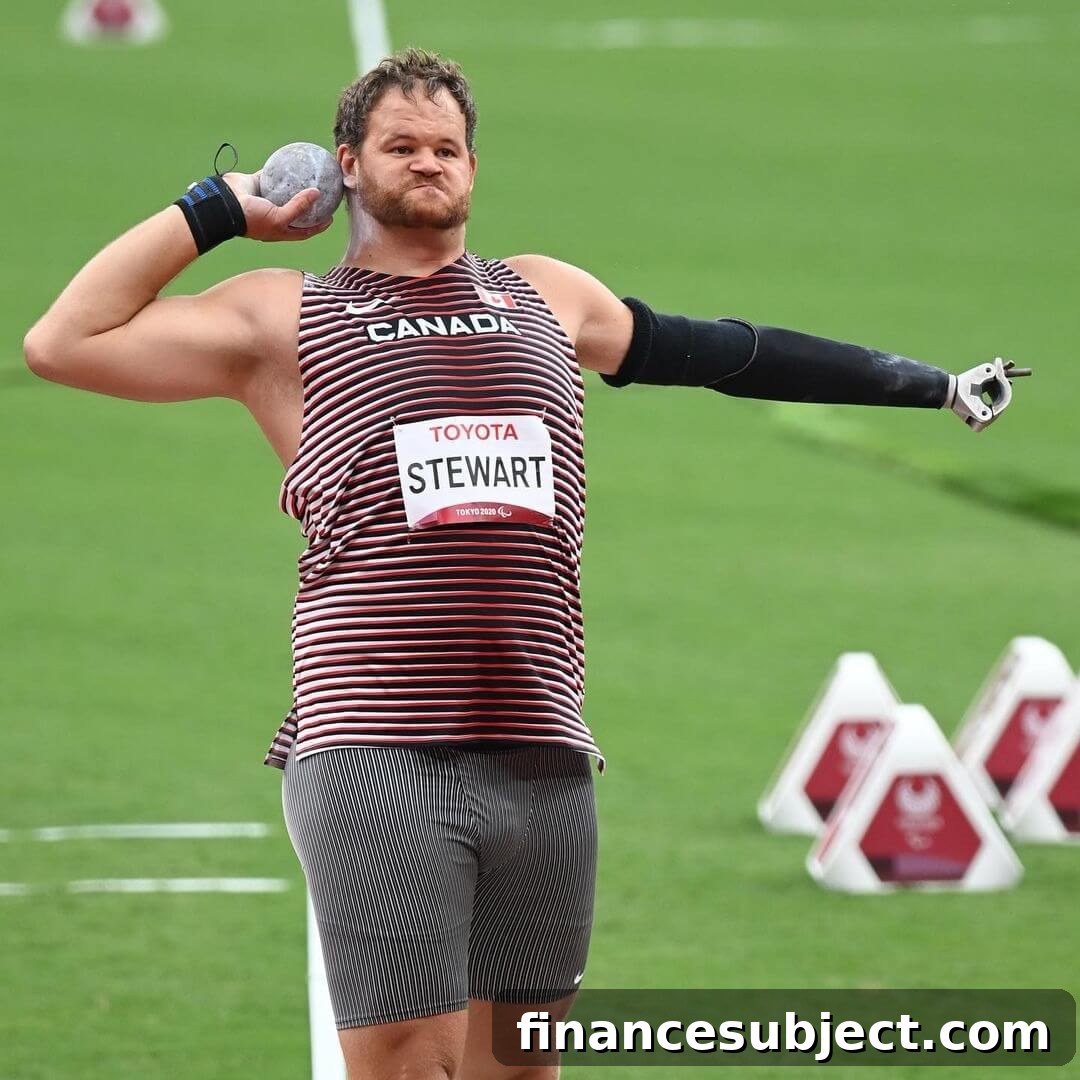
Greg Stewart, the gold-medal shot putter, spoke about the financial realities facing para-athletes and his personal approach to income and sponsorship. At 38, Stewart is competing in his second Paralympic cycle; he won shot put gold at the Tokyo 2020 Paralympics and previously played sitting volleyball for Canada. Standing seven-foot-two, Stewart earned bronze at the 2007 and 2011 Parapan American Games and has multiple world titles with Canada’s para standing volleyball team.
He stepped away from competition in 2022 but returned in 2024 and won silver at the World Para Athletics Championships in May, securing his place on the Paris roster. Stewart is also the co-author of Stand Out: The True Story of Paralympic Gold Medallist Greg Stewart (Kermode Education, 2024), and he is scheduled to compete in Paris on Sept. 4. In the following edited interview, he explains the persistent financial pressures of high-performance para-sport and how he navigates them.
Tell me about your approach to money as a Paralympian?
My view on money has evolved as society begins to treat disabled people more equitably. That shift is slowly reflected in how Paralympic athletes are regarded, but the cost of competing remains high. People with disabilities often face additional expenses for equipment, medical needs and daily supports. Carding can help a bit—sometimes covering part of rent or training costs—but it rarely addresses the extra costs tied directly to an athlete’s disability.
Did finances influence your decision to retire in 2022?
Yes. I retired for two main reasons: to spend more time on what mattered to me—my partner and building a more stable income—and because the carding stipend alone wasn’t enough. It’s difficult to cover rent and food on that amount, let alone any additional supports or long-term savings. Stepping away allowed me to focus on paid work and build a resume. Many athletes believe that once they’re carded they’ll have financial stability, but for most, carding only covers part of the picture and they often still need to pick up extra work.
What kinds of jobs did you take while competing?
I worked for my prosthetist and in automotive scrap recycling for several years while competing. Those jobs helped pay bills during difficult periods, like the pandemic, but they also disrupted training—sometimes forcing me to step away for a week or more at a time. It’s frustrating because athletes represent Canada and serve as ambassadors, yet athletic careers often lack longevity or consistent support. If longevity exists, athletes usually have to create it themselves by juggling work and training.
What impact will increased corporate investment have on Canadian para-sport?
Greater corporate investment can raise the profile of para-sport and attract more competitors, which is a positive outcome for depth and competition. Financial incentives draw attention and can help athletes treat sport as a viable career. At the same time, money can introduce challenges—greater competition for sponsorships, and potential issues like inequity or misaligned priorities. With mindful governance and athlete-focused policies, additional funding can bring meaningful improvements.
Who are your sponsors?
One of my sponsors is Blackwell Dairy in Kamloops; they’ve supported me with milk throughout the year and I’m grateful for their backing. I’ve also been trying to connect with Under Armour for clothing and gear that fits my needs. In addition to sponsorships, I earn income through motivational speaking engagements at schools and corporate events.
How did the Blackwell Dairy sponsorship come about?
Largely by reaching out. There aren’t a lot of organizations coming to me first—often it’s me initiating conversations and asking for support.
As an AthletesCan advocate, how often does the financial reality of para-athletes come up?
Financial concerns arise for all athletes, not only para-athletes. When athletes struggle mentally, two basic needs are usually missing: security and nourishment. Knowing your rent is covered and having reliable access to food—those are the fundamentals. We’ve been discussing carding increases for decades, but progress can be slow and funding often gets diverted. I appreciate the work of our sport minister, Carla Qualtrough—a former para-athlete—who appears to understand these issues. Still, if we place athletes on pedestals, we should ensure ongoing, practical support.
What advice do you have for athletes entering the international scene?
Expect the journey to be expensive and be realistic about your limits. Don’t beat yourself up if you can’t attend every event or take every opportunity—many athletes retire with debt. Love the sport and enjoy the experience, but plan financially: live at home if possible, secure flexible paid work, or cultivate sponsors. Being mindful about finances can reduce stress and allow you to focus on performance.
Newsletter
Get free MoneySense financial tips, news & advice in your inbox.
Read more MoneySense Q&As:
- Ellyce Fulmore is putting the personal back into personal finance
- Sheri Pavlovic on rediscovering the hottest fashion in your own closet
- Tareq Hadhad on his investing journey and how Peace By Chocolate began
- Eva Wong on how her approach to debt and saving has evolved