


THE PROBLEM
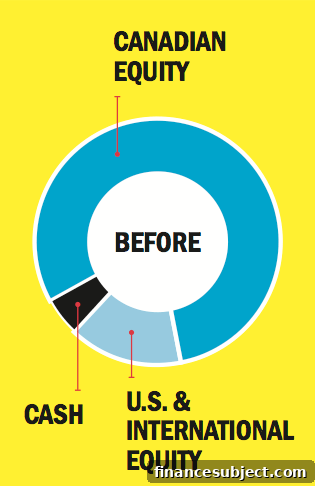 Edward (60) and Penelope (58) Arneson of Cochrane, Alberta, retired five years ago. They are grateful for Edward’s defined benefit pension, which delivers reliable, inflation-indexed income, but they are increasingly dissatisfied with their long-time adviser and their investment results. Their portfolio currently holds $250,000 in Imperial Oil shares plus a mix of registered and non-registered mutual funds. Most of their mutual funds carry high fees—around 2.2% annually—and their overall equity weighting is extreme: about 80% in Canadian equities and roughly 95% in equities overall.
The Arnesons’ priorities are clear: they want more dependable income, greater tax efficiency, and much lower fees. At present, their after-tax guaranteed lifetime income from Edward’s company pensions is about $58,000 per year (indexed for inflation), increasing to $78,000 when Edward turns 65. With a reasonable portfolio return—Tom Feigs, the Calgary money coach advising them, uses a 4% average annual return as an illustrative target—the couple could aim for total annual income near $95,000 through age 95 if the portfolio is properly managed and risk is controlled. But their current concentrated holdings and high fees make that outcome less certain and expose them to unnecessary volatility and tax drag.
THE FIX
Feigs recommends a clearer, simpler plan focused on three priorities: adjust asset allocation, reduce costs, and improve tax efficiency.
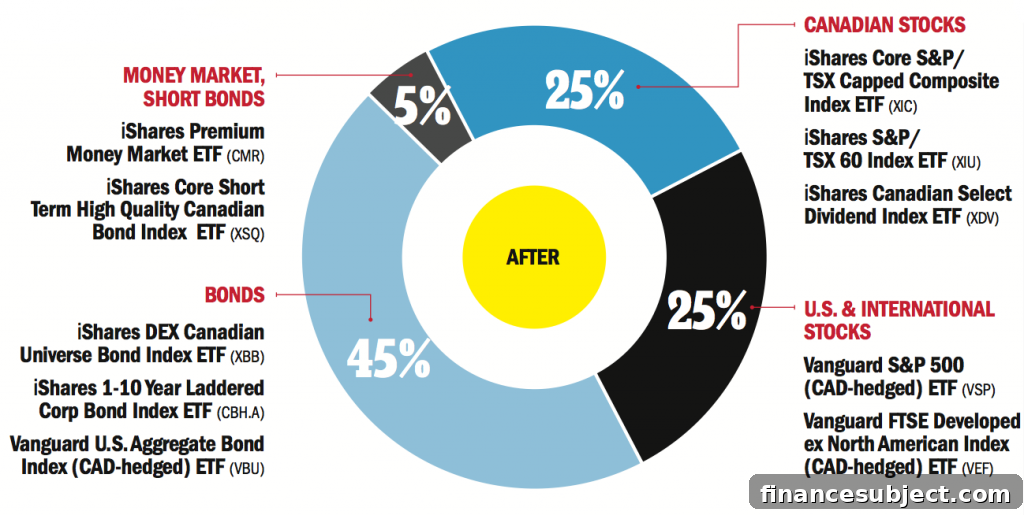
1) Rebalance asset allocation and reduce concentration risk. The couple’s near-95% exposure to equities leaves them vulnerable to market downturns, which is particularly risky in retirement when they rely on portfolio income. Feigs recommends moving toward a more balanced split—roughly 50% equities and 50% fixed income—to temper volatility while still providing growth. He also advises reducing the proportion invested in Canadian equities from 80% to about 30%, and selling or trimming the large single-company holding in Imperial Oil to diversify across sectors and countries. Diversification helps protect against company- or country-specific shocks and smooths long-term returns.
2) Cut investment fees to boost long-term returns. The Arnesons pay about 2.2% in fund fees now; even modest fee reductions compound into meaningful gains over time. Feigs outlines two practical paths: a do-it-yourself approach that builds a passive portfolio with low-cost exchange-traded funds (ETFs) charging around 0.5% or less, or working with a low-fee mutual fund manager such as Leith Wheeler or Mawer, which can construct and maintain a diversified portfolio composed of their own lower-cost mutual funds for roughly 1.2% in fees. The DIY ETF route demands more hands-on management, while a low-fee advisory solution offers managed diversification at a moderate cost. Either approach will likely improve net returns compared with their current funds.
3) Improve tax efficiency and withdrawal sequencing. To reduce taxes over retirement, Feigs recommends splitting Edward’s company pension income where advantageous and gradually moving savings into Tax-Free Savings Accounts (TFSAs) as contribution room becomes available. Prioritizing TFSA contributions shelters future growth and withdrawals from tax, while careful sequencing of withdrawals from registered and non-registered accounts can minimize taxes on income and capital gains. The combination of guaranteed pension income plus a tax-efficient portfolio will help them sustain a comfortable after-tax income stream.
Practical next steps for the Arnesons include trimming the large Imperial Oil stake, rebalancing to a 50/50 asset mix with roughly 30% Canadian equity exposure, eliminating high-fee funds, and choosing either low-cost ETFs they manage themselves or a reputable low-fee mutual fund manager. They should also establish a regular rebalancing schedule, review withdrawal plans to optimize taxes, and consolidate or simplify accounts where sensible. Small changes—especially lower fees—compound year after year, increasing the odds of reaching their income goals.
With disciplined reallocation, lower fees and a tax-aware withdrawal strategy, Edward and Penelope can reduce portfolio risk, improve net returns, and move closer to their objective: more income, greater tax efficiency and fewer fees.
Do you want a portfolio makeover from MoneySense? If so, email [email protected] describing your situation.