
Help to Buy: What the 2013 Scheme Means for Home Buyers
One of the most notable surprises in the 2013 Budget was the introduction of the Help to Buy scheme. Designed to assist home buyers who struggle to save a large deposit, the scheme introduces government-backed support that mimics the informal assistance many receive from the so-called “Bank of Mum and Dad.”
Help to Buy has two main components, each aimed at improving access to homeownership for buyers with smaller deposits:
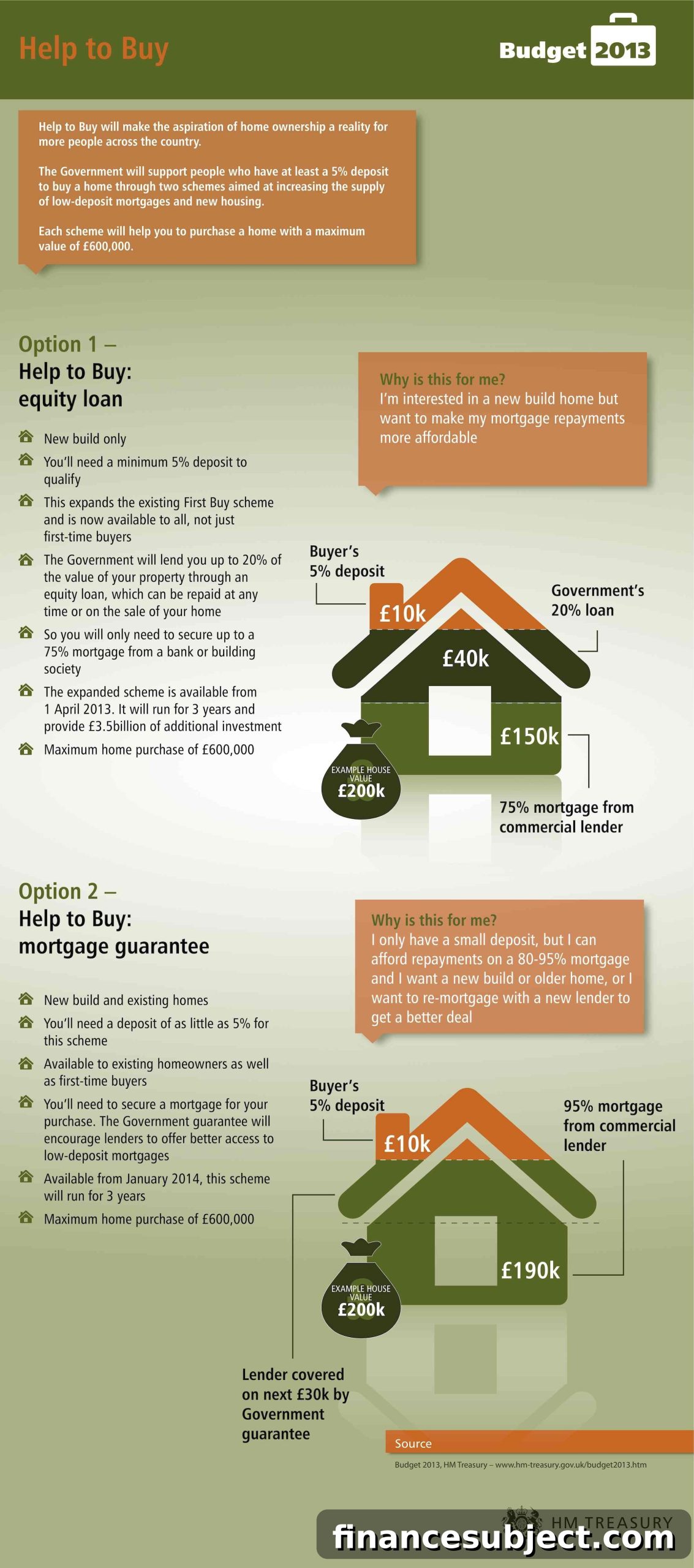
Help to Buy: equity loan – From 1 April 2013, the government will offer equity loans of up to 20% of the value of a new-build property. The loan is repayable when the property is sold. Eligibility for shared equity will be expanded beyond first-time buyers to include those seeking to move up the housing ladder. The scheme will apply to homes valued up to £600,000 and will not include an income cap.
Help to Buy: mortgage guarantee – Starting in January 2014, the government plans to run a mortgage guarantee scheme for three years. Under this strand, lenders offering mortgages to people who can only put down small deposits — generally between 5% and 20% — will be able to access a government guarantee, making such lending more attractive to banks and building societies.
Both parts of the programme aim to make it easier for buyers with modest, self-saved deposits to secure mortgages at competitive rates. By reducing the lender’s perceived risk, the government’s involvement should improve mortgage availability and potentially lower interest rates for borrowers with smaller deposits.
Why Help to Buy?
Supporters argue that Help to Buy addresses a real problem: not everyone has family wealth to call on for a deposit, and many parents are less able to release equity from their own homes because of rising living costs. By stepping in, the state can broaden access to homeownership for people who have been diligently saving but still fall short of traditional deposit levels.
Critics, however, warn that injecting government-backed money into the housing market risks further inflating prices. They argue that rather than stimulating demand for already pricey homes, the state could prioritise increased social housing to create jobs, support builders, and supply genuinely affordable homes without pushing up private-sector prices. Opponents question whether it is wise to encourage additional borrowing in a market where higher prices could offset the benefits of easier deposit access.
The debate touches on a fundamental question: do we want policy that expands access to existing market housing, or policy that increases supply through public investment and social housing provision?
Help to Buy explained
For anyone considering whether to use Help to Buy, there are practical and financial factors to weigh. The equity loan can reduce the initial deposit you need to provide and may lower monthly mortgage payments by increasing the effective deposit size. However, it is still a loan secured against the property and will affect the overall cost of buying and selling the home in the long term.
The mortgage guarantee aims to encourage lenders to offer deals to buyers with deposits as low as 5%. That may open doors for aspiring homeowners who can demonstrate stable income and affordability despite smaller deposits. Yet buyers must consider the implications of higher loan-to-value lending, including possibly higher interest rates and mortgage insurance costs depending on the lender’s pricing.
What is Help to Buy? Click to enlarge and find out!
Before deciding to use either strand of Help to Buy, prospective buyers should:
- Assess long-term affordability, including how future interest rate changes could affect repayments.
- Compare offers from multiple lenders to find the most competitive mortgage terms for your circumstances.
- Understand the terms of the equity loan—how and when it must be repaid, and how it affects proceeds if you sell the property.
- Consider alternatives, such as saving for a larger deposit, shared ownership, or different property types and locations that might better suit your budget.
Help to Buy represents a significant intervention in the housing market: it aims to broaden access to homeownership while also raising important questions about long-term housing policy and market stability. Whether it is right for an individual depends on personal circumstances, priorities and careful consideration of both short-term benefits and long-term costs.
What do you think about Help to Buy? Would you consider using the scheme, or would you prefer to buy without government assistance and own the property outright?