
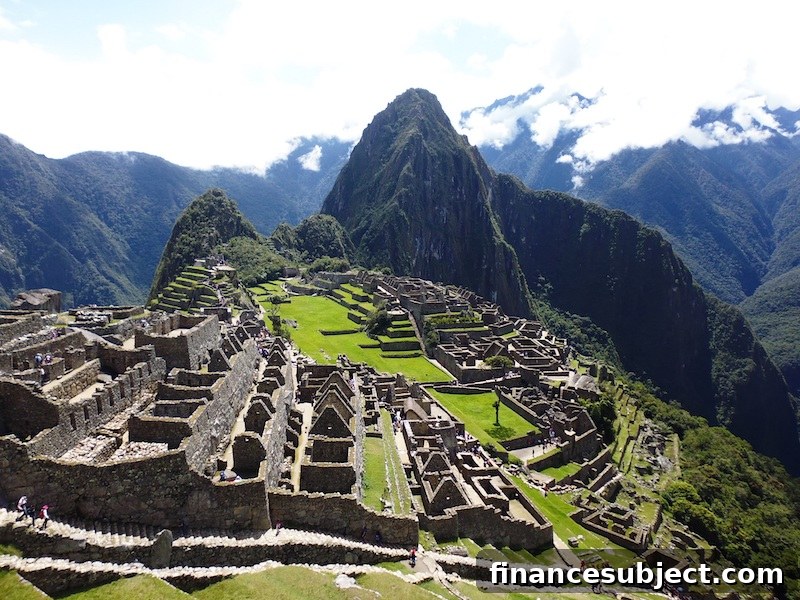
In this latest instalment of our regular series we meet a reader who effectively achieved financial independence in a remote corner of the world—long before he’d heard of FIRE. Read how Mark left work to travel on an actively managed portfolio that continued to grow.
A place by the FIRE
Hey Mark! How do you feel about taking stock of your financial life today?
Fantastic. My hope is to show that someone with a modest income can reach Financial Independence with time, discipline, and a bit of luck.
How old are you?
I’m 59. My partner is a little older and we’ve been together since I was 25.
Do you have any dependents?
We chose not to have children so we could pursue long-term travel. My partner had children from a previous relationship, so that worked for both of us.
Where do you live and what’s it like?
We live in a seaside town on the North Sea coast and we love it.
When do you consider you achieved Financial Independence and why?
I didn’t set out with the FIRE label in mind. My objective was simple: earn enough returns to fund a life of travel. When we left in 2004 my net worth was about £210,000 and our spending was roughly £10–14,000 a year. Over time my capital compounded to a comfortable level, though it could easily have gone the other way.
What about retiring early?
We travelled the developing world for 14 years. I describe myself as a professional investor, but to most people I appeared retired. I still spend hours every day researching investments, yet I suspect my neighbours assume I live on benefits.
Assets: equities and more equities
What is your current net worth?
My net worth first passed £1 million in 2021, dipped below in 2022, and is back around that level today. I don’t monitor it constantly—there were many intra-year drawdowns that resolved by year-end, and obsessing over daily share prices felt pointless.
What are your main assets?
My assets are roughly: house 8%, shares 89%, fixed interest 3%. No mortgage. The equities portion is highly diversified but reflects my active, stock-picking biases; I don’t hold index trackers.
What’s your main residence like?
We own a modest yet surprisingly spacious terraced house on the North East coast, bought for £83,000 in early 2019.
Do you consider your home an asset or an investment?
We bought it as a place to settle. I don’t treat the house as an investment because I’m not seeking a return from it.
Earning: financially unrewarding
What was your job?
I studied Biology and began working as a laboratory technician in the 1980s, earning modest wages. I later moved into laboratory management, where my salary rose from around £16,000 in 1991 to about £32,000 by 2004. I left that job in 2004 to travel full-time.
How did salary and career progression shape your plans?
I was often successful in my roles but struggled to convert that into higher pay. After a year of travel in 1990–91, my aim became to save as much as possible to allow long-term travel. I realised my best chance was to make money on the stock market, so I saved aggressively and initially invested in a handful of investment trusts.
Any career lessons you wished you’d known earlier?
I assumed results alone would advance a career. It took me time to realise that making your boss look good is often more important for progression.
Do you have income sources beyond investments?
Since leaving work in 2004, all my income has come from the portfolio—dividends, sales, and takeover proceeds.
Did pursuing FIRE affect your career?
I never consciously chased FIRE. It was a byproduct of saving to finance travel. I didn’t hear the term until well into our travels.
Saving: fuelled by frugality
What is your annual spending and how has it changed?
While travelling we typically spent £10–14,000 a year between us. Since settling in the UK in 2019 my personal spending has remained under £10,000 a year. We’re fortunate not to have mortgage or rent costs.
Any tips for global nomads?
Banking and payment issues were a recurring headache—ATMs out of service or cards blocked by security. Always have a reliable backup for accessing cash and payments.
Do you follow a budget?
No formal budget. My wants are limited, so I spend sparingly by default.
What percentage of income did you save?
From the point I decided to save aggressively until leaving work, I estimate a savings rate of roughly 65% of net income. I also maximised pension and AVC contributions while servicing a mortgage, and later sold the house before travelling.
What’s the secret to saving more?
Having a clear goal helped enormously. Every spending choice could be judged by whether it moved me closer to or further from that goal. Frugality became enjoyable and habitual.
How did you shift from saving heavily to spending while travelling?
The transition wasn’t dramatic. We spent what we needed and avoided accumulating things to carry. Over time I moved from ‘doing’ to ‘being,’ which was inexpensive and satisfying.
Any hobbies that cost much?
I ride a modest motorcycle that’s cheap to run—filling the tank every couple of weeks keeps me happy and doesn’t blow the budget.
Investing: the evolution of a stockpicker
What kind of investor are you?
I aim to combine core holdings in investment trusts with satellite individual stocks. In practice, ideas often outpaced available cash, and the number of individual holdings grew over time. My approach evolved from early bulletin-board picks to a Ben Graham-style value focus, then to a spreadsheet-backed Earnings Power Value method after the Global Financial Crisis. More recently I’ve shifted to a cautious, strategic allocation, reducing small-cap exposure and favouring larger, more defensive holdings.
What was your best investment?
Early on I discovered online investor communities and bought small companies. One, Soco International, became a 24-bagger and made a huge impact on my portfolio, though I didn’t sell all at the peak. More recently, Burford Capital was a standout: I doubled my holding at £1.20 in 2014 and rode a strong run up to a peak before short-seller headlines and the pandemic created severe volatility. Despite big paper losses, I focused on the company’s underlying prospects rather than short-term price moves.
Big investing mistakes?
I’ve had several total losses early on and learned to be quicker to sell losers before they become disasters. Many losses came from backing companies with seemingly bright futures that were later undone by lowball bids, political interference, or mismanagement.
Overall returns?
I’ve tracked annual net worth since I began saving seriously. My portfolio shows a 28-year IRR of about 8.25%, with considerable volatility along the way. In hindsight, sticking to investment trusts might have been simpler, but I gained thousands of hours of learning in the process.
How do you calculate returns?
I compute year-end NAVs and use XIRR in Microsoft Excel, accounting for spending and capital injections like proceeds from selling my house and transferring pension into a SIPP. That produces the geometric mean return I report.
ISA and pension contributions?
Although I no longer had earned income, I’ve been able to contribute modestly to a SIPP annually. I’ve also moved value into ISAs over time and am largely tax-free on investment returns today.
How often do you check the portfolio?
I follow company reports and results but deliberately avoid checking share prices. I review asset allocation annually and make incremental adjustments, mostly funded from cash generated within the portfolio, which also covers living expenses.
Wealth management: steady as she grows
How will you keep your money?
I hope the portfolio will continue to compound steadily. Mathematically, long-run returns are unlikely to stray far from historical averages unless a few extreme years occur. My current focus is gradual risk reduction through larger-cap, preservation, and some fixed-interest exposure.
Did you follow a withdrawal rule like the 4% rule?
Not really. I left without a formal withdrawal policy. We initially lived off proceeds from the house sale and later the portfolio generated sufficient cash to cover spending and recycling. Early returns were strong, but the Global Financial Crisis showed how sequence of returns can be perilous—had returns been worse early on, our travels would have ended quickly.
Did you enjoy early investment wins that funded travel?
Yes—early gains, particularly from Soco, were substantial at points and allowed tactical shifts into smaller-value stocks. The GFC erased much of those gains, resetting my confidence and taking years to recover.
Has your strategy changed since returning to the UK?
I’m more risk-aware now, with a lower withdrawal rate—around 1%—and an interest in preserving capital for old age. I’m also working to improve my National Insurance record to protect future State Pension rights.
Which matters more: saving or investing?
Saving is the fuel and investing the engine; both matter. I was an obsessive saver but a learning investor. Over time I focused more on building a reliable compounding machine than chasing single winners.
Any remaining financial goals?
My primary goal now is to ensure financial security in old age so I’m not reliant on the state for care. That’s more important than ever, though living an interesting life remains paramount.
Is hardcore travelling over?
When we returned to the UK it felt like closing a chapter. I don’t miss airports. Now I want to spend more time with friends and family, walk hills, and volunteer on farms—activities that keep me busy and fulfilled.
What would you say to readers pursuing financial freedom?
People often dismiss FIRE as impossible because they can’t imagine it for themselves. It’s achievable for many with time, discipline, and some luck. The worst-case outcome is a decent capital sum—and you might just end up living your dream.
Not another day at the office: Mark at Machu Picchu on his 50th birthday.
Any other business?
When did you first take money seriously?
As a child I learned to save pocket money to buy things I wanted. As a student I stretched a grant across the whole term and found it surprising how many peers ran out of money. That early discipline shaped how I thought about goals and budgeting.
Favourite resources?
I follow many blogs and newsletters. A few of the voices I read regularly include writers who distil investment common sense, provide macro perspective, and offer deep dives on economic topics—sources that have helped shape my thinking over the years.
Charity and inheritance?
While travelling we often helped people directly, which felt more rewarding than simply donating to large charities. I’m pragmatic about leaving capital behind: I’d like to preserve a sum against future care costs, and the remainder can be given to causes I support.
What will your finances ideally look like later in life?
If compounding continues and no catastrophe intervenes, I expect the portfolio to last longer than I do. That provides comfort; it also means I can prioritise living well today.
I see some of myself in Mark’s story—discovering online investing early, learning the hard lessons, and ultimately finding a lifestyle that fit his values. His journey shows how discipline, curiosity, and patience can combine to fund an unconventional life.
- An Additional Voluntary Contribution fund enables you to save extra amounts into a workplace pension.[↩]
- Great Financial Crisis, 2007 to 2008.[↩]
- That is, it multiplied in value 24-times over.[↩]
- Internal Rate of Return.[↩]
- Net Asset Value.[↩]