
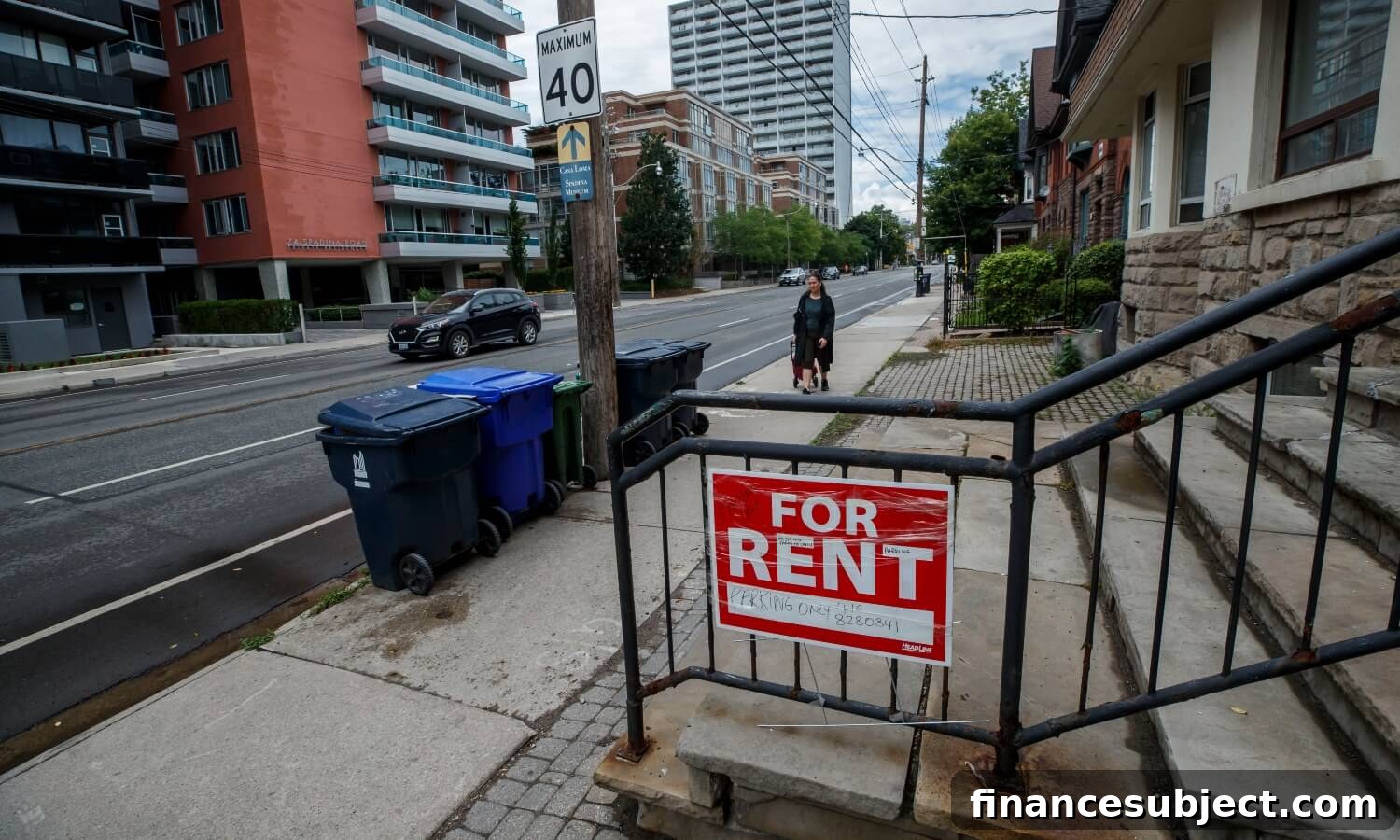
The rapid rise in Canadian rental prices is expected to slow over the next few years as the federal government’s plan to reduce immigration targets takes effect, according to a new report from Desjardins. The report forecasts a moderation in rent inflation driven by slower population growth and a gradual increase in unemployment that together should ease demand for rental housing.
Desjardins highlights that rent inflation has outpaced price growth for owned homes in recent periods. In the third quarter of this year, inflation for rented accommodation reached 8.3%—the fastest pace recorded since the early 1980s. That sharp increase has placed affordability pressure on a growing share of Canadian households, particularly those who rely on rental housing.
Newsletter
Get MoneySense financial tips, news & advice in your inbox.
Canada sets new immigration targets
Last month, the federal government announced a plan to lower Canada’s immigration targets by about 20% amid mounting concerns over housing costs and availability. Part of this policy shift aims to reduce the share of non-permanent residents—such as temporary foreign workers and international students—who typically rent rather than buy because their stay in Canada is temporary or uncertain.
Desjardins notes that many newcomers initially rent when they arrive in Canada, and that a reduction in the inflow of new residents should diminish immediate rental demand. “Lowering the number of newcomers should halt or possibly even reverse Canada’s population growth, slowing demand for rental accommodation,” the report states.
However, the report also stresses uncertainty about how quickly and effectively the new immigration measures will be implemented. If population growth slows faster than expected, rent inflation could fall more quickly. Conversely, if actual population trends remain closer to prior projections, rent pressures could persist at a higher level.
Regional differences and market implications
The expected changes to rent inflation will not be uniform across Canada. Desjardins forecasts that rent increases will decelerate more slowly in provinces such as British Columbia and Ontario, where rental demand remains strong. By contrast, rent growth is expected to ease more noticeably in Alberta’s major cities—particularly Calgary and Edmonton—reflecting the cyclical nature of those economies and their rental markets.
Alberta and Saskatchewan are cited as likely to see the fastest declines in rent inflation because their housing markets are more sensitive to economic cycles. Quebec, on the other hand, may continue to experience comparatively elevated rent inflation for a longer period.
Across the country, the share of households renting has risen significantly in recent years, which means that any change in rent trends will affect a large and growing segment of the population. The report underscores that short-term relief from slower demand does not eliminate deeper affordability issues.
Desjardins cautions that lasting improvements in rental affordability will require more than temporary reductions in demand. Sustainable relief depends on substantial increases in housing supply, changes in housing policy, and concerted efforts to improve affordability across both the rental and ownership sectors. Without such measures, any easing in rent inflation could prove temporary and localized.
Read more news:
- Canada’s economy news: Are we growing enough?
- How a major political event could affect interest rates in Canada
- Why Canadians remain concerned about the economy
- Newcomers to Canada: emerging options to transfer credit information