
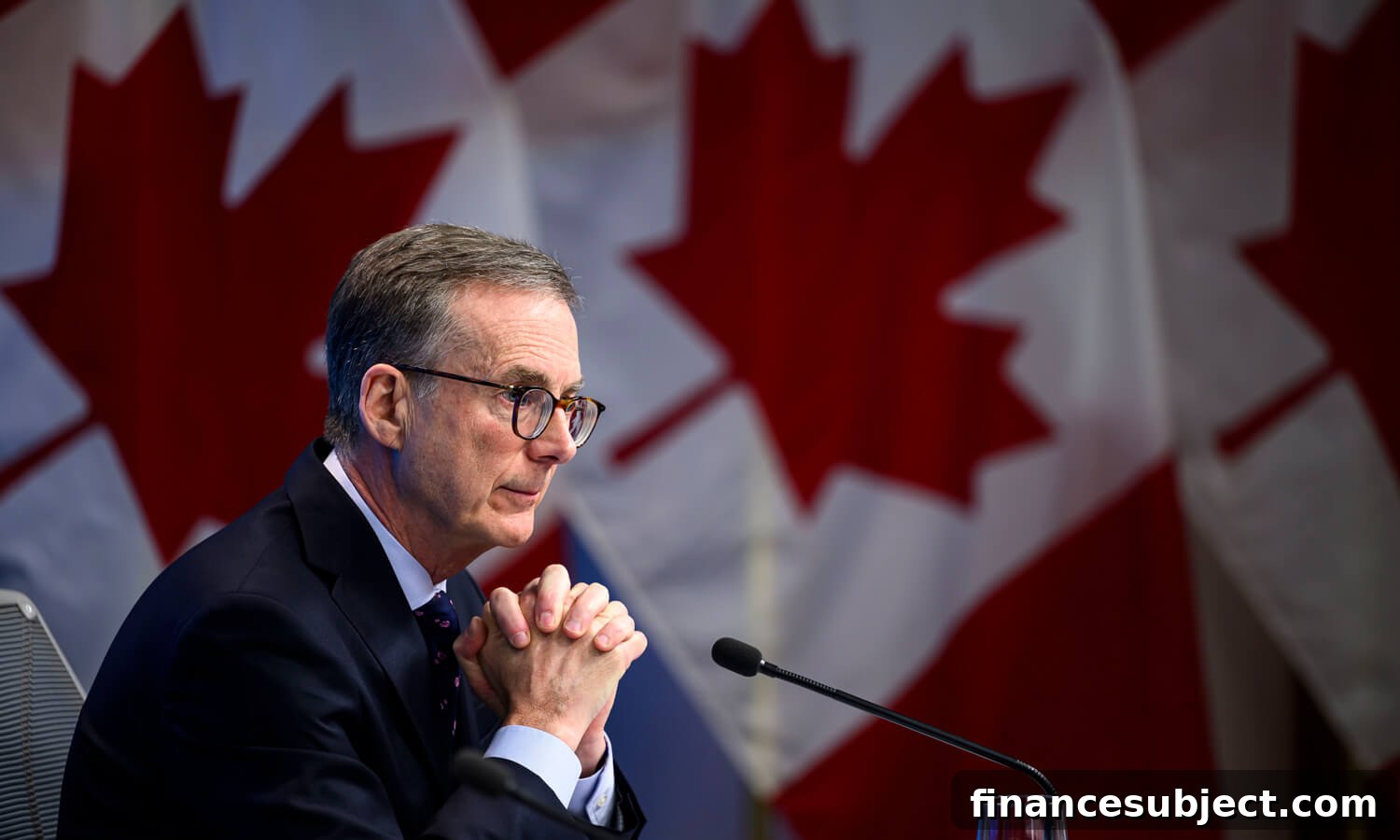
The Bank of Canada cut its key interest rate by a quarter point on Wednesday, lowering the policy rate to 2.75%. This marks the central bank’s seventh consecutive rate reduction and followed expectations from most economists. The decision reflects mounting concerns that escalating tariff tensions with the United States are beginning to undermine Canada’s economic momentum and inflation outlook.
The Bank of Canada points to inflation and trade war
Bank of Canada Governor Tiff Macklem emphasized in prepared remarks that recent signs of stabilizing inflation and the modest economic recovery driven by earlier rate cuts are now at risk because of the unfolding trade dispute with the U.S. He warned that “the pervasive uncertainty created by continuously changing U.S. tariff threats has shaken business and consumer confidence,” noting that uncertainty alone is already inflicting harm on economic activity.
Macklem said the economic damage could be significant, depending on the severity and duration of any tariffs. If the dispute persists, he cautioned, growth in the second quarter of 2025 could be weaker than previously expected. The central bank signaled it will monitor both downside growth risks and the potential for tariff-driven price pressures when setting future policy.
Tools
Mortgage payment calculator
Use a mortgage payment calculator to estimate the true cost of a mortgage, taking into account interest rates, amortization period, and fixed or variable terms.
What led to this rate cut
CIBC Capital Markets chief economist Avery Shenfeld told clients the Bank of Canada might have adopted a “wait-and-see” stance on further cuts if household spending and labour markets had shown continued strength heading into 2025. Instead, the sudden escalation in trade tensions tipped the balance toward easing. The dispute picked up intensity earlier in March when the U.S. moved ahead with a series of tariff actions that have been adjusted and contested over recent weeks.
On March 4, tariff measures first targeted certain Canadian imports, and those measures have been modified through subsequent announcements. In the latest phase, 25% tariffs on some Canadian steel and aluminum imports into the U.S. took effect shortly after midnight; Canada responded the same morning with retaliatory measures. In light of these developments, the Bank of Canada released a supplemental survey of consumers and businesses that focused on reactions to tariff risks from late January through February.
How are Canadians taking it all in
The Bank’s survey found many Canadians are preparing to reduce spending amid worries about job security tied to the trade dispute, particularly in sectors such as manufacturing that are sensitive to tariffs. A significant share of businesses reported they would be prepared to pass higher costs from tariffs on to customers quickly, especially if they communicate the reasons for price increases clearly to consumers.
The central bank also observed that inflation expectations have trended upward among both households and firms. Rising expectations can become self-reinforcing and contribute to actual inflation if left unchecked, which complicates the Bank’s task of balancing support for growth with price stability.
Resource highlight
LoanFinder and personalized loan options
Quick online matching tools can help you find loan providers tailored to your needs and approval likelihood. Many services provide a short questionnaire and personalized results without requiring sensitive personal identifiers up front.
Powered by a third-party comparison tool
Where are future BoC rate announcements headed?
Macklem said the Bank will “proceed carefully” with any future policy moves as it weighs the negative effects of tariffs on growth against the upward price pressures those tariffs could create. He stressed the Bank will use monetary policy to prevent temporary tariff-induced price shocks from becoming persistent inflation. Shenfeld expects the Bank will prioritize growth risks in the near term, leaving the door open to two additional rate cuts by June if conditions warrant.
The Bank of Canada’s next official interest rate decision is scheduled for April 16, when it will also publish updated economic and inflation forecasts that will provide further guidance on its policy path.
Read more personal finance news:
- Canada’s unemployment rate—plus the rate by province and city
- The future of remote work jobs in Canada
- How tariff talk and economic uncertainty are shaping Q4 earnings reports
- Updates on U.S. tariffs affecting goods from Canada and Mexico