
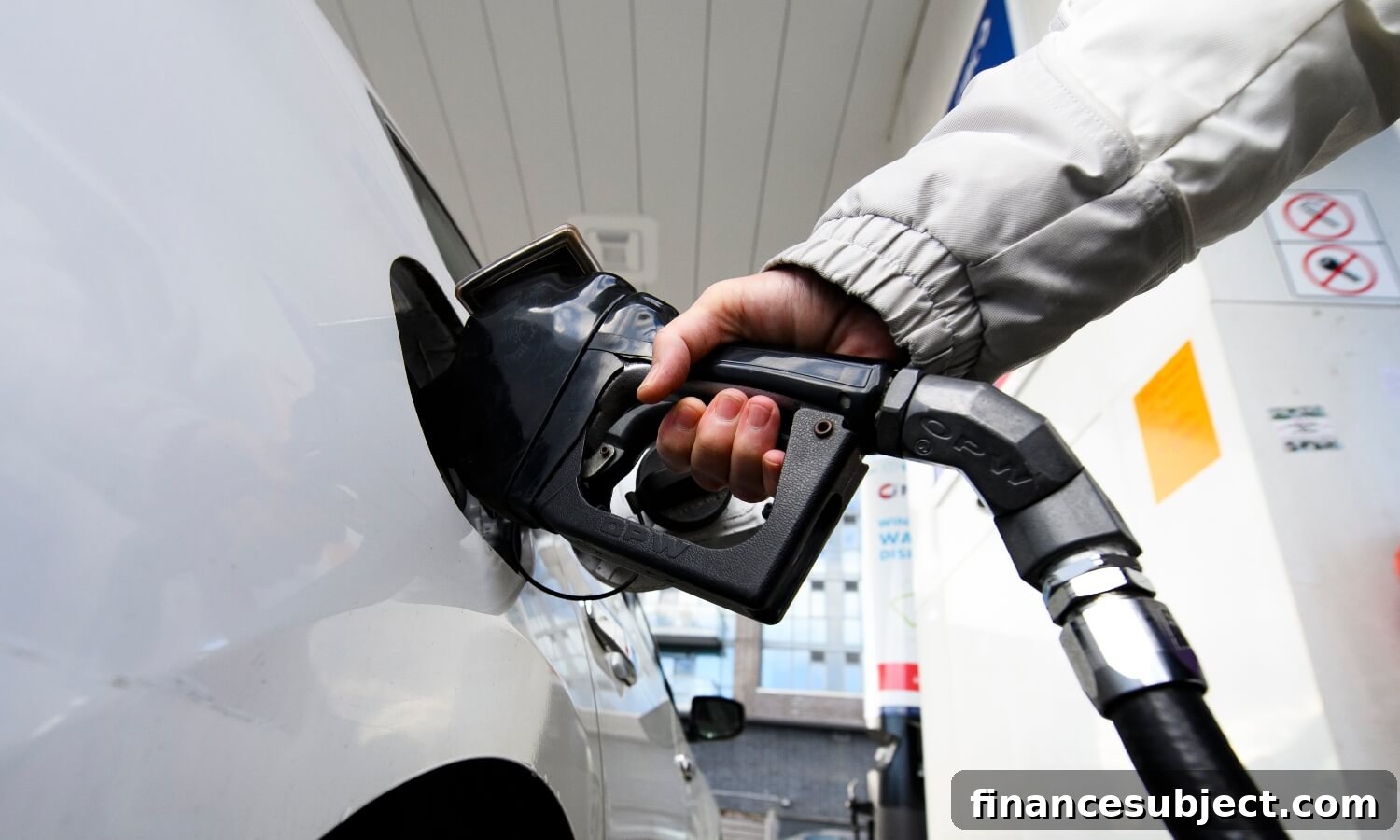
Since gas prices began rising in March, Sarah Bradley has become a frequent bargain hunter at grocery stores across Montreal. “Before, I’m a one-stop shop person,” she said. “Now I think twice. I’m like, OK, do I need that from IGA or can I find it somewhere else for cheaper?”
Fuel costs are reshaping how she spends. “It’s insane,” Bradley said of the expense of filling up her Toyota RAV4 this week—an extra cost that eats into other parts of her household budget.
She’s not even filling the tank in one visit. At a Petro-Canada station where prices recently passed $2 per litre, she bought 12 litres for $24.57 and planned to fill the rest at Costco, where her membership yields a discount. “I’m on the road a lot and it affects our lifestyle choices, absolutely,” the consultant added.
Gas prices near record highs — and unlikely to fall quickly
With the conflict in the Middle East continuing and global oil supplies constrained, gas prices in Canada are hovering around historically high levels and show little sign of falling before the busy summer travel season. According to Natural Resources Canada, the national average for regular unleaded was about $1.98 per litre on Thursday, marking a level not seen since the spike after Russia’s 2022 invasion of Ukraine. The all-time peak remains roughly $2.14 per litre from June of that year.
Also read
Best savings accounts in Canada
Find the best and most up-to-date savings rates in Canada using our comparison tool
Regional prices this week included about $1.94 per litre in Toronto, $2.04 in Montreal, $2.23 in Vancouver, $1.90 in Calgary and $1.92 in Halifax. “We’re in uncharted territory. We’ve never seen an energy crisis like this,” said Dan McTeague, president of Canadians for Affordable Energy. “This problem of a shortage is going to stay with us for the balance of the year.”
Even if the Strait of Hormuz — a key shipping route that normally moves a large portion of the world’s oil — reopens after disruptions linked to the Feb. 28 U.S.-Israel attack on Iran, it will likely take months or even years for Gulf producers to return to full output and for supplies to work their way through refineries and distribution networks. McTeague pointed to strikes and damage at oilfields, refineries and gas facilities across the region, saying the effects have already been set in motion.
An International Energy Agency report this week warned that rapidly growing supply losses are “depleting global oil inventories at a record pace.” Rebuilding those stockpiles takes time: reopening wells that were shut in is complex because of the physical and chemical changes that occur in reservoirs and wellbores when production stops. Distillation sites and refineries that curtailed output during the disruptions also take time to ramp back up.
Repairing facilities damaged by attacks could extend timelines further. Some sites may face long waits for replacement parts, and if shippers remain unsure about safety in key waterways, merchant traffic may be slow to return to pre-crisis levels.
Rising fuel costs squeeze household budgets
Although more than 80% of oil and natural gas that normally passes through the Strait of Hormuz goes to Asian markets, oil is traded globally, so price increases are felt by buyers around the world, including Canadians at the pump. How far prices rise or fall over the coming months depends heavily on whether key shipping lanes remain disrupted and how quickly supply restores.
Patrick De Haan, head of petroleum analysis at GasBuddy, said summer fuel prices will hinge on the duration of the waterway disruption. “The longer we stay there, the more Canadians may restrain their travel,” he noted, while also pointing out that short-term demand may not collapse. “Three short months of summer—a lot of Canadians are going to grimace and bear the higher price of fuel.”
Instead of cancelling plans, many households are likely to look for savings elsewhere. That might mean cutting grocery costs, postponing discretionary purchases, carpooling more often or choosing lower-cost travel options.
For Montreal security guard Almoustapha Haidala, higher fuel prices have already meant trimming the weekly grocery budget. While filling his Toyota Corolla and watching the pylon display $2.01 per litre, he said in French, “We’ll definitely cut back on food. Cutting back on food will affect our quality of life. It’s too high. And it makes our expenses climb at the end of the month, which means we’re really struggling financially with everyday life.”
Newsletter
Get free MoneySense financial tips, news & advice in your inbox.
Read more news:
- Summer camp sticker shock is real—here’s how to stay on budget
- Stock news: Barrick’s gold-fuelled profit boom leads a busy week of earnings
- Young Canadians face another difficult summer job market
- Jet fuel surge pushes airline fares higher