
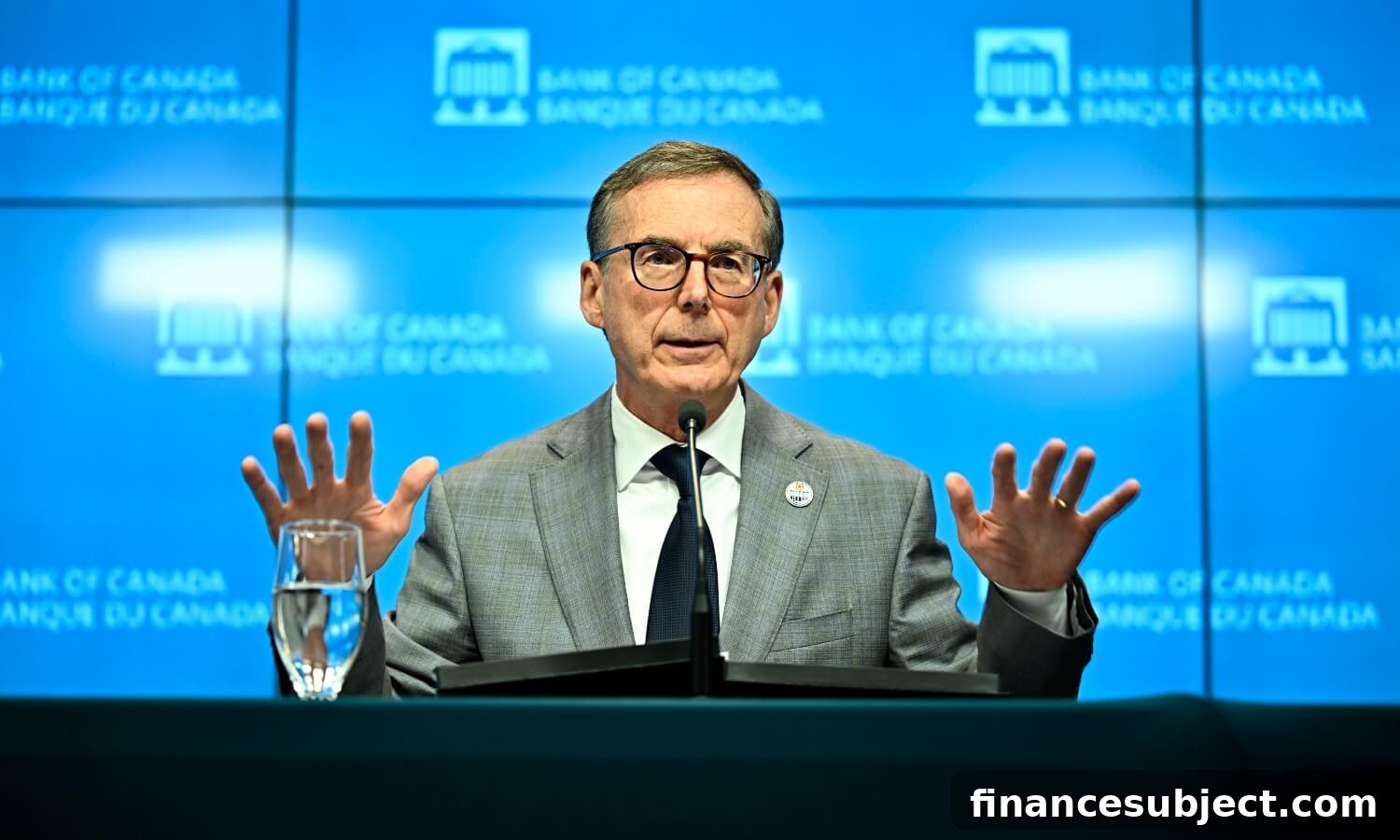
Economists and market observers widely expect the Bank of Canada to announce another interest rate cut this week as multiple indicators suggest inflation is easing in a durable way.
Markets have priced in a reduction to the central bank’s overnight rate ahead of the scheduled announcement on Wednesday, following Statistics Canada’s latest consumer price report showing annual inflation slowed to 2.7% in June.
That reading came in slightly below the 2.8% forecast many had expected and has strengthened confidence among traders and economists that the Bank of Canada could follow up last month’s 25-basis-point reduction with an additional cut.
“I think it’s very likely the Bank of Canada cuts rates again next week,” said Royce Mendes, managing director and head of macro strategy at Desjardins. “From a strategic standpoint, it would be unusual to only cut once by 25 basis points and then stop — that wouldn’t shift the economy or inflation path meaningfully. It made sense that the central bank would likely implement at least two consecutive cuts, and recent data have reinforced that view.”
Why might the Bank of Canada cut rates?
Last month’s interest rate cut, which lowered the Bank of Canada’s policy rate from 5% to 4.75%, was the first reduction in over four years. Several pieces of recent economic data provide a rationale for further easing.
Beyond the softer inflation print, Mendes pointed to rising unemployment and weak business growth expectations as additional reasons the central bank may be ready to reduce its policy rate again. While inflation remains above the Bank’s 2% target, he and others argue that holding rates at currently restrictive levels risks tipping the economy into a sharper slowdown.
“Current interest-rate settings are still highly restrictive — you can see that in consumer spending patterns and in the housing market,” Mendes said. “If the Bank doesn’t cut next week, it could signal a greater willingness to risk a recession simply to shave a few tenths off inflation.”
Data released by Statistics Canada on retail sales showed consumers pulled back in May, with retail receipts falling 0.8% to $66.1 billion. Sales declined in eight of the nine subsectors tracked, underscoring the soft demand environment.
Mendes emphasized that an additional rate cut would not be intended to stimulate the economy aggressively but rather to reduce the degree of constraint monetary policy is imposing. A small easing, he said, could restore some consumer confidence and modestly support spending.
Why Canada’s employment numbers matter
Labour-market figures for June added further weight to the argument for easing. The economy lost 1,400 jobs that month and the unemployment rate rose to 6.4% from 6.2% in May — the highest jobless rate since January 2022. That softening in employment increases the likelihood that the Bank will lower rates this week to avoid compounding weakness.
Not everyone, however, is convinced a cut is certain. Clay Jarvis, mortgage and real estate expert at NerdWallet Canada, noted the central bank’s historically cautious stance. “Reducing the overnight rate while inflation remains well above 2% would be fairly uncharacteristic,” he wrote, suggesting the decision could go either way.
Even if the Bank trims rates by 25 basis points, Jarvis said the change may not be sufficient to materially revive the housing market. Many buyers continue to face elevated mortgage costs and uncertainty about future payments.
A survey conducted jointly by CPA Canada and BDO Debt Solutions after June’s cut found that half of Canadians feel the earlier rate increases have worsened their debt burdens. Seven in ten respondents said the June rate reduction did not change their financial outlook, and 52% believe further rate cuts will not be enough to meaningfully ease their financial strain.
Newsletter
Get free MoneySense financial tips, news & advice delivered to your inbox.
Read more about the economy:
- Canada’s inflation rate — and what it means for your investments
- What is the inflation rate in the U.S.?
- What is the GDP in Canada right now?
- Will Canada enter a recession in 2024?