

Earlier in August 2025 I proposed an alternative to the classic 60/40 stock-and-bond portfolio called the 40/30/30 allocation: 40% equities, 30% bonds and 30% alternative assets that tend to behave differently when both stocks and bonds struggle. In theory, that mix would have helped during rare episodes such as 2022, when both equities and fixed income declined together.
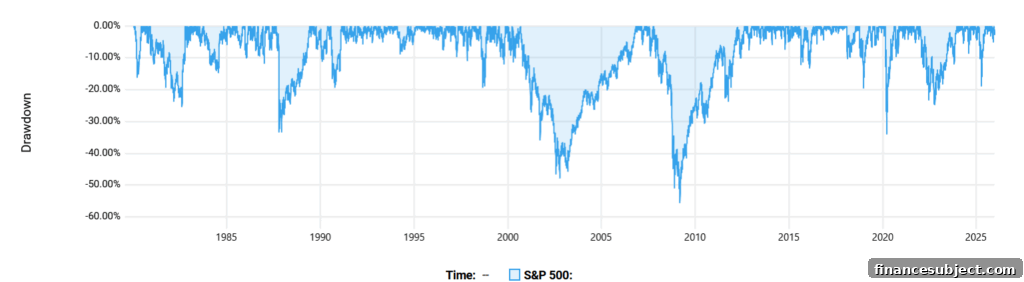
That concept has trade-offs. Many alternative strategies carry higher fees because they rely on active management. They also add complexity: finding ETFs that provide genuine diversification rather than repackaging familiar risks is challenging. Even with a well-constructed mix, one important gap remains: these allocations are not specifically designed to protect against sudden market crashes—deep, double-digit drawdowns like those in 2008 or the March 2020 COVID shock.
Source: Testfolio.io
Below I review two ETF-based approaches that individual investors can access, with Canadian-listed options noted where available. The Canadian ETF market is smaller than the U.S. market in this area, but there are still a few usable tools. Both approaches can offer genuine protection in specific crash scenarios, yet neither is a free lunch: costs, structural decay and execution risk make crash-hedging ETFs difficult to use effectively for most investors.
Option 1: Inverse ETFs
Inverse ETFs are structured to deliver the opposite daily return of a benchmark. They aim to provide a negative multiple of that benchmark’s daily move and are primarily intended as short-term trading tools. Most inverse funds track broad market indexes, although some focus on sectors or individual stocks. Crucially, their objective resets every trading day, so they are not built for buy-and-hold protection.
A common U.S. example is the ProShares Short S&P 500 ETF (SH), which targets -1x the daily return of the S&P 500. Leveraged inverse funds multiply that exposure: for example, Direxion Daily S&P 500 Bear 3X Shares (SPXS) targets -3x the index’s daily return. Canadian investors can access similar products listed domestically, such as BetaPro -3x S&P 500 Daily Leveraged Bear Alternative ETF (TSX:SSPX).
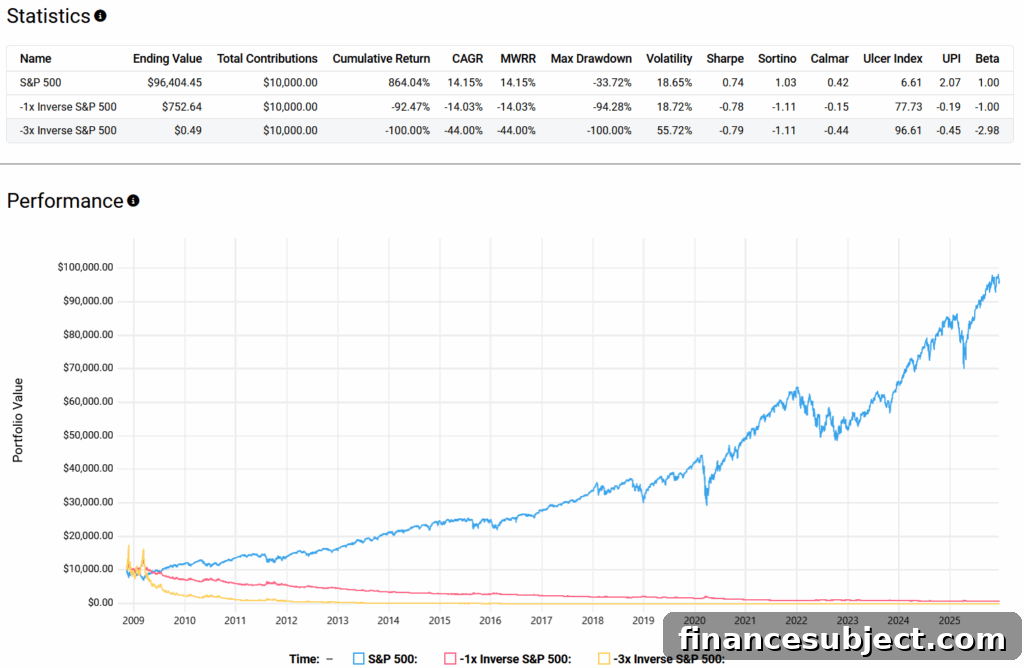
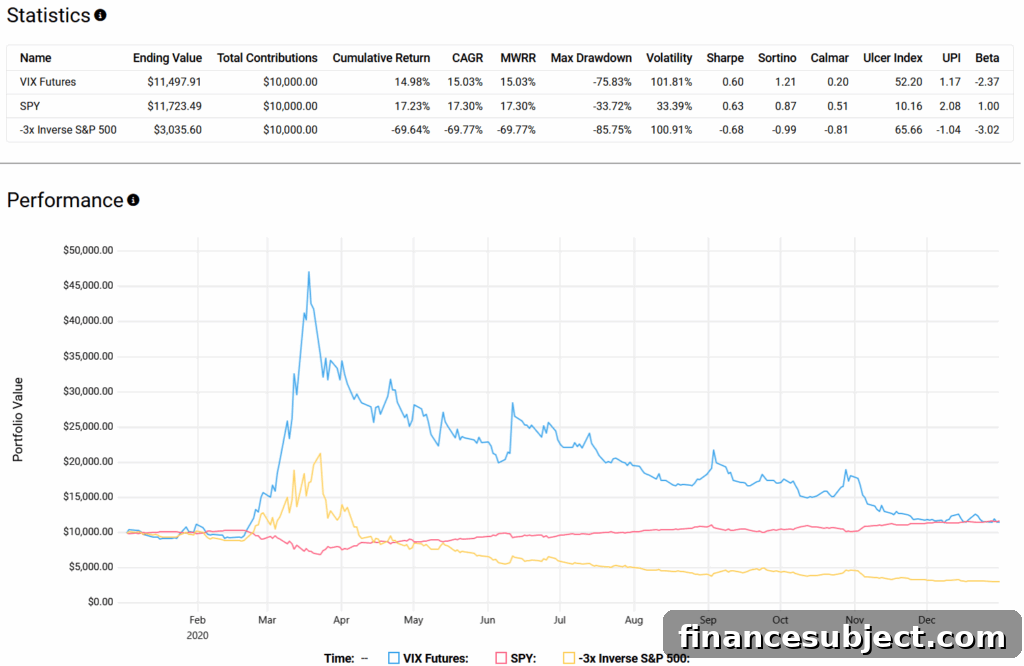
During sharp selloffs, inverse ETFs can perform exactly as intended. In March 2020, as the S&P 500 plunged, inverse funds rose—leveraged versions moved by a much larger magnitude. However, once markets recovered, those same inverse holdings declined steadily. This underlines their fundamental limitation: because equity markets trend upward over the long run, holding a permanent short position is structurally disadvantageous. Issuers warn that inverse ETFs are designed for short-term use and day trading, not buy-and-hold investors.
Effectively using inverse ETFs requires precise market timing: enter before the crash and exit before the rebound. That doubles the difficulty for investors, since being right twice—on entry and exit—is hard even for professionals. Over long periods, inverse ETFs typically decay in value: fees, daily compounding effects and volatility drag erode returns. For example, over a roughly 17.1-year period from November 5, 2008 to December 18, 2025, buy-and-hold performance for common inverse funds effectively trended to zero after multiple reverse splits.
Source: Testfolio.io
In summary, inverse ETFs can deliver powerful short-term protection during sudden declines, but they are costly and risky to hold for more than a few days because of fees, daily resets and long-term upward trends in equity markets.
Option 2: S&P 500 VIX futures
Another popular hedge is exposure to the Cboe Volatility Index (VIX) via VIX futures-based ETFs. The VIX measures market expectations of near-term S&P 500 volatility derived from option prices. During periods of stress, demand for downside protection pushes option prices—and therefore the VIX—higher. Because the VIX spikes in crises, it is often called Wall Street’s “fear gauge.”
You cannot invest directly in the VIX itself; instead, exchanges offer VIX futures that express expectations for volatility at specific future dates. ETFs that provide volatility exposure typically hold the front-month and next-month VIX futures. Examples include U.S. funds such as ProShares VIX Short-Term Futures ETF (VIXY) and Canadian offerings like BetaPro S&P 500 VIX Short-Term Futures ETF (TSX:VOLX).
During crashes, short-term VIX futures can generate outsized gains. In March 2020, volatility ETFs surged as VIX futures climbed, often outperforming even leveraged inverse equity funds. This asymmetric payoff—where relatively small increases in market stress can produce large gains—is called convexity and is why institutional investors use volatility futures as a tail-risk hedge against rare but severe market moves.
Source: Testfolio.io
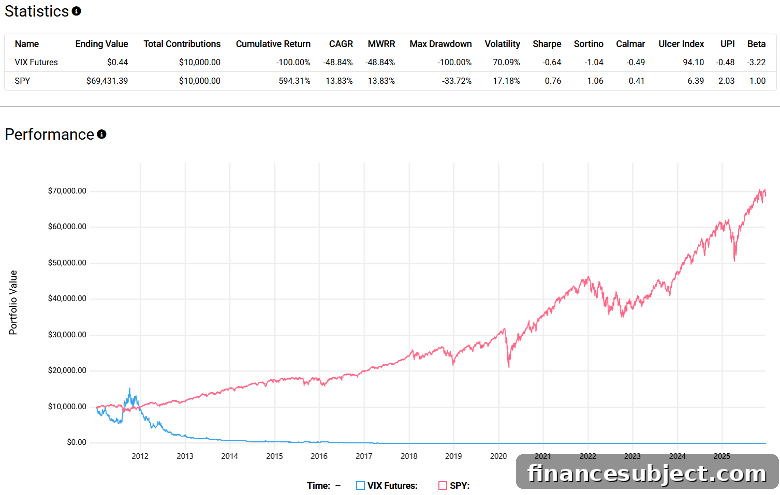
Outside moments of crisis, however, volatility ETFs generally perform poorly. The VIX futures curve is commonly in contango, meaning longer-dated futures trade at higher prices than front-month contracts. ETFs that roll front-month futures sell the expiring contract low and buy the next contract higher, producing negative roll yield. Combined with the mean-reverting nature of volatility—sharp, short spikes followed by long declines—and management fees (VIXY’s MER is 0.85% as an example), these funds suffer persistent negative carry. Over long periods, buy-and-hold exposure to short-term VIX futures has historically decayed toward zero, requiring repeated reverse splits to maintain tradability.
Like inverse ETFs, success with volatility ETFs depends on timing: enter before a volatility spike and exit after the spike has paid off. That timing is difficult even for institutions, making volatility ETFs an unreliable long-term insurance tool for many portfolios.
Source: Testfolio.io
So, what can you do to protect your portfolio?
Both inverse ETFs and VIX futures-based ETFs can hedge a market crash, and episodes like March 2020 prove their effectiveness in specific moments. The main challenge is integrating these tools into a retail investor’s portfolio in a practical and repeatable way. Execution risk—timing entry and exit correctly—is the dominant obstacle. Enter too early and the position erodes capital before a crash occurs. Exit too late and a recovery will erase hedge gains quickly.
Some investors try maintaining a permanent small allocation to hedging instruments—for example, a 90/10 stock-to-hedge split—rebalanced on a fixed schedule to avoid market timing. While this approach can blunt extreme drawdowns, backtests generally show lower compound returns, higher volatility and weaker risk-adjusted performance compared with a traditional 60/40 portfolio, often at higher fees and complexity.
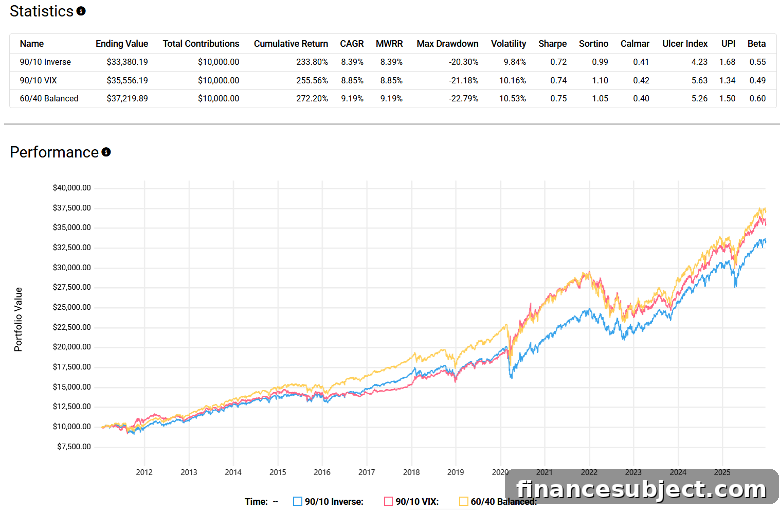
Source: Testfolio.io
Market crashes are an inherent part of equity investing. The equity risk premium compensates investors for enduring volatility and occasional severe drawdowns. For most individual investors, practical protections tend to be traditional: maintain a diversified mix of high-quality bonds, consider allocations to assets such as gold for currency or inflation pressure, and keep a cash buffer to meet near-term needs. These measures reduce portfolio stress without relying on precise timing or exotic hedges.
Crash protection can be valuable, but it usually comes at a price. The burden of effective execution falls on the investor, and the costs, complexity and decay characteristics of inverse and volatility ETFs mean they are tools best used with clear rules and realistic expectations—not as a permanent replacement for diversified portfolio construction.
Newsletter
Get free MoneySense financial tips, news & advice in your inbox.
Read more about investing with ETFs:
- Is Wealthsimple’s new Physical Gold Trading worth it?
- How cash ETFs keep your money working
- A practical guide to Canadian REIT investing in 2025
- What’s behind the retreat in responsible investing?