
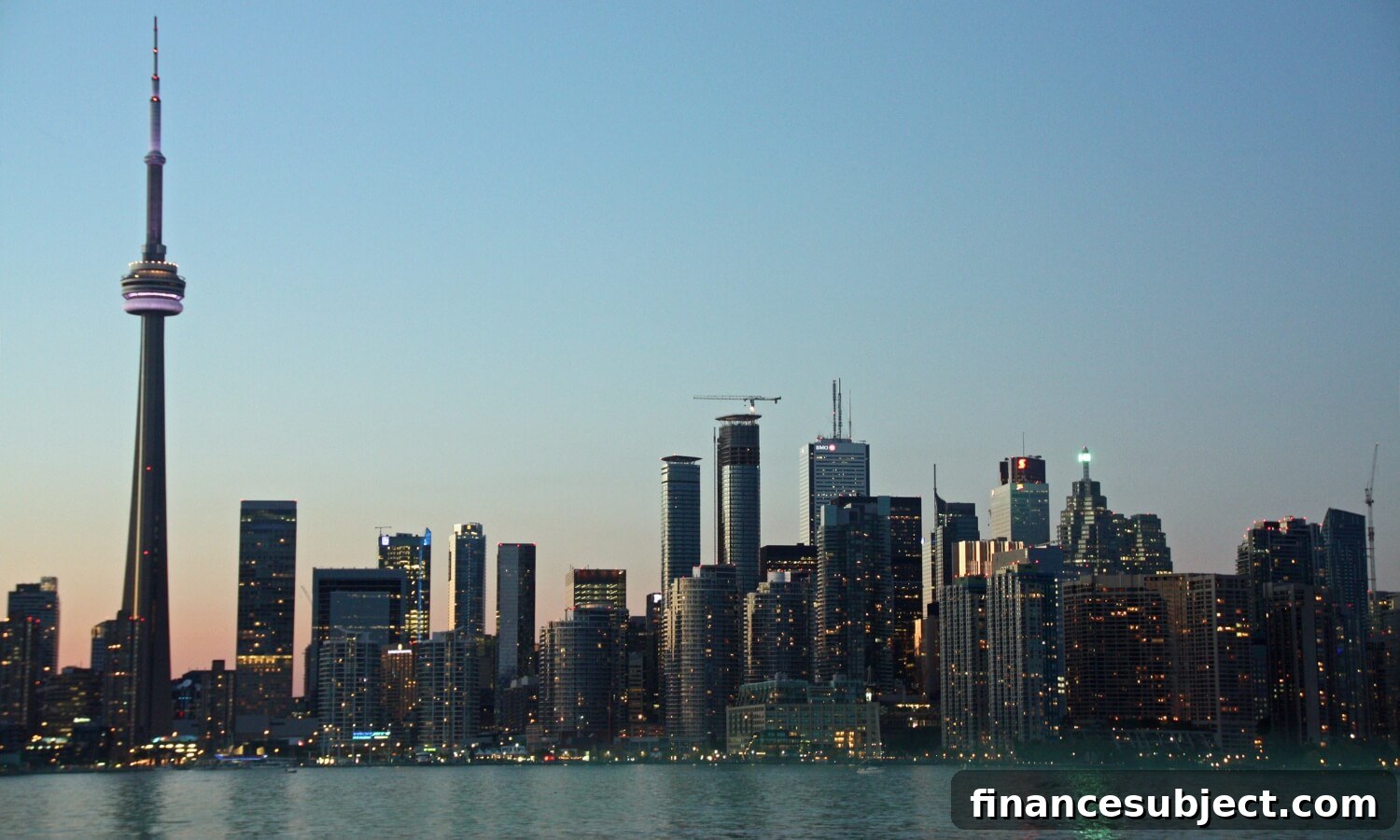
As Canada’s economic centre, Toronto is a major hub for industries ranging from finance to entertainment. The city attracts a large share of newcomers to Canada and has the country’s highest proportion of foreign-born residents. With the national population surpassing 40 million in 2023 and many newcomers choosing the Greater Toronto Area, the region faces strong demand for housing. Increasing supply remains critical to easing shortages and improving affordability across Toronto and its suburbs.
- The 50 best neighbourhoods in Toronto
- Closer look at the top three neighbourhoods
- Real estate trends in Toronto
- Methodology
- The table highlights the top 50 neighbourhoods in Toronto. For the complete data set covering all 306 Toronto neighbourhoods, see the full neighbourhood data page.
- Benchmark price 2023: Average composite benchmark price for 2023, representing all property types: detached and attached houses, townhouses and apartments.
- 1-year, 3-year and 5-year growth: Percentage change in the composite benchmark price over each time frame.
- Value, economics and accessibility: Scores from 0 to 5 indicating relative value for money, neighbourhood income and education levels, and ease of travel by foot, bike and transit.
- Children: Percentage of households with children in the neighbourhood.
- Find the best mortgage rates and compare five-year fixed and variable options.
- Use mortgage affordability and payment calculators to estimate what you can borrow and what monthly payments might look like.
- Calculate mortgage penalties or renewals and read comprehensive guides for first-time and second-home buyers in Canada.
Best places to buy real estate in Toronto
Below is a ranked list of the top 50 Toronto neighbourhoods to consider in 2024. The table includes benchmark prices for 2023 along with short- and long-term growth rates and neighbourhood scores for value, economics and accessibility. Use these metrics to compare affordability, investment potential and suitability for families.
| wdt_ID | Rank | Neighbourhood | Benchmark price 2023 | 1-year growth | 3-year | 5-year | Value | Economics | Accessibility | Children (%) |
|---|---|---|---|---|---|---|---|---|---|---|
| 1 | 1 | Orchard Grove | $2,261,249 | 7% | 15% | 13% | 2.5 | 5.0 | 3.1 | 52% |
| 2 | 2 | Fairlawn | $1,881,922 | 2% | 11% | 5% | 2.4 | 5.0 | 3.1 | 52% |
| 3 | 3 | Bedford Park | $2,060,125 | -0% | 11% | 14% | 2.4 | 5.0 | 3.1 | 52% |
| 4 | 4 | Centennial (West Rouge) | $1,311,339 | 3% | 29% | 39% | 2.9 | 4.3 | 2.0 | 56% |
| 5 | 5 | Thorncliffe Park | $690,129 | -4% | 12% | 35% | 2.9 | 4.3 | 3.9 | 45% |
| 6 | 6 | Chipping | $2,401,646 | 15% | 22% | 24% | 2.6 | 4.4 | 1.7 | 47% |
| 7 | 7 | Ledbury | $2,910,736 | -6% | 24% | 13% | 2.0 | 5.0 | 3.1 | 52% |
| 8 | 8 | South of Bloor | $1,396,804 | 7% | 34% | 46% | 3.0 | 4.0 | 3.7 | 42% |
| 9 | 9 | Ridley | $3,282,096 | -2% | 21% | 25% | 2.0 | 5.0 | 3.1 | 52% |
| 10 | 10 | Port Union Village | $1,077,878 | -8% | 14% | 21% | 2.6 | 4.3 | 2.0 | 56% |
| 11 | 11 | Mallow | $1,581,646 | 0% | 6% | 8% | 2.5 | 4.4 | 1.7 | 47% |
| 12 | 12 | Highland Creek | $1,244,905 | -12% | 20% | 26% | 2.6 | 4.3 | 2.0 | 56% |
| 13 | 13 | Mildenhall | $2,146,841 | -21% | 23% | 52% | 2.2 | 4.7 | 2.9 | 42% |
| 14 | 14 | The Queensway | $941,152 | -1% | 19% | 25% | 2.9 | 4.0 | 3.7 | 42% |
| 15 | 15 | Cliffcrest | $2,016,550 | 62% | 81% | 93% | 4.3 | 2.6 | 2.7 | 47% |
| 16 | 16 | Leaside | $2,108,465 | 3% | 18% | 19% | 2.5 | 4.3 | 3.9 | 45% |
| 17 | 17 | Kingsway Park South | $2,141,654 | 12% | 28% | 32% | 2.7 | 4.0 | 3.7 | 42% |
| 18 | 18 | The Kingsway | $2,445,364 | -4% | 3% | 21% | 2.1 | 4.6 | 4.0 | 38% |
| 19 | 19 | Old Mill | $2,561,190 | 24% | 56% | 43% | 3.0 | 3.6 | 3.8 | 40% |
| 20 | 20 | Lambton | $1,875,780 | 3% | 55% | 80% | 3.0 | 3.6 | 3.8 | 40% |
| 21 | 21 | Duncairn | $1,368,291 | -14% | -9% | -7% | 2.2 | 4.4 | 1.7 | 47% |
| 22 | 22 | Bruce Farm | $1,249,163 | 7% | 27% | 32% | 3.0 | 3.5 | 1.7 | 50% |
| 23 | 23 | St. John | $1,850,022 | -22% | 60% | 0% | 2.3 | 4.2 | 2.7 | 46% |
| 24 | 24 | Royal York South | $1,835,175 | -7% | 21% | 36% | 2.5 | 4.0 | 3.7 | 42% |
| 25 | 25 | Baby Point | $1,845,726 | 11% | 28% | 49% | 2.9 | 3.6 | 3.8 | 40% |
| 26 | 26 | Highland | $895,669 | 2% | 24% | 16% | 2.9 | 3.5 | 1.7 | 50% |
| 27 | 27 | Runnymede | $1,473,513 | 3% | 28% | 40% | 2.8 | 3.6 | 3.8 | 40% |
| 28 | 28 | Cloverdale | $1,324,879 | 2% | 36% | 44% | 2.9 | 3.5 | 3.7 | 47% |
| 29 | 29 | Upper Rouge | $984,115 | 1% | 22% | 41% | 2.9 | 3.5 | 1.1 | 68% |
| 30 | 30 | Denlow | $3,064,873 | -4% | 20% | 11% | 2.0 | 4.4 | 1.7 | 47% |
| 31 | 31 | York Valley | $4,554,627 | 39% | 1% | 31% | 2.2 | 4.2 | 2.7 | 46% |
| 32 | 32 | Old Finch | $1,074,712 | -1% | 24% | 23% | 2.8 | 3.5 | 1.7 | 50% |
| 33 | 33 | Lawrence Park | $5,199,684 | 5% | 38% | 52% | 1.6 | 4.7 | 2.9 | 42% |
| 34 | 34 | Jamestown | $1,634,112 | 64% | 130% | 161% | 5.0 | 1.3 | 2.5 | 57% |
| 35 | 35 | Old Burnhamthorpe | $1,111,927 | 9% | 34% | 56% | 3.2 | 3.1 | 2.2 | 45% |
| 36 | 36 | Eringate | $1,019,346 | 5% | 38% | 55% | 3.2 | 3.1 | 2.2 | 45% |
| 37 | 37 | Rosedale | $3,062,427 | 22% | 11% | 34% | 2.5 | 3.8 | 2.4 | 23% |
| 38 | 38 | Princess Gardens | $1,852,015 | 5% | 31% | 34% | 2.7 | 3.5 | 3.7 | 47% |
| 39 | 39 | Brahms | $1,324,300 | 6% | 9% | -6% | 2.7 | 3.5 | 1.7 | 50% |
| 40 | 40 | Yorkminster | $3,678,403 | 15% | 9% | 12% | 2.0 | 4.2 | 2.7 | 46% |
| 41 | 41 | Blythwood | $4,544,240 | -13% | 35% | 50% | 1.5 | 4.7 | 2.9 | 42% |
| 42 | 42 | Rippleton | $3,665,442 | 4% | 5% | 1% | 1.8 | 4.4 | 1.7 | 47% |
| 43 | 43 | Swansea | $964,332 | -10% | 7% | 21% | 2.6 | 3.6 | 3.8 | 40% |
| 44 | 44 | West Deane Park | $1,401,153 | -2% | 11% | 40% | 2.7 | 3.5 | 3.7 | 47% |
| 45 | 45 | Cresthaven | $1,364,714 | -8% | 30% | 24% | 2.6 | 3.5 | 1.7 | 50% |
| 46 | 46 | Etobicoke | $887,713 | 3% | 22% | 40% | 3.0 | 3.1 | 2.2 | 45% |
| 47 | 47 | Zion Park | $1,017,146 | -9% | 7% | 10% | 2.5 | 3.5 | 1.7 | 50% |
| 48 | 48 | Upper Beach | $1,236,696 | -9% | 14% | 28% | 2.6 | 3.5 | 4.1 | 41% |
| 49 | 49 | Eastview | $1,091,854 | -13% | 16% | -0% | 2.5 | 3.5 | 1.7 | 50% |
| 50 | 50 | Islington | $1,201,421 | -11% | 5% | 17% | 2.4 | 3.5 | 3.7 | 47% |
Source: Toronto Regional Real Estate Board
Top three neighbourhoods in Toronto
1. Orchard Grove
Orchard Grove sits near the Cricket Club and several green spaces and is currently one of Toronto’s most sought-after neighbourhoods. The 2023 benchmark price was $2,261,249. Over the last five years the area has posted steady gains, with the benchmark price up 7% versus 2022, 15% versus 2020 and 13% versus 2018. The neighbourhood scores highly on economic indicators and attracts affluent buyers, which contributes to rising prices.
Orchard Grove appeals to families and professionals thanks to nearby schools, upscale commercial amenities, reliable transit links and quick access to Highway 401. Housing is varied—ranging from bungalows and Tudor-style homes to Georgian-style residences—so buyers find a range of options. About 52% of households have children, above the Toronto average, and the neighbourhood earns an accessibility rating that reflects reasonable walkability and transit access.
2. Fairlawn
Fairlawn benefits from a central location near Yonge Street and Lawrence Avenue, with parks such as Yonge Boulevard Parkette and York Mills Valley Park close by. The 2023 benchmark price was $1,881,922, up modestly from the previous year. The area offers multiple school options and neighbourhood amenities—grocery stores, restaurants, a library and community services—which support its accessibility score and make it popular with commuters.
3. Bedford Park
Bedford Park is a family-oriented neighbourhood with a mix of historic homes and newer custom builds. The 2023 benchmark price was $2,060,125, reflecting long-term gains even as price growth paused year-over-year in 2023. With abundant parks, playgrounds, schools and transit connections, Bedford Park remains a preferred choice for families; roughly half of households include children. The mix of detached and semi-detached homes and an active trend of renovations and rebuilds make it a dynamic neighbourhood for buyers seeking both character and modern designs.
What’s happened in the Toronto real estate market?
Rising interest rates throughout 2023 slowed price growth in Toronto. The city’s benchmark home price began the year near $987,842 and climbed to a seasonal peak of about $1,197,021 in May before easing through the summer and autumn. By December the benchmark settled around $1,062,914, roughly 11% below the May peak but still above $1 million for the year overall.
Higher borrowing costs prompted some buyers to pause, which led to longer listing times: average days on market increased from roughly 22 days at the market peak in May to about 51 days by December. That shift created more negotiating room for committed buyers as some sellers became more open to offers and concessions.
Local agents noted that uncertainty around rates contributed to buyer hesitation in late 2023. When the Bank of Canada raised its policy rate toward the end of the summer, buyer activity slowed. As rates stabilized later, market dynamics began to shift again.
What’s next for real estate in Toronto?
Early signs in the following year showed improving momentum. In January, home sales were reported up about 33% year-over-year and 16% month-over-month, while new listings rose roughly 15% year-over-year. That combination suggested more activity from buyers and sellers and indicated renewed buyer confidence after a period of caution.
Agents observed that some buyers who waited through 2023 were returning, and competitive bidding emerged again in certain segments. Market direction now depends on interest-rate policy, inventory growth and buyer demand. Prospective buyers should weigh affordability, mortgage options and neighbourhood characteristics when considering a purchase, while sellers should monitor comparable listings and local demand trends.
Newsletter
Get free MoneySense financial tips, news & advice in your inbox.
Read more about buying a home:
- The complete guide for first-time home buyers in Canada
- Where to get the new first home savings account
- Mortgage renewal calculator
- How much you need to earn to afford a home in Toronto and the GTA
Return to top.
This article was created by Zoocasa.
This is an unpaid article written by a content partner based on its expertise and edited by MoneySense.
This article is presented by Ratehub.ca.
This editorial content is presented with financial support from an advertiser. The advertiser did not influence the creation of the article.