

Bank of Nova Scotia (TSE: BNS)
- Net income: $2.03 billion
- Q2 profit: $1.48 per diluted share
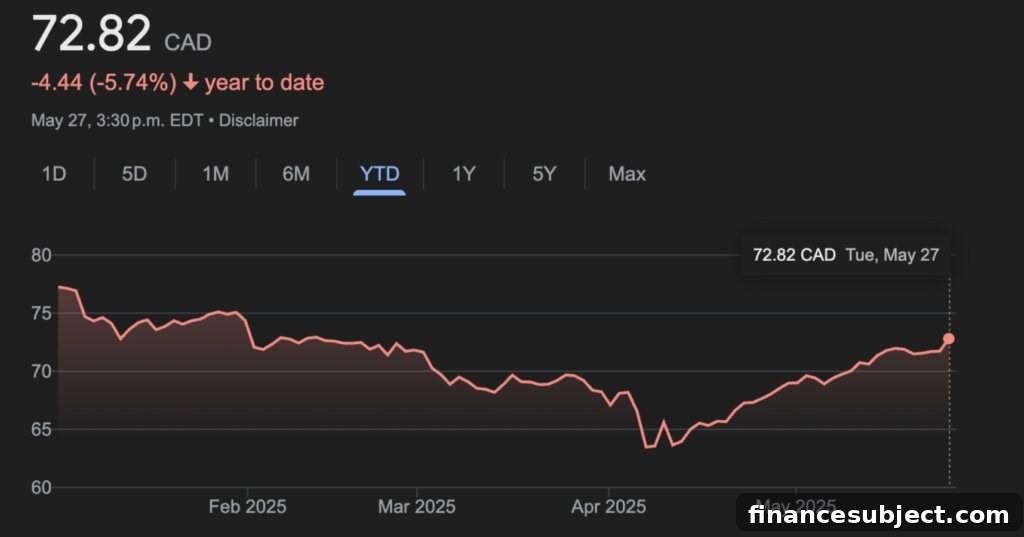
Scotiabank posted second-quarter net income of $2.03 billion, down from $2.09 billion a year earlier, as the bank increased provisions for potential loan losses. The board also approved a higher quarterly dividend of $1.10 per share, up from $1.06.
For the quarter ended April 30, Scotiabank reported earnings of $1.48 per diluted share, compared with $1.57 per diluted share in the same period last year. Revenue rose to $9.08 billion from $8.35 billion a year earlier, while provisions for credit losses climbed to $1.40 billion, up from $1.01 billion.
On an adjusted basis, Scotiabank recorded $1.52 per diluted share, slightly below the prior-year adjusted result of $1.58 per diluted share and a touch under the average analyst expectation of $1.56 per share, according to LSEG Data & Analytics. The results reflect stronger revenue offset by higher loss provisions tied to a more cautious economic outlook.
featuredTFSA GIC rate (1 year)Earn a guaranteed 3.50% in your TFSA when you lock in for 1 year.go to site
Best online brokersOpen your TFSA with one of the best online brokers in Canada. See our ranking.Read now
MoneySense is an award-winning personal finance publication that has guided Canadians since 1999. Our editorial team of experienced journalists works with leading finance experts to compare products across banks, credit unions and card issuers. Learn more about our editorial standards and advertising practices.
Changes at Scotiabank
Chief executive Scott Thomson said the bank is concentrating on controllable priorities within its strategic plan while monitoring an uncertain economic environment. Management raised performing allowances this quarter to reflect macroeconomic risks, he said, while noting Scotiabank’s strong balance sheet puts it in a position to support clients and pursue growth opportunities as conditions evolve.
Within the quarter, Scotiabank’s Canadian banking segment reported net income attributable to equity holders of $613 million, down from $893 million a year earlier as credit-loss provisions and non-interest expenses increased despite higher revenue. International banking produced $676 million in net income, up from $639 million a year earlier, and global wealth management earned $399 million versus $341 million the prior year. The global banking and markets division reported $413 million in net income, an increase from $375 million.
Rankings
The best online banks and credit unions in Canada
CIBC reports rise in profit on trading boost, modest borrower concerns
Canadian Imperial Bank of Commerce (TSE: CM)
- Q2 profit: $2.01 billion
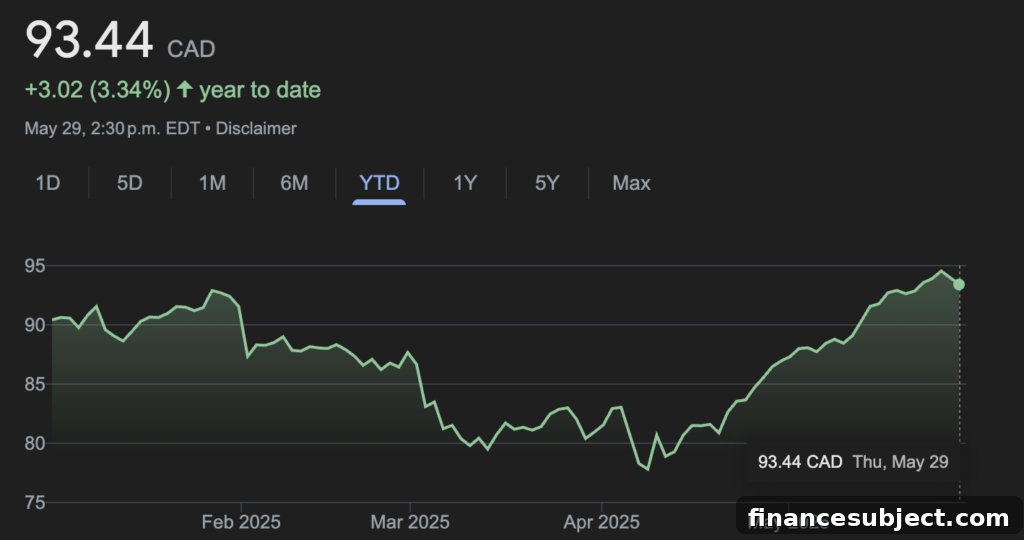
CIBC reported a second-quarter profit of $2.01 billion, an increase from $1.75 billion a year earlier, helped by stronger trading results amid market volatility. Adjusted earnings were $2.05 per share, well above last year’s $1.75 and ahead of the analyst consensus of $1.89 per share, according to LSEG Data & Analytics.
The bank said provisions for credit losses totaled $605 million, up from $514 million a year earlier, reflecting a modest increase in borrower risk. Chief risk officer Frank Guse noted the bank remains comfortable with the overall strength of its Canadian consumer portfolios, saying impaired losses continue to sit at the low end of guidance thanks to good portfolio performance.
CIBC did register higher credit card and personal loan write-offs quarter-over-quarter as unemployment rose, and observed a small uptick in 90-day mortgage delinquencies. Management said these trends are not a major concern given strong average loan-to-value ratios among mortgage customers.
CIBC’s revenue rose to $7.02 billion from $6.16 billion, supported by a 32% increase in adjusted revenue in its capital markets division as volatility boosted trading income. Expenses climbed 9% year over year as the bank invested in technology, paid performance-based compensation and incurred some severance costs. Management said it is using improved revenue to optimize staffing levels as part of broader efficiency efforts.
Also read
The best online brokers, ranked and compared
BMO reports rise in profit even as companies remain hesitant on borrowing
Bank of Montreal (TSE: BMO)
Q2 profit: $2.50 per diluted share
Net income: $1.96 billion
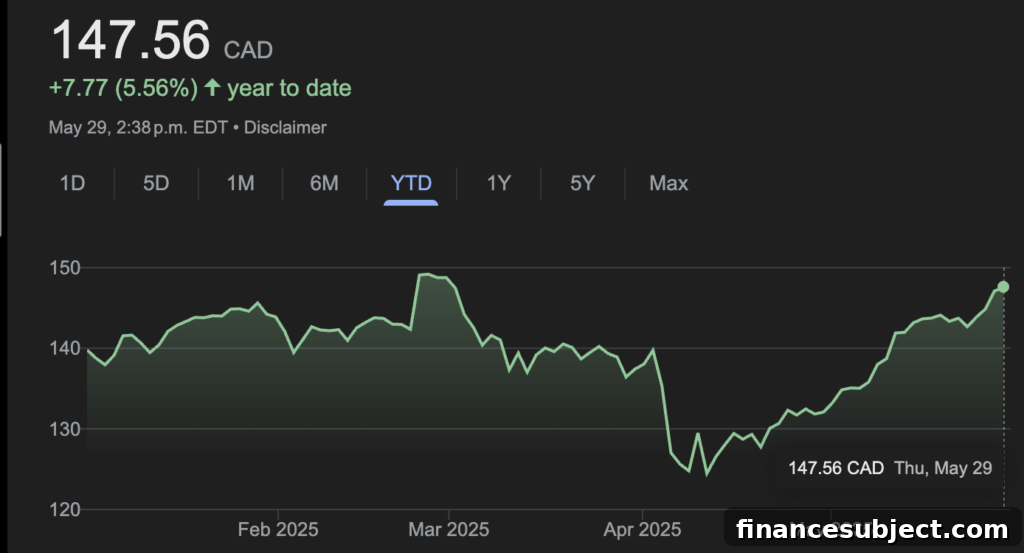
BMO reported net income of $1.96 billion for the quarter, up from $1.87 billion a year earlier. The increase was driven in part by lower losses in the corporate segment following higher acquisition-related costs in the prior year.
The bank declared a quarterly common-share dividend of $1.63, an increase of eight cents from a year earlier and up four cents from the prior quarter. Earnings were $2.50 per diluted share for the quarter ended April 30, compared with $2.36 per diluted share a year ago. On an adjusted basis, BMO reported $2.62 per share, above the analyst consensus of $2.53 per share.
BMO’s results also reflect a cautious business environment. CEO Darryl White cited trade policy uncertainty in North America as a factor weighing on business activity and loan demand. The bank increased its provisions for credit losses to $1.05 billion from $705 million a year ago, joining peers that raised allowances during the quarter.
Provisions were lower than two quarters ago, with impaired provisions at $765 million versus $1.11 billion at the recent peak. BMO executives said client sentiment appears to be improving and that they expect loan growth to turn positive later in the year. National Bank and other peers also signaled higher provisions for the quarter, reflecting a cautious stance across the industry.
Revenue for BMO rose to $8.68 billion from $7.97 billion a year earlier. While trading revenue helped the quarter’s outperformance, analysts caution that such gains can moderate in future quarters. Investors will have further clarity as other major banks release their results for the quarter.
Read more about stocks:
- Target reports Q1 earnings—dip in sales, C-suite changes and more
- Is the stock market going to crash in 2025?
- Do you need a planner if you’re a DIY investor?
- New active U.S. ETFs for Canadian investors—are these funds worth your money?