

No matter what stage you are at in financial planning, understanding the common risks to your retirement and financial stability is essential. The Toronto Star published a chart summarizing reasons why many Canadians delay retirement, and those findings highlight the pressures facing older workers.
Inflation delays retirement for half of older Canadians
Results of a survey of Canadians older than 55 conducted in June 2022.
| I have delayed (or plan to delay) my retirement because… | |
|---|---|
| I don’t have enough savings/investments | 62% |
| Rising inflation/cost of living this year | 54% |
| I have too much debt | 40% |
| My children still require financial support | 26% |
| I love my job too much to quit | 23% |
| The COVID-19 pandemic | 21% |
| I am taking care of my partner/spouse | 13% |
| I am taking care of my partner or other family member | 10% |
The purpose of this chapter is education: knowledge reduces anxiety about the future. Below are the key risks to retirement security and practical steps you can take to prepare for each.
While enthusiasm may be necessary for great accomplishments elsewhere, on Wall Street it almost invariably leads to disaster.
—Benjamin Graham
Newsletter
Get free MoneySense financial tips, news & advice in your inbox.
Lifestyle inflation
When most people hear “inflation,” they think of the economy-wide rise in prices. Equally important, though less discussed, is lifestyle inflation: the tendency to increase spending as income rises. A sudden pay increase often prompts choices—bigger home, newer car, regular vacations—that lift living standards immediately and make later cutbacks difficult.
The core pattern is simple: the more you earn, the more you spend. The danger is that lifestyle inflation can erode long-term financial security when extra income is not redirected toward savings and investments. For example, investing an extra $500 per month over ten years at a modest annual return could grow into a substantial sum that supports future goals; spending that money instead reduces your options and may extend the number of years you need to work.
Because habits are powerful, once higher spending becomes routine it is hard to reverse. Our economy often encourages borrowing to sustain lifestyle choices, which compounds the challenge. The antidote is deliberate “lifestyle deflation”: deciding to save and invest a portion of any income increase so you build long-term security while still enjoying life.
You don’t need to become miserly; the point is balance. Rather than an automatic “I deserve this” response to every pay raise, adopt the mindset “sacrifice today for a brighter tomorrow” and apply practical rules to protect your future.
- Create a realistic budget and track spending so you know where money goes.
- Prioritize paying down high-interest debt quickly.
- Limit credit card use; if you use cards, favor those that offer cash-back or clear benefits.
- Use discounts, coupons and price comparisons to make lifestyle choices more affordable.
Economic inflation
If you are planning for retirement, factor in economic inflation: the general rise in prices that diminishes purchasing power over time. Inflation affects retirement in two main ways. First, the cost of goods and services rises, increasing the annual income you will need. Second, inflation reduces the real value of uninvested savings, so cash put aside today may buy much less in future years without investment growth.
The examples below illustrate how a modest annual inflation rate accumulates over time. Over 25 years, even a 2.5% annual inflation rate can significantly raise the cost of the same basket of goods and sharply reduce the real value of savings if those savings do not earn returns that outpace inflation.
Cost of goods at an annual inflation rate of 2.5%
| Number of years | If your annual expenses are $20,000 | If your annual expenses are $40,000 |
|---|---|---|
| 1 | $20,500 | $41,000 |
| 5 | $22,628 | $45,256 |
| 15 | $28,966 | $57,932 |
| 25 | $37,079 | $74,158 |
Inflation also reduces the purchasing power of savings over time. If savings are held in low-yield accounts, their real value can shrink as prices rise, which is why investment returns matter in retirement planning.
Value of savings at an annual inflation rate of 2.5%
| Number of years | If your annual savings total $20,000 | If your savings total $40,000 |
|---|---|---|
| 1 | $19,512 | $39,024 |
| 5 | $17,677 | $35,354 |
| 15 | $13,809 | $27,618 |
| 25 | $10,788 | $21,576 |
When projecting retirement needs, include an assumed inflation rate so your income targets reflect future purchasing power. In Canada, inflation is tracked by the Consumer Price Index and monetary policy—such as the Bank of Canada’s key interest rate—plays a role in managing inflationary pressures.
Canada’s retirement income system rests on three pillars that help offset inflation to varying degrees: government programs like Old Age Security (OAS) and the Guaranteed Income Supplement (GIS), the Canada Pension Plan (CPP), and private savings and investments. The first two are adjusted periodically to reflect changes in the cost of living; private savings must be invested wisely to preserve and grow real value.
Living too long
Longevity is a positive outcome, but it raises a common concern: will retirement savings last? Federal and provincial plans provide a baseline income, yet individuals rightly ask whether their chosen lifestyle is sustainable throughout a potentially long retirement.
A thorough cash flow analysis is essential. This analysis projects future income and expenses, accounts for debt repayment, and considers insurance products such as life and disability coverage. Knowing projected cash flows helps you set realistic retirement dates and spending plans so you can enjoy retirement without constant worry about running out of money.
Resource highlight
Compare life insurance quotes and save
Request a personalized quote and consult with an expert about appropriate coverage. The right policy can protect your family and preserve financial stability.
Powered by ratehub.ca
Dying too soon
Death is a reality we all face. Ensuring financial resources are accessible to surviving partners and beneficiaries—through joint accounts, a valid will, and appropriate insurance—protects loved ones from avoidable hardship. Life insurance can replace lost income and cover debts or final expenses; when planning, remember to account for any government spousal benefits that may change after a death.
The most common types of life insurance
| Permanent life insurance | Term life insurance | |
|---|---|---|
| What? | Permanent policies provide lifelong coverage, build cash value over time, and can be used to cover final expenses, supplement retirement income, or meet long-term goals. | Term policies provide coverage for a set period—typically 5 to 30 years—at a lower fixed cost. If the insured dies during the term, the beneficiary receives a tax-free lump-sum death benefit. |
| Who? | Suitable for those seeking a straightforward, long-term death benefit and potential cash-value growth; premiums are typically higher but predictable for budgeting. | Best for people seeking affordable, temporary coverage to protect financial responsibilities during key years (for example, while raising children or paying a mortgage). |
Becoming critically ill or disabled
Serious illness and disability are statistically more likely than an early death, and they can have a profound effect on household income. Critical illness and disability insurance provide income protection if you cannot work due to health reasons. Disability coverage typically costs a percentage of income and pays a portion of lost earnings; critical illness policies can be structured in various ways to pay a lump sum on diagnosis of covered conditions.
When deciding on insurance, ask whether you prefer to protect most of your current income against disability, thereby preserving lifestyle and financial obligations, or to accept the risk of a coverage gap. For many households, the cost of adequate protection is a prudent investment in financial resilience.
Takeaways
- With a sound financial plan, retirement can be a choice rather than a necessity to delay work.
- Lifestyle inflation is powerful and once established is hard to reverse; counter it by directing a portion of income increases to savings.
- Perform a cash flow analysis to identify future goals, estimate the income needed to support them, and include debts and insurance costs in the plan.
- Appropriate insurance—life, disability and critical illness—plays a vital role in protecting you and your beneficiaries.
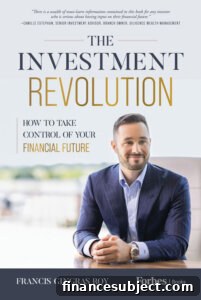
Excerpted from The Investment Revolution: How to Take Control of Your Financial Future by Francis Gingras Roy, available Nov. 12, 2024. Roy is a senior investment advisor at Manulife Wealth and a financial security advisor at Manulife Wealth Insurance Services Inc. He has been recognized among Canada’s leading advisors by industry publications.
Read more about retirement planning:
- The best RRSPs in Canada
- What’s my RRSP contribution limit? The MoneySense RRSP calculator
- The best TFSAs in Canada
- TFSA contribution room calculator