

Kyle Prevost, creator of 4 Steps to a Worry-Free Retirement, Canada’s DIY retirement planning course, summarizes this week’s financial headlines and explains what they mean for Canadian investors.
Nike and Carnival shareholders sail to profitable waters
This week’s earnings showed that investors preferred cruising over running—at least when it came to Carnival and Nike.
U.S. earnings highlights
Key results from recent reports (all figures in U.S. dollars):
- Nike (NKE/NYSE): Earnings per share $0.70 (vs. $0.52 expected). Revenue $11.59 billion (vs. $11.65 billion expected).
- Carnival (CCL/NYSE): Earnings per share $1.27 (vs. $1.17 expected). Revenue $7.89 billion (vs. $7.82 billion expected).
Despite solid beats from both companies, market reactions were surprisingly muted. Carnival reported record revenue for the quarter and raised its outlook for the third time this year. CEO Josh Weinstein said the improvement was driven more by better onboard profit margins than simply adding more sailings. Investors may have already priced in much of the good news—Carnival’s shares are up more than 36% over the past 12 months.
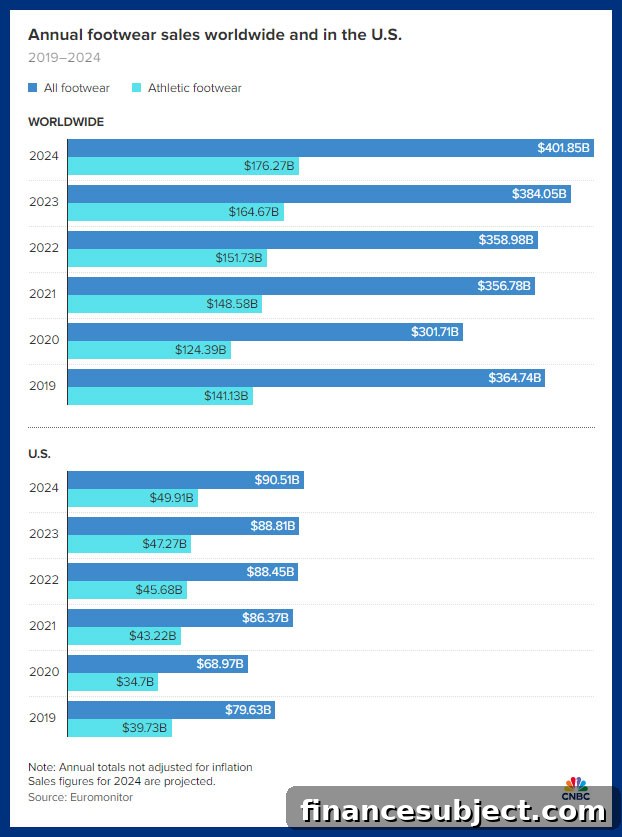
Nike’s results were strong on profit, yet its shares fell after hours by roughly 5% and are down about 23% year to date. The company appears to be in transition: John Donahoe is stepping down and Elliott Hill will assume the CEO role on October 14. Nike warned that revenue could decline 8% to 10% next quarter and noted weaker spring order books. Its strategy to push direct online sales over traditional wholesale channels has drawn criticism, especially as the U.S. sneaker market shows signs of plateauing.
One notable aside: Elon Musk’s investment in the platform formerly known as Twitter has suffered a large write-down. Reports indicate the value has fallen by tens of billions, representing a meaningful loss relative to what he paid for the company. The scale of that loss has drawn broad attention in markets and media.
featured1-year GICLock in your deposit and earn a guaranteed interest rate of 3.50%.go to site
featuredSavings accountOpen a High Interest Savings Account and earn 4.60% interest for 5 months on eligible deposits up to $100,000.go to site
MoneySense is an award-winning magazine that has helped Canadians with personal finance since 1999. Our editorial team of journalists collaborates with leading Canadian finance experts. To help readers compare financial products, we analyze offerings from many large banks, credit unions and card issuers.
Approved: National Bank’s takeover of Canadian Western Bank
Canada’s banking landscape is consolidating. The Competition Bureau approved National Bank of Canada’s proposed acquisition of Canadian Western Bank (CWB), a move that reshapes regional banking dynamics and could narrow the gap with other national banks.
National Bank already ranks among Canada’s larger companies with a market capitalization in the tens of billions. CWB was valued at roughly $2.5 billion before the deal and was among the top regional banks in the country. The takeover was approved overwhelmingly by CWB shareholders, who voted in favour after National Bank offered a significant premium—roughly doubling the immediate value for many holders.
Why this matters for investors:
- National Bank’s market cap positions it to move closer to larger national peers. The acquisition materially increases its footprint and scale.
- CWB shareholders received a compelling premium, which explains the near-unanimous vote to accept the offer.
- The deal expands National Bank’s presence in Western Canada, an area where it previously had limited branch coverage.
- National Bank likely expects to cross-sell wealth and commercial services to CWB’s clients, creating potential revenue synergies.
- National Bank committed to preserving CWB’s branch network and Alberta-based management, suggesting a slower integration than some past bank consolidations.
The transaction still requires final clearance from the Office of the Superintendent of Financial Institutions (OSFI) and the Minister of Finance, with a hoped-for close within the next year.
Longshoremen strike highlights the power of strategic labour action
A recent longshoremen strike on the U.S. East Coast demonstrated how concentrated labour action at a few key nodes—ports—can ripple across the broader economy. Nearly 25,000 dockworkers walked off the job, and many other port workers refused to unload ships in solidarity. Negotiations later resumed with a tentative agreement reported, including a multi-year wage rise.
The walkout threatened operations at numerous eastern ports and highlighted the vulnerability of supply chains. Estimates suggested daily economic costs could be large, with upstream impacts on tens of thousands of jobs if disruptions widened. One core dispute blended wages with concerns about automation: dockworkers seek protections against machines replacing roles, while port operators and shippers press for productivity gains.
The timing—close to a major U.S. election—added political sensitivity. Labour traditionally supports one political party, but union sentiment can shift, and elected officials must weigh support for workers against avoiding inflationary shocks and supply disruptions during a critical campaign season.
Longer term, higher dock wages increase the incentive to automate terminal operations. Ports that refuse automation risk falling behind global peers on efficiency, while adopting automation raises labour tensions. Either path will force difficult trade-offs between employment, cost pressures and competitiveness.
Why utilities are losing their “boring” label
With yields from high-interest savings accounts and short-term GICs becoming less attractive relative to equity income, many income-focused investors are turning back to utilities. Utilities offer steady cash flows, regulated business models and dividend yields that look attractive as interest rates are expected to fall.
ETF flows into utilities have accelerated this year. The iShares U.S. Utilities ETF (IDU/NYSE) and Canada-focused utilities ETFs have seen notable gains, reflecting investor demand for defensive income and exposure to energy and infrastructure assets. Utilities also benefit indirectly from rising electrification trends and increased electricity demand tied to technologies like data centers and AI.
That said, some income-oriented products—such as certain option-overlay income ETFs—trade away upside potential to boost short-term yield. These strategies can provide higher immediate income but often cap long-term growth, so investors should weigh the trade-offs carefully.
One last thing…
Registration is open for the 2024 Canadian Financial Summit, a free online event with several MoneySense contributors among the speakers. If you’re interested in practical investing and retirement planning ideas, consider reserving a spot while space is available.
Read more about investing:
- Best ETFs in Canada
- Is VFV a good buy? Other lower-fee U.S. ETF options
- Buying your first stocks in Canada
- How capital gains tax works and other common tax questions